
About Edward Robinson
Lived 1794 – 1863 (aged 68). Edward Robinson was an American linguist, archaeologist, anthropologist, geographer, translator and university teacher.
Edward Robinson (April 10, 1794 – January 27, 1863) was an American biblical scholar known for his magnum opus, Biblical Researches in Palestine, the first major work in biblical geography and biblical archaeology, which earned him the epithets "Father of Biblical Geography" and "Founder of Modern Palestinology."
He studied in the United States and Germany, centers of biblical scholarship and exploration of the Bible as history. He translated scriptural works from classical languages as well as German translations. His Greek and English Lexicon of the New Testament (1836; last revision, 1850) became a standard authority in the United States and was reprinted several times in Great Britain.
Biography Robinson was born in Southington, Connecticut, and raised on a farm. His father was a minister in the Congregational Church of the town for four decades. Robinson taught at schools in East Haven and Farmington in 1810–11 to earn money for college. He attended Hamilton College in Clinton, New York, where his maternal uncle, Seth Norton, was a professor. He graduated in 1816.
In 1821, he went to Andover, Massachusetts, where he published his translation of books i–ix, xviii and xix of the Iliad. There he aided Moses Stuart in the preparation of the second edition (1823) of the latter's Hebrew Grammar. He translated into English (1825) Wahl's Clavis Philologica Novi Testamenti.
Robinson went to Europe to study ancient languages, largely in Halle and Berlin (1826–30). While in Halle, in 1828 he married German writer Therese Albertine Luise von Jakob. After the couple returned to the United States, Robinson was appointed professor extraordinary of sacred literature at Andover Theological Seminary (1830–1833). Robinson founded the Biblical Repository (1831), which he edited for four years.
Exploration of Palestine
Robinson traveled to Palestine in 1838 in the company of Eli Smith. He published Biblical Researches in Palestine in 1841, for which he was awarded the Gold Medal of the Royal Geographical Society in 1842.
Together with Smith, Robinson made scores of identifications of ancient places referenced in the Bible.
Works
Books Dictionary of the Holy Bible for the Use of Schools and Young Persons (Boston, 1833) Greek and English Lexicon of the New Testament (1836; last revision, New York, 1850), based on the Clavis Philologica Novi Testamenti of Christian A. Wahl. This work superseded his translation of Wahl's work, becoming a standard authority in the United States. It was several times reprinted in Great Britain. Biblical Researches in Palestine and Adjacent Countries (three volumes, Boston and London, 1841; German edition, Halle, 1841; second edition, enlarged, 1856, published in both English and German) A Harmony of the Gospels in Greek in the General Order of Le Clerc and Newcome, with Newcome's Notes: Printed from the Text with the Various Readings of Knapp (1834) Greek Harmony of the Gospels (1845; second edition, 1851). The Greek text is the Textus Receptus of Elzevir (reproduced by August Hahn). English Harmony of the Gospels (1846) Memoir of Rev. William Robinson, with some Account of his Ancestors in this Country (printed privately, New York, 1859) This is a sketch of his father, who for 41 years was pastor of the Congregational church in Southington, Connecticut. Physical Geography of the Holy Land (New York and London, 1865). This is a supplement to his Biblical Researches, and was edited by Mrs. Robinson after his death. Revised editions of the Greek and English Harmonies, edited by Matthew B. Riddle, were published in 1885 and 1886 after Robinson's death.
Edits and translations Philipp Karl Buttmann, Greek Grammar (1823; third edition, 1851) Georg Benedikt Winer, Grammar of New Testament Greek (1825), with Moses Stuart Christian Abraham Wahl, Clavis Philologica Novi Testamenti (1825) Wilhelm Gesenius, Hebrew Lexicon of the Old Testament, including the Biblical Chaldee (1836; fifth edition, with corrections and additions, 1854)
Revisions Augustine Calmet, Dictionary of the Bible (Boston, 1832)
Don’t just read it —
keep it.
Full-length biographies made to live with: read them, listen on the way to work, watch them tonight.
- E-book
- Audio
- Video
Instant download · yours to keep · every purchase keeps this site free
Important facts
People in Edward Robinson's life
Named in this biography and alive at the same time

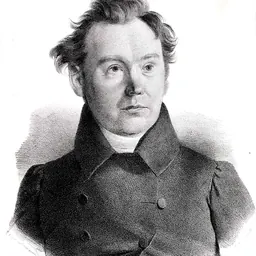
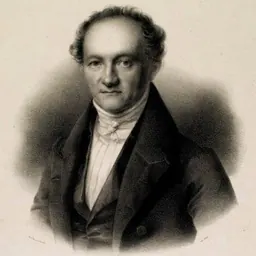




Related people
Same field, nearest in time
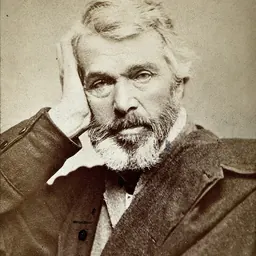
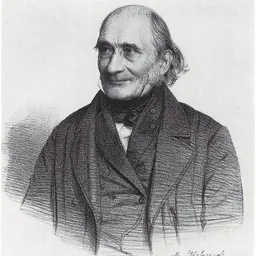

Contemporaries
People whose lives overlapped Edward Robinson's




Frequently asked questions
Who was Edward Robinson?
American biblical scholar (1794-1863)
When was Edward Robinson born?
Edward Robinson was born on 10 April 1794 in Southington, Connecticut.
When did Edward Robinson die?
Edward Robinson died on 27 January 1863 in New York City.
What was Edward Robinson's occupation?
Edward Robinson was a linguist, archaeologist, anthropologist, geographer, translator and university teacher.
What nationality was Edward Robinson?
Edward Robinson was American.
Sources & further reading
· DBpedia: Edward Robinson (scholar)
Cite this page
APA: Biography.guide. (2026). Edward Robinson. https://biography.guide/edward-robinson-linguist/
MLA: "Edward Robinson." Biography.guide, https://biography.guide/edward-robinson-linguist/.
Chicago: "Edward Robinson." Biography.guide. https://biography.guide/edward-robinson-linguist/.
Data last updated: 2026-09-20 · Spot an error? Report a correction.
Page generated 2026-09-27 05:18 UTC