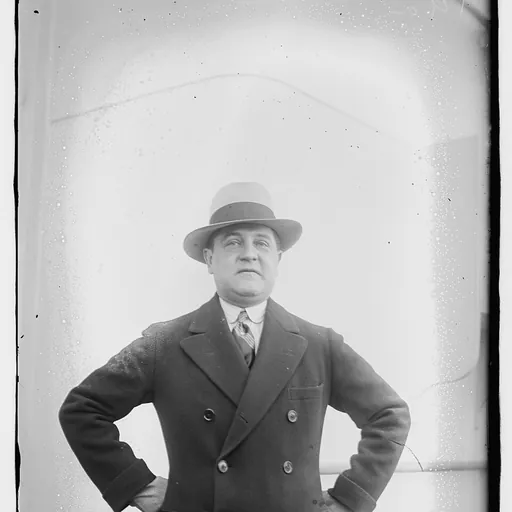
Edward Ray Goetz
(1886-1954) American composer, writer and producer
About Edward Ray Goetz
Lived 1886 – 1954 (aged 68). Edward Ray Goetz was an American composer, songwriter, film producer, film actor and screenwriter.
Edward Ray Goetz (June 12, 1886 – June 12, 1954) was an American composer, lyricist, playwright, theatre director, and theatrical producer. A Tin Pan Alley songwriter, he published more than 500 songs during his career, many of them originally written for the New York stage. His songs were recorded by several artists, including Judy Garland, Al Jolson, and Blossom Seeley. He was active as both a lyricist and composer for Broadway musicals from 1906 through to 1930, collaborating with artists like George Gershwin, Cole Porter, Sigmund Romberg, and A. Baldwin Sloane to create material for the theatre.
Beginning with the musical Hitchy-Koo of 1917, he produced several of the musicals and plays he was creatively involved in up until the 1930-1931 Broadway season, when he produced his final stage work, Porter's The New Yorkers, for which he created the story and served as director. He authored the play The Lady of the Orchids which he produced on Broadway in 1928. He produced and served as production supervisor of Herbert Fields and Porter's 1929 musical Fifty Million Frenchmen which was adapted by Warner Brothers into a 1930 film of the same name.
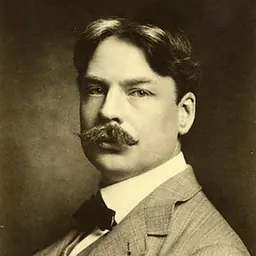
His work as a songwriter was featured in the films For Me and My Gal (1942), Somebody Loves Me (1952), and The Greatest Show On Earth (1952), the latter of which resulted from his work as the lyricist for the Ringling Bros. and Barnum & Bailey Circus during the final three years of his life. Having never stopped working, he died in 1954. At the age of 16 he moved to New York City to pursue a career as a songwriter. He studied music at Yale University and Columbia University; and was a pupil of composer Edward MacDowell at the latter institution. He contributed words and music to several musical revues, including the first Ziegfeld Follies (The Follies of 1907).
Beginning with Hitchy-Koo of 1917, Goetz began producing musicals and plays on Broadway. In addition to serving as producer of this musical, he also penned the musical book and served as lyricist with composer Raymond Hubbell writing the music. He produced several more musicals in which he contributed music and/or lyrics, including As You Were (1920), Little Miss Bluebeard (1923), and Cole Porter's Paris (1928), the latter of which included some musical material by Goetz.
Goetz's younger sister Dorothy married Irving Berlin in 1912. She died from typhoid fever contracted during their honeymoon. She was 20 years old at the time of her death. The two men remained friends after her death, and their collaborations include the 1912 song "Alexander's Bagpipe Band", a parody of Berlin's 1911 tune "Alexander's Ragtime Band". Goetz served as the lyricist for the Ringling Bros. and Barnum & Bailey Circus from 1951 through to 1954. Goetz and Ringling North's songs were featured in The Greatest Show On Earth (1952) and in live performances during the 1950s. On 24 October 1918 Goetz was married to actress Irène Bordoni. They were divorced on November 6, 1929.
Goetz died on his 68th birthday on June 12, 1954 in Greenwich, Connecticut. Some of his songs were used posthumously in the 1975 Broadway musical Doctor Jazz.
Composer and lyricist Songs
Goetz published more than 500 songs during his career. He and Buddy DeSylva collaborated on lyrics for several songs with music by George Gershwin for the 1922 and 1923 editions of George White's Scandals, including "Across the Sea," "Let's Be Lonesome Together," "There Is Nothing Too Good for You," and "Throw 'Er in High."
His other popular-song compositions included "So This Is Love," "Don't Go In the Lion's Cage Tonight," "If You Could Care," "Meet Me in the Shadows," "The Land of Going to Be," and "Boom." He also wrote "There's a Girl in Chateau Thierry" in 1919.
Stage scores "For Me and My Gal" "The Never Homes" in 1911 "The Hen Pecks" in 1911 "Hokey-Pokey" in 1912 "Hanky-Panky" in 1912 "Roly-Poly" "All Aboard" "The Pleasure Seekers" "Hitchy-Koo"
Movie songwriter "So This Is Love", 1953 "Toddling the Todalo", 1952 "Lovely Luawana Lady", 1952 "Do I Love You?", 1923) "He Goes to Church on Sunday", 1907 "Yaaka Hula Hickey Dula (Hawaiian Love Song)" (lyrics) "Fifty Million Frenchmen", 1931 (playwright) "Paris", 1929 "If You Could Care", 1929
Producer George White's Scandals of 1922 As You Were The French Doll Little Miss Bluebeard Paris Fifty Million Frenchmen The New Yorkers
Don’t just read it —
keep it.
Full-length biographies made to live with: read them, listen on the way to work, watch them tonight.
- E-book
- Audio
- Video
Instant download · yours to keep · every purchase keeps this site free
Important facts
People in Edward Ray Goetz's life
Named in this biography and alive at the same time
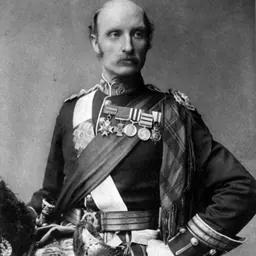
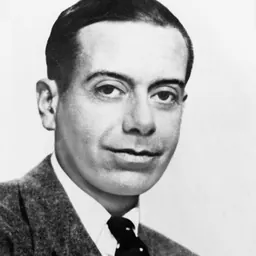



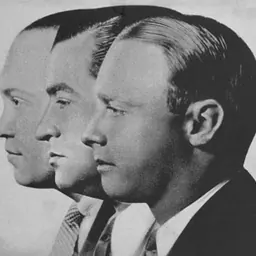
Related people
Same field, nearest in time


Contemporaries
People whose lives overlapped Edward Ray Goetz's





Frequently asked questions
Who was Edward Ray Goetz?
(1886-1954) American composer, writer and producer
When was Edward Ray Goetz born?
Edward Ray Goetz was born on 12 June 1886 in Buffalo.
When did Edward Ray Goetz die?
Edward Ray Goetz died on 12 June 1954 in Greenwich.
What was Edward Ray Goetz's occupation?
Edward Ray Goetz was a composer, songwriter, film producer, film actor and screenwriter.
What nationality was Edward Ray Goetz?
Edward Ray Goetz was American.
Sources & further reading
Cite this page
APA: Biography.guide. (2026). Edward Ray Goetz. https://biography.guide/edward-ray-goetz/
MLA: "Edward Ray Goetz." Biography.guide, https://biography.guide/edward-ray-goetz/.
Chicago: "Edward Ray Goetz." Biography.guide. https://biography.guide/edward-ray-goetz/.
Data last updated: 2026-09-20 · Spot an error? Report a correction.
Portrait: Wikimedia Commons · author & licence
Page generated 2026-09-27 04:57 UTC