
About Edward Norman Hay
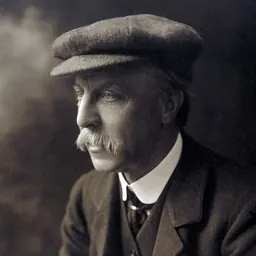
Lived 1889 – 1943 (aged 54). Edward Norman Hay was a British musicologist, composer and music critic.
Edward Norman Hay (19 April 1889 – 10 September 1943) was a Northern Irish composer and music critic.
Early life Hay was born at 26 Newton Road, Faversham, Kent, the second son of Joseph Hay, an Inland Revenue official, who was the son of Edward Hay of Coleraine, County Londonderry (d. 1890), coachmaker, and Janet Robb (1864–1891) of Alloa, Scotland, the daughter of Andrew Robb (d.1900), a mill manager.
His parents had married in Edinburgh in 1884, and their first son, Francis Edward Cecil Hay, died in Peebles in 1885. Joseph and Janet moved to Faversham shortly afterwards. His mother Janet died aged only 26 in January 1891 and was buried in North Merchiston Cemetery, Edinburgh, and the 1891 census finds Edward in the Cottage Hospital in Faversham. Edward moved across to Coleraine in Ireland shortly afterwards to be cared for by aunts. When young he contracted polio, which left him with a permanent limp, and apparently unable to walk until the age of 12.
Education and career According to his own account he first studied the violin at the age of eight, but around the age of ten "I was suddenly filled with a longing to play a keyboard instrument ... and I took a vow one evening not to sleep until I had learnt the notes of the bass staff". He went on to take piano lessons and "during my five years with her [the teacher] I proceeded from Clementi and Dussek to the easier Beethoven, with not one trashy piece in between. And I think the finest thing she ever did was to leave Bach alone".
Hay studied in Belfast, with Francis Koeller and later with Charles John Brennan, Edred Martin Chaundy and Arthur Eaglefield-Hull. He took a bachelor's degree in music at Oxford, and later a doctorate in music at Balliol College, Oxford for composition (1919). He also became a fellow of the Royal College of Organists (1911). Returning to Ireland he was organist at St. Patrick's Parish Church, Coleraine from 1914 to 1916, and thereafter of Bangor Abbey Church in 1922.
In 1922-3 he served as Head of Music at Campbell College, Belfast. From 1923 to 1924 he was the external examiner (degrees) at Trinity College Dublin and shortly before his death was lecturer in music at Queen's University, Belfast. From 1926 he served as the music critic for the Belfast Telegraph using the pseudonym "Rathcol". He also was the general editor and arranger of "Ulster Airs" for BBC Northern Ireland. He was also organist at Belmont Presbyterian Church, Belfast.
He married Hessie Haughey from Coleraine at Fitzroy Avenue Presbyterian Church, Belfast, on 7 April 1920. They had two sons, Michael (1927–2004) and Joseph Norman Haughey Hay (1924–2007).
Death and legacy Hay died in 1943 in Portstewart, County Londonderry, Northern Ireland. His obituary in The Times (13 September 1943) records that he "won the Carnegie Award for a String Quartet in A in 1918, and from 1923 to 1924 was external examiner for degrees in music at Trinity College Dublin. After working for the BBC for a time he was appointed in 1941 Lecturer on Music, Queen's University Belfast". It continued "Dr Hay's chief work was 'Paean', performed in 1932 at Worcester at the Three Choirs Festival. Notable orchestral works by him are the symphonic poem 'Dunluce (1921)' and an 'Irish Rhapsody'." The 1921 cantata The Wind Among the Reeds (setting Yeats) was given what was billed as its first performance on 7 September 1995 by soprano Melanie Armitstead, the chorus of the Belfast Philharmonic Society and the Ulster Orchestra, conducted by John Lubbock. And a new performance of the String Quartet in A by the Bingham Quartet was broadcast in October 1995. In 2002, his work was performed at Ulster Hall, and his sons were there to hear it.
Selected compositions Orchestral Dunluce, tone poem (1921) Fantasy on Irish Folk Tunes (1924) Four Irish Sketches (1929–32) An Irish Rhapsody (1932)
Vocal with orchestra The Gilly of Christ (Joseph Campbell) for chorus and orchestra (1917) The Wind Among the Reeds (W. B. Yeats) for mezzo, baritone, chorus and orch. (1921) To Wonder (Robert N. D. Wilson) for soprano, alto, tenor, bass, chorus and orch. (1924) Paean (George Herbert) for mezzo, chorus and orchestra (1930)
Choral (unaccompanied) Shed no Tear (John Keats) (1923)
Choral (with organ) Behold, what Manner of Love (biblical) (1923) Thou O God hast taught me (1927)
Chamber music Cello Sonata, for cello and piano (1916) Fantasy on Irish Folk Tunes for string quartet (1917) String Quartet in A major (1918). Winner of Carnegie Trust Award
Songs The Silent Land for mezzo and cello (1905) A Birthday Song (Dante Gabriel Rossetti) for soprano, mezzo and piano (1918) Churnin' Day (Elizabeth Shane) for voice and piano (1936) The Buttermilk Boy, Ulster folksong for voice and piano (1939) Tryste Noel (Louise Imogen Guiney) for soprano and piano (1940)
Musical comedy The Lady Voters Dilemma (1919)
Don’t just read it —
keep it.
Full-length biographies made to live with: read them, listen on the way to work, watch them tonight.
- E-book
- Audio
- Video
Instant download · yours to keep · every purchase keeps this site free
Important facts
People in Edward Norman Hay's life
Named in this biography and alive at the same time




Related people
Same field, nearest in time

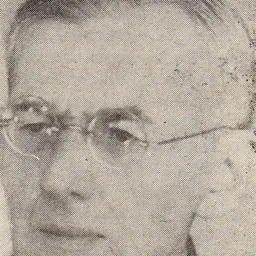
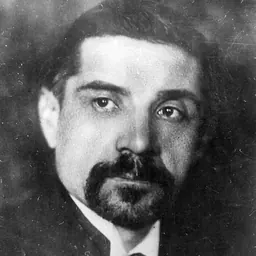
Contemporaries
People whose lives overlapped Edward Norman Hay's
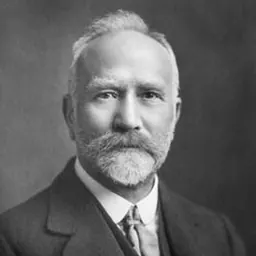

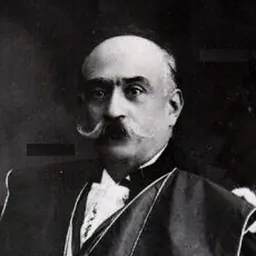
Frequently asked questions
Who was Edward Norman Hay?
British musician
When was Edward Norman Hay born?
Edward Norman Hay was born on 19 April 1889.
When did Edward Norman Hay die?
Edward Norman Hay died on 10 September 1943.
What was Edward Norman Hay's occupation?
Edward Norman Hay was a musicologist, composer and music critic.
What nationality was Edward Norman Hay?
Edward Norman Hay was British.
Sources & further reading
· Wikipedia: Edward Norman Hay
Cite this page
APA: Biography.guide. (2026). Edward Norman Hay. https://biography.guide/edward-norman-hay/
MLA: "Edward Norman Hay." Biography.guide, https://biography.guide/edward-norman-hay/.
Chicago: "Edward Norman Hay." Biography.guide. https://biography.guide/edward-norman-hay/.
Data last updated: 2026-09-20 · Spot an error? Report a correction.
Page generated 2026-09-27 05:21 UTC