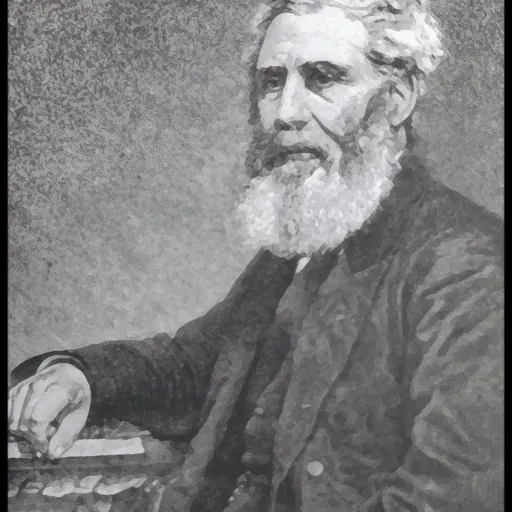
Edward Nangle
Irish minister
About Edward Nangle
Lived 1799 – 1883 (aged 83–84).
Edward Nangle (1799 – 9 September 1883) was a Church of Ireland minister and the founder of the Achill Mission Colony. He established a Protestant mission on Achill Island, County Mayo, in 1834 and worked there for eighteen years with the aim of bringing Protestantism to the Native Irish Christians who were impoverished in large part due to the Penal Law policies of the Protestant Ascendancy. Edward Nangle was involved in evangelical attempts to convert Catholics to Protestantism. He opened a Christian school on the island where children were taught reading, writing, agricultural skills and Christianity as part of a Missionary Colony. His presence on the island led to some press coverage and parliamentary debates. The island itself was developed with a pier built at Dugort, a courthouse at Achill Sound and a road network between numerous key locations on the island. He descended from the Nangle family who had held the title of Barons of Navan for over six hundred years. Although by tradition, the family was Roman Catholic, Nangle was raised in the Protestant faith since his mother, Catherine Nangle (née Anne Sall) was a practicing Protestant. Nangle's mother died when he was only nine years old and shortly afterwards his father sent him to Cavan Royal School. It is supposed he studied alongside Robert Daly the Bishop of Cashel.
Ordination
After secondary education, Nangle completed a Bachelor of Arts Degree in Trinity College, graduating in 1823. Although contemplating a career in medicine, Nangle decided to enter the ministry. In his biographer's words, he looked ‘forward to ordination as a means of securing an eligible social position’. It is believed that Nangle's decision to enter the ministry was the first step in what became his 'conversion experience'. As required for his theological education, he read the Bible and through this, 'the Holy Spirit enlightened the young student and he experienced true conversion'.
After his theological studies in Trinity College, in the summer of 1824, he was ordained deacon by Thomas O’Beirne, Bishop of Meath, for the curacy of Athboy in County Meath. He failed as a curate at first in Athboy and then in Monkstown, where he stayed for less than three weeks. He finally settled in Arva, a small town near Cavan Town, for the following two years. Nangle's biographer Henry Seddal described his personality: ‘Mr. Nangle was doubtless at times headstrong in forming his opinions, stubborn in holding them and harsh in giving them expression.’ In the words of a close contemporary: ‘when animated, the most extraordinary fire lights up his eyes.’
After beginning his ministry in Arva, Edward was affected by the Second Reformation religious revival in Cavan among the tenants of Lord Farnham, the landlord of a thirty-thousand-acre estate. Hundreds of tenants were arriving at Farnham's home converting from Catholicism.
Founding of the Achill Mission Colony
Beginning In July 1831, Edward Nangle paid his first visit to Achill Island accompanied by his wife Eliza. He sailed there on the relief ship Nottingham after famine and cholera swept through Mayo and Sligo. After spending a night at Achill Sound, he travelled around the island on horseback. Describing his initial encounter with the island, Nangle wrote: ‘The deep silence of desolation was unbroken, except by the monotonous rippling of the tide as it ebbed or flowed, or the wild scream of the curlew disturbed by some casual intruder on its privacy’. Apparently moved by what he perceived as the spiritual and temporal destitution he witnessed among the people living on the island, Nangle decided to establish the Achill Mission Colony.
In the following three years, Nangle bought land on the island and negotiated a thirty-one-year leasing contract with Sir Richard O’Donnell, the landlord of the Burrishoole estate, which comprised most of Achill. Edward Nangle, his wife Eliza and their three young daughters arrived in Dugort on 30 July 1834. They were soon joined by Nangle's assistant, Joseph Duncan and two Scripture readers. The Nangles' friends, Dr Neason Adams and his wife Isabella, moved to the Colony in December 1835. Forty three children attended on the first day, and it was the first free school to open on the island. Within a couple of months there were schools in Dugort, Slievemore, Cashel and Keel, catering for 410 children.
In December 1835, a printing press was established at the Mission Colony headquarters at Dugort. It had been granted as a gift to the group by friends in London and York. On 31 July 1837, Nangle printed the first edition of the Achill Herald. This was a monthly Protestant newspaper and within two years, its circulation exceeded three thousand amounting to approximately a third of The Times circulation at that time. The Achill Herald was published continuously each month from 1837 to 1868 when it merged with other Protestant publications.
Four years after he took up residence on Achill, Edward Nangle wrote: ‘The Missionary Settlement has since grown into a village – the sides of a once barren mountain are now adorned with cultivated fields and gardens … and the stillness of desolation which once reigned is now broken by the hum of the school and the sound of the church-going bell.’ However, the early years of the Colony were marked by bitter confrontation between the Catholic authorities and the Achill Mission with competing schools at the centre of the conflict.
By the early 1840s, the Achill Mission Colony included two-storey slated houses, a printing press, an orphanage, a hospital, a post office, a dispensary, a corn mill and farm buildings, surrounded by fields reclaimed from the wet mountain slopes. In 1842, the colony accommodated fifty-six families comprising 365 individuals. Only eleven of these families (one-fifth of the total) were originally Protestant; the remaining forty-five families were originally Catholic.
Famine years In the early years of the Great Famine, Edward Nangle became the focus of allegations that he was a 'soul-buyer' who was using funds raised for famine relief to advance his Achill evangelisation efforts particularly through the decision to provide food for the children attending the Achill Mission schools. Edward Nangle defended the school food programme arguing that, in addition to the religious programme offered, it was the most efficient way of offering famine relief and the food programme was expanded to meet demand from the islanders.
In January 1847, controversy was triggered when the Achill Mission claimed that in the previous month the Mission 'gave employment to 4,458 labourers of which number 2,000 were Roman Catholics'. In July 1847, it was suggested that 5,000 out of Achill's total population of 7,000, were receiving practical support Nangle was warned of a secret plan to attack the colony, kill those living there, burn the buildings and put an end to the Achill Mission. No attack took place but it is believed that the preparations made deterred the assailants.
In the summer of 1835, John MacHale made his first visit to Achill as Catholic Archbishop of Tuam. Followed by a crowd holding banners with the words, Down the Schematics, the Archbishop led a procession of thirteen priests. A succession of the priests addressed the crowd and denounced the colony, pronouncing a curse on all who dared associate themselves with the nearby Protestant settlement.
In 1835, after the Mission opened schools in Dugort, Cashel, Keel and Slievemore, the local parish priest responded by opening three competing schools. Nangle had an immediate grievance against the master of Dugort national school because he had reportedly "with a knife in his hand threatened to take the head of one of the children attending a school under [mission] patronage".
In 1836, John MacHale again visited Achill. This time speaking to a large crowd outdoors he said: "I call upon you to make a solemn promise this day not to have anything to do with the Achill Mission people ... There is no place outside of Hell which more enrages the Almighty than the Protestant colony ... I shall not dirty my mouth with the names of some of the people who are sending their children to the colony school. I hope they will give up doing so."
In 1837, MacHale made another visit, this time stirring up the populace against what he called "these venomous fanatics", referring to those involved with the Achill Mission Colony. Not long after his visit, a schoolmaster and scripture reader from the Mission Colony, were beaten on Clare Island and forced to take refuge in a lighthouse before they could escape the island on a coastguard vessel. John and Bridget Lavelle were cleared of his murder at a trial in Castlebar in spring 1839. The two main witnesses in the case of Reynolds' murder were schooled in their evidence by a local Catholic priest who was aggressively hostile to the Mission. Nangle accused the Crown of holding a "mock" trial and as a direct consequence of these and other incidents, a new courthouse was built at Achill Sound.
In 1848, the Achill Mission produced a prospectus seeking to raise funds to purchase additional island land from Sir Richard O'Donnell. The document describes, from a Colony perspective, the sectarian unrest during the first decade of the Achill Mission as well as its activities in the early famine years. A significant development occurred in 1851 when the Achill Mission purchased a considerable amount of land from the Encumbered Estates Court and became the largest landlord on Achill Island. Shortly afterwards Nangle was transferred to the parish of Skreen, County Sligo.
Public scrutiny In the summer of 1842, Samuel and Anna Hall visited the Achill mission. The visit was part of an Irish tour which the couple had embarked on with the aim of producing a guide book of Ireland for tourists entitled, Ireland: Its Scenery and Character. Arriving at the Colony, they conducted a brief overview of the mission, taking into account the finances expended and the practical results. However, they were not 'enamoured' by Nangle's strict approach to the entrants of the school, the mission and the orphanage.
Although they were at the Colony for less than two hours on 22 June 1842, the Halls branded the Mission ‘a complete failure’ and targeted Nangle, labelling him as a man without any genuine sense of gentle, peace-loving, Christian zeal. In a personal letter to Nangle, Samuel Hall wrote: ‘Be assured, sir, that religion is strong enough to overcome your miserable attempts to degrade it – that Christianity cannot be permanently tainted by coarseness, ignorance and bigotry of which you are representative. I have done my duty.’
In a response to the Halls' visit, Edward Nangle highlighted the significant fact that the visit had only lasted less than two hours: ‘Truly, sir, the rapidity with which you can require experience throws into shade the wonders of the steam press!’ As to the Halls’ references to the cost of the Mission's activities, Nangle replied: ‘as if the salvation of immortal souls for which Christ died, was not a worthy object for the expenditure of a smaller sum of the world’s wealth than is often squandered without a rebuke, on the follies and vanities of this perishing world’.
The Halls’ report of the Mission along with the record a similar visit undertook by Asenath Nicholson, an American author, drew unwelcome attention to the expenditure and income of the Achill Mission Colony and raised questions about the benefits of the organisation. The Halls drew up another report of the Mission in 1849, towards the end of the Great Famine, this time with a more benign approach. They paid tribute to the work of the mission staff during the crisis months of the famine, saying they were ‘indefatigable in their efforts to raise funds’ and ‘distributed with no sparing had to those who must otherwise have perished’. By 1853, the Halls were trying to avoid being drawn in to comment on the island and advised visitors to make their own judgment. By then Nangle had left Achill, and the previous allegations continued to surround the Achill Mission Colony. Shortly afterwards he married - for the second time - Sarah Fetherstonhaugh.
Edward Nangle returned to Achill briefly in 1879 writing ‘As I have now completed my 80th year, and am very infirm, I am unable to work for our dear people in Achill as I did for upwards of 40 years of my life.’ In 1881, he moved to Dublin and died on Sunday 9 September 1883, at the age of 84. He died at his home 23, Morehampton Road, Dublin with his second wife, Sarah by his side.
Don’t just read it —
keep it.
Full-length biographies made to live with: read them, listen on the way to work, watch them tonight.
- E-book
- Audio
- Video
Instant download · yours to keep · every purchase keeps this site free
Important facts
People in Edward Nangle's life
Named in this biography and alive at the same time

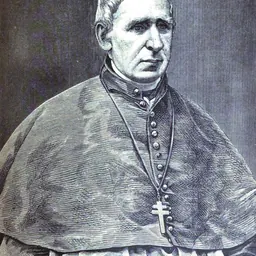
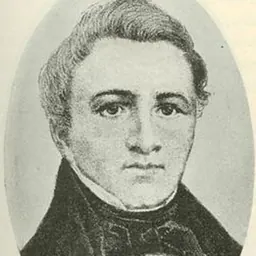


Contemporaries
People whose lives overlapped Edward Nangle's






Frequently asked questions
Who was Edward Nangle?
Irish minister (1799–1883)
When was Edward Nangle born?
Edward Nangle was born in 1799 in Athboy.
When did Edward Nangle die?
Edward Nangle died on 9 September 1883 in Monkstown.
Sources & further reading
Cite this page
APA: Biography.guide. (2026). Edward Nangle. https://biography.guide/edward-nangle/
MLA: "Edward Nangle." Biography.guide, https://biography.guide/edward-nangle/.
Chicago: "Edward Nangle." Biography.guide. https://biography.guide/edward-nangle/.
Data last updated: 2026-09-22 · Spot an error? Report a correction.
Portrait: Wikimedia Commons · author & licence
Page generated 2026-09-27 05:03 UTC