
About Edward J. McCormack, Jr.
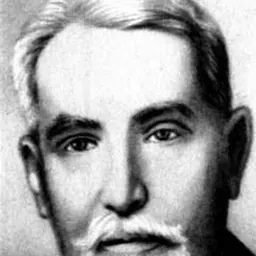
Lived 1923 – 1997 (aged 73). Edward J. McCormack, Jr. was an American lawyer.
Edward Joseph McCormack Jr. (August 29, 1923 – February 27, 1997), was an American attorney and politician from Massachusetts. He was most notable for serving as Massachusetts Attorney General from 1959 through 1963.
Personal life and education A member of an influential political family of Irish descent, McCormack was a son of Edward Joseph "Knocko" McCormack Sr., a prominent Boston political figure, and a nephew of John W. McCormack, who became Speaker of the United States House of Representatives. McCormack when young was described as tall and handsome, with dark blond hair. Because of the prejudice he faced in Boston as a Catholic of Irish descent, he became well known among his classmates for his efforts to fight discrimination against black and Jewish midshipmen.
Politics McCormack won election to the Boston City Council in 1953 and 1955, and served as council president beginning in 1956. In 1956, he was the unsuccessful Democratic nominee for attorney general. In 1958, he ran again for attorney general. Following the death of incumbent George Fingold on August 31, 1958, the Massachusetts Legislature met on September 5 to elect a successor, but was unable to choose. They voted to schedule another Joint Convention for the following week, after the primaries, when the Democratic-controlled legislature would know who had won the Democratic nomination, with that individual likely receiving the interim appointment.
McCormack won the primary, and on September 11, 1958, the legislature selected him to fill the vacancy. He was sworn in later the same day. He won the November election, was re-elected in 1960, and served from 1959 to 1963. His tenure was known for a strong record on civil rights.
Senate campaign In the 1962 U.S. Senate special election in Massachusetts, McCormack faced off in the Democratic primary against Edward M. "Ted" Kennedy, who was running for the Senate seat vacated by his brother John upon becoming President of the United States. Critics said the current (appointed) senator, Ben Smith, who was a close friend of the Kennedy family, was intended all along to simply be a "seat-warmer" until Ted Kennedy turned thirty (the minimum age provided by the U.S. Constitution for eligibility to serve in the Senate). Smith initially planned to run in the special election to complete the rest of the term; however, he backed off when polls showed that he would suffer certain defeat to McCormack in the primary. Kennedy faced the notion that with brother John as president and Robert as U.S. Attorney General, "Don't you think that Teddy is one Kennedy too many?".
McCormack had the support of many liberals and intellectuals, who thought Kennedy inexperienced (Kennedy used the slogan, "He can do more for Massachusetts", the same one John had used in his first campaign for the seat ten years earlier). McCormack's staff seems to regard Kennedy's presence in the race more as an insult than a challenge, noting that McCormack had a distinguished record in academics, war service, and public office. By contrast, Kennedy had just reached the qualifying age for the Senate, and his public experience was limited to a short uneventful term as assistant District Attorney in Boston.
Kennedy subsequently won the September 1962 primary by a two-to-one margin, and he received McCormack's support in the general election. Although pundits predicted that this contest would have caused a rift between McCormack's uncle, John W. McCormack, who was the Speaker of the House of Representatives, and Kennedy's brother President John F. Kennedy, Speaker McCormack never showed by word or deed that he bore a grudge against the Kennedys for his nephew's loss.
In the November special election, Kennedy defeated Republican George Cabot Lodge II, product of another noted Massachusetts political family, gaining 55 percent of the vote.
Further political activities McCormack was a Massachusetts delegate to the 1964 Democratic national convention.
McCormack was the Democratic nominee for Governor of Massachusetts in 1966, when he lost to Republican incumbent John A. Volpe, the first time that the term of that office was extended from two to four years.
Known as a shrewd political broker, McCormack in 1975 was asked by U.S. District Judge W. Arthur Garrity Jr. to head planning of the implementation of the judge's desegregation order for Boston public schools. After weeks of McCormack's bargaining with stakeholders, the plan produced had broad support and eliminated busing between predominantly black Roxbury and South Boston, whose largely Irish population had fiercely resisted the initial phase of desegregation of the schools. Worried that elements of the plan would violate the civil rights of Black students, Garrity modified the plan to put South Boston and Roxbury in the same working district and nearly doubled the number of students to be bused citywide. McCormack "felt betrayed" and was "certain that the judge's remedy would ensure more violence."
After politics Although no longer in public office, he remained a political insider and worked as a development lawyer in Boston real estate, while his friend Kevin H. White was mayor of that city. McCormack had financial interests in Rowe's Wharf, Government Center Garage, Copley Place, Lafayette Place, and the Bostonian Hotel, where he made and lost hundreds of millions.
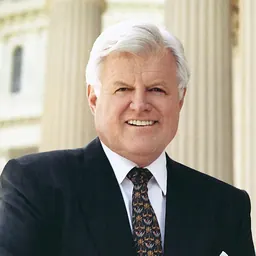
McCormack died in 1997, at age 73, of complications from lung cancer. His former political opponent Ted Kennedy, still serving at the time as Massachusetts's senior United States senator, fondly recalled their 1962 primary contest.
Don’t just read it —
keep it.
Full-length biographies made to live with: read them, listen on the way to work, watch them tonight.
- E-book
- Audio
- Video
Instant download · yours to keep · every purchase keeps this site free
Important facts
People in Edward J. McCormack, Jr.'s life
Named in this biography and alive at the same time





Related people
Same field, nearest in time


Contemporaries
People whose lives overlapped Edward J. McCormack, Jr.'s


Frequently asked questions
Who was Edward J. McCormack, Jr.?
American lawyer (1923-1997)
When was Edward J. McCormack, Jr. born?
Edward J. McCormack, Jr. was born on 29 August 1923 in Boston.
When did Edward J. McCormack, Jr. die?
Edward J. McCormack, Jr. died on 27 February 1997 in Boston.
What was Edward J. McCormack, Jr.'s occupation?
Edward J. McCormack, Jr. was a lawyer.
What nationality was Edward J. McCormack, Jr.?
Edward J. McCormack, Jr. was American.
Sources & further reading
· Wikipedia: Edward J. McCormack, Jr.
· DBpedia: Edward J. McCormack Jr.
Cite this page
APA: Biography.guide. (2026). Edward J. McCormack, Jr.. https://biography.guide/edward-j-mccormack-jr/
MLA: "Edward J. McCormack, Jr.." Biography.guide, https://biography.guide/edward-j-mccormack-jr/.
Chicago: "Edward J. McCormack, Jr.." Biography.guide. https://biography.guide/edward-j-mccormack-jr/.
Data last updated: 2026-09-20 · Spot an error? Report a correction.
Page generated 2026-09-27 05:18 UTC