
About Edward Haycock, Sr.
Lived 1790 – 1870 (aged 80). Edward Haycock, Sr. was a British architect.
Edward Haycock Sr. (29 July 1790 – 20 December 1870) was an English architect renowned for his work in the West Midlands and central and southern Wales during the late Georgian and early Victorian periods.
Biography Haycock was the grandson of William Haycock (1725–1802) of Shrewsbury and the son of John Hiram Haycock (1759–1830), who were architects and building contractors. He joined the family business after 1810 and assumed control following his father's death in 1830. Around 1845, he transitioned from building contracting to focus solely on architecture, with his son Edward Haycock Junior (1829/30-1882) later joining the practice and continuing it until about 1880.
On 13 February 1827, Haycock married Mary Hatton at St Sepulchre-without-Newgate, London and had three sons and four daughters.
In addition to his architectural career, Haycock was active in the political life of Shrewsbury as a Conservative. He served on the council for thirty-four years, became an alderman, and was mayor in 1842. He was a friend of the Shrewsbury architect John Carline and also of Dr Robert Waring Darwin, the father of the naturalist Charles Darwin. aged 80
Architectural career Lord Hill's column, Shrewsbury 1815. Designed by Edward Haycock and modified by Thomas Harrison.
Haycock professionally trained in London under Sir Jeffrey Wyattville, exhibiting at the Royal Academy between 1808 and 1810. He then rejoined his father in the family building firm, working as builder and architect until about 1845, when he became a full-time architect. Work for the Gwynne family of Monachty led to the planning of Aberaeron. He was appointed County Surveyor of Shropshire from 1834 to 1866.
Associations and style Haycock was part of a group of architects, including Thomas Farnolls Pritchard, Joseph Bromfield and John Carline, who established Shrewsbury as a major centre for architectural innovation in the later 18th and first half of the 19th century. This group gained many major architectural commissions in Shropshire and over much of Wales, despite competition from major London architects. Edward Haycock Snr specialised as a Gothic Revival architect.thumb Harbourmaster Hotel, Aberaeron His father had used the Ionic order very effectively on the ill-fated Shrewsbury Shirehall His churches tend to be more pedestrian, using a simplified Gothic, often with crocketed pinnacles on the towers. A departure from this is St Catherine's, Doddington, (a suburb of Whitchurch, Shropshire) 1836–7, which has an impressive Grecian revival facade.
Town of Aberaeron
Aberaeron was founded by Rev. Alban Thomas Jones Gwynne following an Act of Parliament in 1807, but it appears that town did not start to be laid out until about 1830. Edward Haycock was employed by Colonel A J Gwynne for supervising the building of houses and their layout in a grid plan around squares, including the principal one, Alban Square. In 1833, Samuel Lewis's “Topographical Dictionary of Wales” records “Upwards of thirty new leases have been granted, pursuant to which several houses have been already built, and others are already in progress; a general post-office, a posting-house and an excellent hotel have been established". The Town Hall (1833–35), which later became the Cardiganshire County Hall, a typical building in Haycock's style, soon followed. The building of the planned town continued until the 1850s with a house in Portland Place being dated 1855. The posting house mentioned by Lewis could be the Castle and the hotel could be the Harbourmaster Hotel. Haycock achieved a consistency of style throughout the project which results in the attractive appearance of Aberaeron today.
List of architectural work
Public buildings and monuments
Shrewsbury 1814–16: Lord Hill's Column at Shrewsbury (assisted by Thomas Harrison of Chester Shrewsbury, The Butter Market, Pride Hill, 1819–20, demolished 1830 – New Butter Market Shrewsbury, The Salop Infirmary, Monmouth, Shire Hall extension, c. 1830 Cardiff, The Market
A newspaper obituary states Haycock also "obtained first prizes for plans for the Birmingham and New Orleans Infirmaries" but these are not mentioned by Colvin.
Churches
Shropshire Shrewsbury St George, Frankwell 1829–32 Tilstock 1835 Whitchurch, St Catherine, Doddington. 1836-7 Cruckton 1840 Cressage 1841 Cound 1842-3 Bayston Hill 1843 Clun Chapel Lawn 1843 Hope 1843 Middleton-in-Chirbury 1843 Dorrington 1843-5 Newcastle 1848 Church Pulverbatch 1852-3 Christ Church Shelton and Oxon 1854
Staffordshire Tettenhall 1825
Breconshire Hay on Wye 1833-4
Cardiganshire Aberaeron 1835
Carmarthenshire Carmarthen St David. Llannon 1841
Ceredigion Aberaeron Aberystwyth St Michael 1830-3 St David's Church, Barmouth 1830
Glamorgan Caerphilly 1826 Tai Bach Margam 1827 Beulah Calvinistic Methodist Chapel, Groes, 1838
Merioneth Barmouth 1830
Monmouthshire Abersychan 1831-2 Trevethin St Thomas 1831-2 Lanvaud 1843
Montgomeryshire Machynlleth 1827
Country houses
Shropshire Onslow Hall 1815–20 – Remodelled house for John Wingfield Clungunford House.1825-8. For the Rev John Rocke. Netley Hall, Shropshire.1854-8.
Montgomeryshire Welshpool Rectory Churchstoke Vicarage. Enlarged 1846–7.
Radnorshire Stanage Park. Alterations 1845.
Gallery
Literature Colvin H. (2008) A Biographical Dictionary of British Architects 1600–1840. Yale University Press, 4th edition London. Lloyd T et al.(2006):Carmarthenshire and Ceredigion: The Buildings of Wales, Yale University Press. J Newman and N Pevsner, (2006), The Buildings of England: Shropshire, Yale. R Scourfield and R Haslam (2013, The Buildings of Wales: Powys; Montgomeryshire, Radnorshire and Breconshire, Yale University Press.
Don’t just read it —
keep it.
Full-length biographies made to live with: read them, listen on the way to work, watch them tonight.
- E-book
- Audio
- Video
Instant download · yours to keep · every purchase keeps this site free
Important facts
People in Edward Haycock, Sr.'s life
Named in this biography and alive at the same time

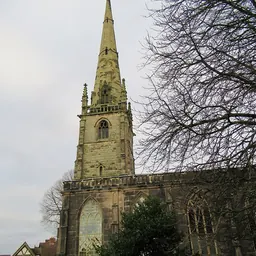

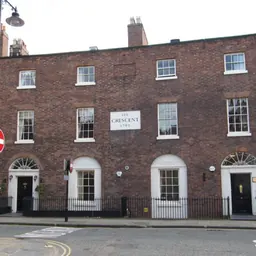

Related people
Same field, nearest in time


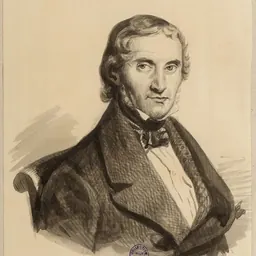

Contemporaries
People whose lives overlapped Edward Haycock, Sr.'s
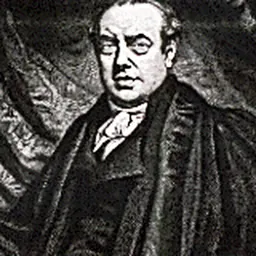


Frequently asked questions
Who was Edward Haycock, Sr.?
English architect (1790–1870)
When was Edward Haycock, Sr. born?
Edward Haycock, Sr. was born on 29 July 1790 in Shrewsbury.
When did Edward Haycock, Sr. die?
Edward Haycock, Sr. died on 20 December 1870 in Shrewsbury.
What was Edward Haycock, Sr.'s occupation?
Edward Haycock, Sr. was an architect.
What nationality was Edward Haycock, Sr.?
Edward Haycock, Sr. was British.
Sources & further reading
· Wikipedia: Edward Haycock, Sr.
Cite this page
APA: Biography.guide. (2026). Edward Haycock, Sr.. https://biography.guide/edward-haycock-sr/
MLA: "Edward Haycock, Sr.." Biography.guide, https://biography.guide/edward-haycock-sr/.
Chicago: "Edward Haycock, Sr.." Biography.guide. https://biography.guide/edward-haycock-sr/.
Data last updated: 2026-09-20 · Spot an error? Report a correction.
Page generated 2026-09-27 05:26 UTC