
About Edward Hawke, 1st Baron Hawke
Lived 1705 – 1781 (aged 76). Edward Hawke, 1st Baron Hawke was a British politician and naval officer.
Admiral of the Fleet Edward Hawke, 1st Baron Hawke, (21 February 1705 – 17 October 1781) was a Royal Navy officer and politician. As captain of the third-rate , he took part in the Battle of Toulon in February 1744 during the War of the Austrian Succession. He also captured six ships of a French squadron in the Bay of Biscay in the Second Battle of Cape Finisterre in October 1747.
Hawke went on to achieve a victory over a French fleet at the Battle of Quiberon Bay in November 1759 during the Seven Years' War, preventing a French invasion of Britain. He developed the concept of a Western Squadron, keeping an almost continuous blockade of the French coast throughout the war.
Hawke also sat in the British House of Commons from 1747 to 1776 and served as First Lord of the Admiralty for five years between 1766 and 1771. In this post, he was successful in bringing the navy's spending under control and also oversaw the mobilisation of the navy during the Falklands Crisis in 1770.
Early life Hawke was the only son of Edward Hawke, a barrister of Lincoln's Inn, and his wife Elizabeth Bladen, a daughter of Nathaniel Bladen of Hemsworth in Yorkshire, and widow of Col. Ruthven.
Hawke joined the navy as a volunteer in the sixth-rate on the North American Station in February 1720. Promoted to lieutenant on 2 June 1725, he transferred to the fifth-rate on the West Coast of Africa later that month, to the fourth-rate in the Channel Squadron in April 1729 and to the fourth-rate in November 1729.
Battle of Toulon
Hawke became commanding officer of the third-rate in June 1743: he did not see action until the Battle of Toulon in February 1744 during the War of the Austrian Succession. The fight at Toulon was extremely confused, although Hawke had emerged from it with a degree of credit. While not a defeat for the British, they had failed to take an opportunity to comprehensively defeat the Franco-Spanish fleet when a number of British ships had not engaged the enemy, leading to a mass court martial. Hawke's ship managed to capture the only prize of the battle, the Spanish ship Poder, although it was subsequently destroyed by the French. He was then given command of the second-rate in August 1745. and appointed second-in-command of the Western Squadron, with his flag in the fourth-rate in August 1747. He went on to replace Vice-Admiral of the White Sir Peter Warren as the Commander-in-Chief, English Channel in charge of the Western Squadron, with his flag in the third-rate , in October 1747. Hawke then put a great deal of effort into improving the performance of his crews and instilling in them a sense of pride and patriotism. The Western Squadron had been established to keep a watch on the French Channel ports. Under a previous commander, Lord Anson, it had successfully contained the French coast and in May 1747 won the First Battle of Cape Finisterre when it attacked a large convoy leaving harbour.
The British had received word that there was now an incoming convoy arriving from the West Indies. Hawke took his fleet and lay in wait for the arrival of the French. In October 1747, Hawke captured six ships of a French squadron in the Bay of Biscay in the Second Battle of Cape Finisterre. The consequence of this, along with Anson's earlier victory, was to give the British almost total control in the English Channel during the final months of the war. It proved ruinous to the French economy, helping the British to secure an acceptable peace at the negotiations for the Treaty of Aix-la-Chapelle.
Peace
For Hawke, however, the arrival of peace brought a sudden end to his opportunities for active service. In December 1747, he was elected as a Member of Parliament for the naval town of Portsmouth, which he was to represent for the next thirty years. Promoted to Vice-Admiral of the Blue on 26 May 1748, and was recalled as Port Admiral at Portsmouth in 1755. This in turn further worsened relations between Britain and France, bringing them to the brink of declaring war. France would continue to demand the return of the captured merchant ships throughout the coming war. By early 1756, after repeated clashes in North America, and deteriorating relations in Europe, the two sides were formally at war. Hawke then spent three months cruising off Menorca and Marseille before returning home where he gave evidence against Byng. Hawke was subsequently criticised by some of Byng supporter's for not having blockaded either Menorca or Toulon. He was promoted to Admiral of the Blue on 24 February 1757. Hawke then offered an ultimatum – either the Generals attacked immediately or he would sail for home. His fleet was needed to protect an inbound convoy from the West Indies, and could not afford to sit indefinitely off Rochefort. Mourdaunt hastily agreed, and the expedition returned to Britain without having made any serious attempt on the town. The failure of the expedition led to an inquiry which recommended the court-martial of Mordaunt, which commenced on 14 December 1757 and at which he was acquitted.
In 1758 Hawke directed the blockade of Brest for six months. In 1758 he was involved in a major altercation with his superiors at the Admiralty which saw him strike his flag and return to port over a misunderstanding at which he took offence. Although he later apologised, he was severely reprimanded. In Hawke's absence the Channel Fleet was placed under the direct command of Lord Anson.
Battle of Quiberon Bay
In May 1759 Hawke was restored to the command of the Western Squadron. He won a sufficient victory in the Battle of Quiberon Bay, that when combined with Admiral of the Blue Edward Boscawen's victory at the Battle of Lagos, the French invasion threat was eliminated. Although he had effectively put the French channel fleet out of action for the remainder of the war, Hawke was disappointed he had not secured a more comprehensive victory, asserting that had he had two more hours of daylight the whole French fleet would have been captured.
Blockade of Brest
Although Hawke's victory at Quiberon Bay ended any immediate hope of a major invasion of Great Britain, the French continued to entertain hopes of a future invasion for the remainder of the war, which drove the British to keep a tight blockade on the French coast. This continued to starve French ports of commerce, further weakening France's economy. After a spell in England, Hawke returned to take command of the blockading fleet off Brest. The British were now effectively mounting a blockade of the French coast from Dunkirk to Marseille. Hawke attempted to destroy some of the remaining French warships, which he had trapped in the Vilaine Estuary. He sent in fire ships, but these failed to accomplish the task. Hawke developed a plan for landing on the coast, seizing a peninsula, and attacking the ships from land. However, he was forced to abandon this when orders reached him from Pitt for a much larger expedition.
Capture of Belle Île
In an effort to further undermine the French, Pitt had conceived the idea of seizing the island of Belle Île, off the coast of Brittany and asked the navy to prepare for an expedition to take it. Hawke made his opposition clear in a letter to Anson, which was subsequently widely circulated. Pitt was extremely annoyed by this, considering that Hawke had overstepped his authority. Nonetheless, Pitt pressed ahead with the expedition against Belle Île. An initial assault in April 1761 was repulsed with heavy loss but, reinforced, the British successfully captured the island in June. Although the capture of the island provided another victory for Pitt and lowered the morale of the French public by showing that the British could now occupy parts of Metropolitan France, Hawke's criticisms of its strategic usefulness were borne out. It was not a useful staging point for further raids on the coast and the French were not especially concerned about its loss, telling Britain during subsequent peace negotiations that they would offer nothing in exchange for it and Britain could keep it if they wished.
First Lord of the Admiralty
Hawke then retired from active duty, being promoted to Admiral of the White on 21 October 1762 and being appointed Rear-Admiral of Great Britain on 4 January 1763 and Vice-Admiral of Great Britain on 5 November 1765. He was made First Lord of the Admiralty in the Chatham ministry in December 1766 and promoted to Admiral of the Fleet on 15 January 1768. During his time as First Lord, Hawke was successful in bringing the navy's spending under control. He also oversaw the mobilisation of the navy during the Falklands Crisis in 1770 and was then succeeded as First Lord by Lord Sandwich in January 1771.
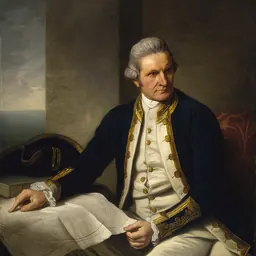
Hawke was influential in the decision to give Captain James Cook command of his first expedition that left in 1768. When at a meeting in the Royal Geographical Society it was suggested that a civilian should lead the expedition, Hawke is supposed to have remarked that he would sooner have his right hand cut off than allow this to happen. Cook named a series of prominent places that he came across in the 'New World' after Hawke as a sign of his gratitude.
Final years
Hawke was created Baron Hawke "of Towton" (in which Yorkshire parish was situated his residence of Scarthingwell Hall, inherited by his wife ) on 20 May 1776. Towards the end of his life he had his country house built in Sunbury-on-Thames and lived alternately there and at a rented home in North Stoneham, Hampshire. He died at his house in Sunbury-on-Thames on 17 October 1781 and was buried at St Nicolas Church, North Stoneham.
Cultural references His memorial, carved by John Francis Moore and depicting the Battle of Quiberon Bay, is in St. Nicolas' Church, North Stoneham.
In Robert Louis Stevenson's 1883 novel Treasure Island, Long John Silver claims that he used to serve in the Royal Navy and lost his leg under "the immortal Hawke".
Places named after Hawke include: Australia Cape Hawke in New South Wales. New Zealand Hawke Bay and subsequently Hawke's Bay Region in the North Island. Canada Hawke's Bay, Newfoundland and Labrador. Port Hawkesbury, Nova Scotia.
In addition to his naval and political career, Hawke was listed as an original member of Boodle's in 1762.
Royal Navy ships named in Hawke's honour The 74-gun launched in 1820. built in 1891.
Marriage and issue In 1737 he married Catherine Brooke, the only daughter and sole heiress of Walter Brooke (1695-1722) of Burton Hall, Gateforth near Hull in Yorkshire, by his wife Catherine Hammond (d.1721) daughter and heiress of William Hammond of Scarthingwell Hall, Hawke made his home at Scarthingwell Hall and took for his barony the territorial designation "of Towton" from the parish in which it was situated. By his wife he had three sons and one daughter, who survived, and three children who died in infancy.
Don’t just read it —
keep it.
Full-length biographies made to live with: read them, listen on the way to work, watch them tonight.
- E-book
- Audio
- Video
Instant download · yours to keep · every purchase keeps this site free
Important facts
People in Edward Hawke, 1st Baron Hawke's life
Named in this biography and alive at the same time
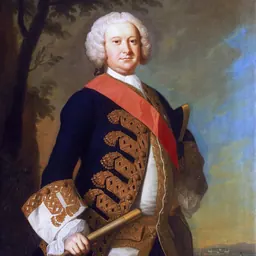
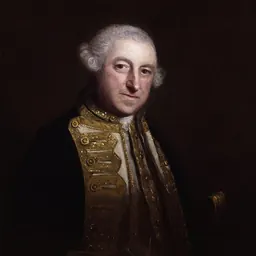




Related people
Same field, nearest in time
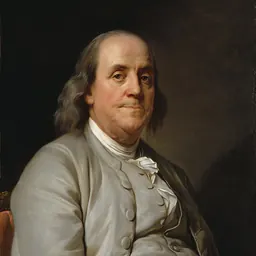

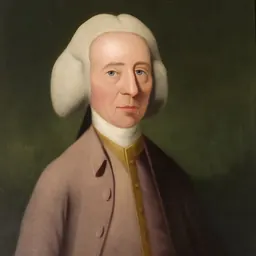


Contemporaries
People whose lives overlapped Edward Hawke, 1st Baron Hawke's

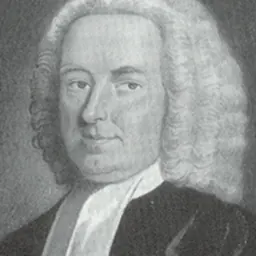


Frequently asked questions
Who was Edward Hawke, 1st Baron Hawke?
Royal Navy admiral (1705-1781)
When was Edward Hawke, 1st Baron Hawke born?
Edward Hawke, 1st Baron Hawke was born on 21 February 1705 in London.
When did Edward Hawke, 1st Baron Hawke die?
Edward Hawke, 1st Baron Hawke died on 17 October 1781 in Sunbury-on-Thames.
What was Edward Hawke, 1st Baron Hawke's occupation?
Edward Hawke, 1st Baron Hawke was a politician and naval officer.
What nationality was Edward Hawke, 1st Baron Hawke?
Edward Hawke, 1st Baron Hawke was British.
Sources & further reading
· Wikipedia: Edward Hawke, 1st Baron Hawke
· DBpedia: Edward Hawke, 1st Baron Hawke
Cite this page
APA: Biography.guide. (2026). Edward Hawke, 1st Baron Hawke. https://biography.guide/edward-hawke-1st-baron-hawke/
MLA: "Edward Hawke, 1st Baron Hawke." Biography.guide, https://biography.guide/edward-hawke-1st-baron-hawke/.
Chicago: "Edward Hawke, 1st Baron Hawke." Biography.guide. https://biography.guide/edward-hawke-1st-baron-hawke/.
Data last updated: 2026-09-20 · Spot an error? Report a correction.
Page generated 2026-09-27 05:19 UTC