
About Edward H. Tarrant
Lived 1799 – 1858 (aged 58–59). Edward H. Tarrant was an American politician.
Edward H. Tarrant (1796 – August 2, 1858) was an American politician and general. He served in the Texas House of Representatives during both periods. Tarrant County, whose county seat is Fort Worth, was named after him.
Early life and education Tarrant was a veteran of the War of 1812, taking part in the Battle of New Orleans (1814–15) at age 19, probably as a private in the Kentucky state militia. Having moved to Tennessee, he was elected a colonel of the Tennessee state militia, in the frontier environment. By 1827, Tarrant had become a sheriff of Henry County, Tennessee, but he moved to Texas by the early 1830s and established a ranch in Red River County. He became one of the most prosperous landowners, and he owned slaves.
Career In September 1837, Tarrant was elected to represent Red River County in the House of Representatives of the Second Texan Congress; but after a few months, he resigned to serve the republic by directing ranger activities against the Indians in 1838. In 1838–39, he served as chief justice in Red River County and was elected Brigadier-general of a northeast Texas militia unit called the Fourth Brigade. Tarrant's Indian-fighting career culminated in the Battle of Village Creek, east of present-day Fort Worth, in May 1841. In the battle, fellow county namesake John B. Denton was killed, and now Denton and Denton County in Texas are named in memorial to him.
In 1843, Tarrant, along with George W. Terrell, negotiated the Treaty of Bird's Fort with nine tribes of Native Americans.
Tarrant served two terms in the state House of Representatives, between 1849 and 1853. In April 1851, he married Mary Danforth, a 19 year old at the time. The couple resided on Chambers Creek near Italy, Ellis County, Texas.
As fighting Indians had become his specialty, in 1857, Tarrant moved part of his household to Fort Belknap in present-day Young County. He led a "go-to" fighting force to protect settlers in that locale from frequent Indian uprisings.
Later life and death In 1857, Tarrant began moving part of his household to Fort Belknap. On one of his journeys, General Tarrant fell ill and died on August 2, 1858, at the home of William Fondren, which is 10 miles from Weatherford, Texas, in Parker County. He was initially interred in the William Fondren family cemetery. On January 28, 1859, Tarrant's remains were moved to a grave on his Chambers Creek family farm in Ellis County, Texas. Tarrant's final resting place, effective March 3, 1928, is Pioneers Rest Cemetery in Fort Worth, Texas, the seat of his namesake county.
Tarrant's widow later married James Emerson Hawkins, a settler of Midlothian, Texas.
Don’t just read it —
keep it.
Full-length biographies made to live with: read them, listen on the way to work, watch them tonight.
- E-book
- Audio
- Video
Instant download · yours to keep · every purchase keeps this site free
Important facts
Related people
Same field, nearest in time
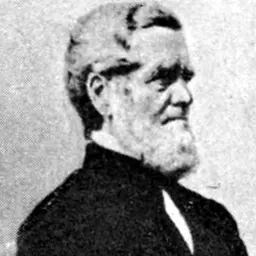

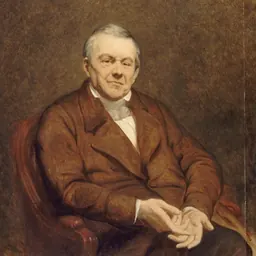


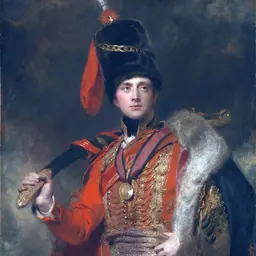
Contemporaries
People whose lives overlapped Edward H. Tarrant's






Frequently asked questions
Who was Edward H. Tarrant?
general who served in the Republic of Texas Militia
When was Edward H. Tarrant born?
Edward H. Tarrant was born in 1799 in Bamberg County.
When did Edward H. Tarrant die?
Edward H. Tarrant died on 2 August 1858 in Parker County.
What was Edward H. Tarrant's occupation?
Edward H. Tarrant was a politician.
What nationality was Edward H. Tarrant?
Edward H. Tarrant was American.
Sources & further reading
· Wikipedia: Edward H. Tarrant
Cite this page
APA: Biography.guide. (2026). Edward H. Tarrant. https://biography.guide/edward-h-tarrant/
MLA: "Edward H. Tarrant." Biography.guide, https://biography.guide/edward-h-tarrant/.
Chicago: "Edward H. Tarrant." Biography.guide. https://biography.guide/edward-h-tarrant/.
Data last updated: 2026-09-20 · Spot an error? Report a correction.
Page generated 2026-09-27 05:30 UTC