
About Edward Gibbons
Lived 1568 – 1650 (aged 81–82). Edward Gibbons was an English musician.
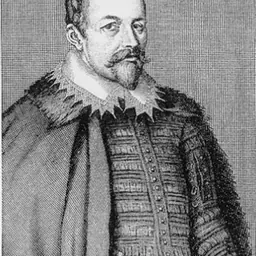
Edward Gibbons (bapt. 21 March 1568 – in or before July 1650) was an English choirmaster and composer of the late Renaissance and early Baroque periods. Born in Cambridge, Gibbons's youth is completely unknown, but he later received degrees from the Universities of Cambridge and Oxford. From 1591/92 to 1598 he worked at King's College, Cambridge, as a lay clerk and choirmaster. During his tenure he married Jane, with whom he had six children. Gibbons's whereabouts the next few years remain uncertain; he may have lived in Acton, Bristol or Exeter, but by 1607 he was the choirmaster of the Exeter Cathedral, where the choristers included Matthew Locke. By 1609 Gibbons received a special dispensation to become a priest vicar, becoming the head of the college of priest-vicars and succentor. Jane died in 1628, and Edward married Mary Bluet; the family was evicted from their home during the English Civil War, but moved to their estate in Dunsford.
A few compositions of Gibbons survive: an organ prelude, two verse anthems, two works for viol consorts, and some sacred music. Of these, commentators have mainly praised the verse anthems, How hath ye City sate solitary and What Strikes the Clocke? Musicologist John Harley called the former particularly moving, and it was likely written for the 1603 London plague outburst to which Gibbons's brother Ellis may have succumbed to. Edward is the elder brother of the better-known Orlando; after the early deaths of Orlando and his wife, Edward cared for their son, Christopher, who also became a noted composer.
Life and career Youth and education Edward Gibbons was born to William and Mary ( 1603) Gibbons in Cambridge and baptised on 21 March 1568 at Church of St Mary the Great, Cambridge. At the time early baptisms were commonplace, so his actual date of birth was likely shortly before 21 March. He was the first surviving son of a musical family, where his father William was a member of the Cambridge waits. His brother Ellis was born 1573 and later became a composer, while 1581/82 saw the birth of Ferdinando, who eventually took William's place as wait. Orlando, who would become the most famous musician of the family, was born in 1583 in Oxford, although Edward and Ellis were still living in Cambridge at that time. Nothing is known of Edward Gibbons's childhood education.
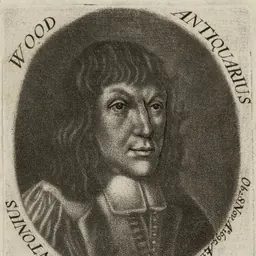
The 17th-century biographer Anthony Wood reported that he received a Bachelor of Music from the University of Cambridge and that he was "incorporated in the same degree" at the University of Oxford on 7 July 1592. Records indicate that from at least March 1591/92 and until the Michaelmas term of 1598 he worked as a lay clerk at King's College, Cambridge. He was also choirmaster there—succeeding Thomas Hammond—for about the same period, during which Orlando was a choirboy at some point. By 1596, Edward married Jane, a wealthy woman related a to an otherwise unknown 'Lord Spencer'. The couple had six children: Robert (bapt. 1 July 1597, perhaps died in infancy); Mary (bapt. 11 April 1599); Jane; Joan (buried 19 June 1627); William (bapt. 24 October 1607); and Murrey (buried 28 February 1636).
Exeter and later life
By 1598, Hammond likely resumed his position as choirmaster, with Gibbons's subsequent whereabouts being uncertain for a few years. At no point was he the organist of Bristol Cathedral as Wood and other early biographies record. Modern musicologists do not accept this claim since the detailed surviving records of Bristol do not include Gibbons's name. Musicologist Edmund Fellowes noted, however, that "It is not impossible that he may have been organist of one of the city churches in Bristol, for the tradition is of early origin". Gibbons is known to have lived in Exeter by 1607, as his son William was baptised there on 24 October 1607. Gibbons's mother died in April 1603, and his brother Ellis two months later; in Ellis's will, Edward Gibbons is recorded as "of Acton", presumably Acton, London. However, no records of his activity there exist, and it is possible that 'Acton' is a typo for 'Exeter', meaning that Gibbons could have settled in Exeter as early as 1603. William Cotton had become Bishop of Exeter on 12 November 1598, and according to 18th-century historian John Walker, Cotton urged Gibbons to come to Exeter Cathedral at this time. This suggests Gibbons moved to Exeter immediately after his 1598 leave from King's, which would create a logical chronology of this period. From 25 June 1608 on, Gibbons taught choristers at the Exeter Cathedral, with a salary of 50 and a quarter shillings split between him and the organist John Lugge. From 1638 to 1641, and perhaps earlier, the future composer Matthew Locke was among his choristers. Records suggest that Gibbons often put his subordinate Greenwood Randall in charge. Some of Gibbons's few surviving compositions were probably written by this time.
On 8 August 1609 Gibbons became a vicar—a parish priest, as opposed to a rector—for Exeter. Because he was a layman, a special dispensation was required (submitted on 25 March 1609), which described him as "unmatched skill and skill in music and singing". (Translated as "unmatched skill and skill in music and singing" from the original Latin: "" while Consortium5 recorded Nomine.)
Works + List of compositions by Edward Gibbons Title Genre Instrumentation Key Manuscript source: Folios RISM No. Prelude Prelude Organ D minor BL. Harleian MS ff. 193v–194r How hath ye City sate solitary Verse anthem Two alto soloists, choir and orchestra D minor BL. Harleian MS 7340 ff. 194r–199v Commandments and Creed, and Credo Credo ? Christ Church, Oxford Mus. 1220–1224 – Awake and arise Verse anthem Three voices G major Christ Church, Oxford Mus. 43, f. 24r Nomine Consort (In Nomine) Five viols ? Bodleian Library, Mus Sch. d.212–216 – What Strikes the Clocke? Consort Three viols A minor Durham Dean and Chapter Library MS 33 No other works by Edward Gibbons survive
Don’t just read it —
keep it.
Full-length biographies made to live with: read them, listen on the way to work, watch them tonight.
- E-book
- Audio
- Video
Instant download · yours to keep · every purchase keeps this site free
Important facts
People in Edward Gibbons's life
Named in this biography and alive at the same time


Related people
Same field, nearest in time


Contemporaries
People whose lives overlapped Edward Gibbons's




Frequently asked questions
Who was Edward Gibbons?
English musician
When was Edward Gibbons born?
Edward Gibbons was born in 1568.
When did Edward Gibbons die?
Edward Gibbons died in 1650.
What was Edward Gibbons's occupation?
Edward Gibbons was a musician.
What nationality was Edward Gibbons?
Edward Gibbons was English.
Sources & further reading
Cite this page
APA: Biography.guide. (2026). Edward Gibbons. https://biography.guide/edward-gibbons/
MLA: "Edward Gibbons." Biography.guide, https://biography.guide/edward-gibbons/.
Chicago: "Edward Gibbons." Biography.guide. https://biography.guide/edward-gibbons/.
Data last updated: 2026-09-20 · Spot an error? Report a correction.
Page generated 2026-09-27 05:28 UTC