
About Edward Ford
Lived 1605 – 1670 (aged 65). Edward Ford was a soldier and inventor.
Sir Edward Ford (22 April 1605 – 3 September 1670), was a member of the West Sussex gentry and inventor, who fought for the Royalists in the Wars of the Three Kingdoms. In his "History of the Rebellion", Clarendon judged that while 'a man of honesty and courage', Ford lacked experience of war and was an ineffectual soldier. However, he proved a reliable and trustworthy agent during negotiations between Charles I and Parliament in the period leading up to the 1648 Second English Civil War.
Personal details Edward Ford was born on the family estates at Uppark, near Harting, West Sussex, eldest son of Sir William Ford (1570- 1653) and Anna Carell (1575-1658). He had an elder sister Magdalen (1604-?), and two younger brothers, John (1606-1681) and William (1608-?).
Sometime before 1634 he married Sarah Ireton, sister of Puritan radical and future Parliamentarian general Henry Ireton. They had one surviving daughter Katherine (1634 to 1682).
Career
He became a gentleman-commoner of Trinity College, Oxford, in 1621, but left the university without taking a degree. Charles I gave him a colonel's commission on the outbreak of the war, and in 1642 made him High Sheriff of Sussex. According to Vicars he offered his majesty "a thousand men, and to undertake the conquest of Sussex, though sixty miles in length." He began to raise forces accordingly, and on 18 November 1642 the House of Commons ordered him to be apprehended. After previously capturing the city of Chichester for the King, on the first week of December 1642 on Muster Green in Haywards Heath in Sussex, Ford was the leader of the Royalist army at the Battle of Muster Green, and lost the battle, whereupon he retreated back through Sussex to Chichester. Sir William Waller, after taking Winchester and Arundel Castle, besieged Chichester, which Ford surrendered eight days later (29 December) Ford soon afterwards obtained his release by the interest of his wife, Sarah, with her brother, General Henry Ireton. On 4 October 1643 he was knighted by Charles I at Oxford.
Ford commanded a regiment of horse under Lord Hopton, to whom he proposed the recapture of Arundel Castle. Hopton took it after three days' siege (19 December 1643). Ford was left in command by Hopton, with a garrison of above two hundred men and many good officers, but, Clarendon says, he had insufficient experience, although "a man of honour and courage". After a siege of seventeen days the garrison surrendered "at mercy", Ford and Sir Edward Bishop presenting themselves to Sir William Waller on 6 January 1643–4 as hostages for the delivery of the castle, both thus becoming his prisoners for the second time. They were declared by parliament on 9 October 1644 to be incapable of any employment. Ford was imprisoned in the Tower of London, from which in December he escaped. He then retired to the continent. In 1647 the queen, knowing his relationship with Ireton, sent him to England to join Sir John Berkeley in a futile negotiation with the army.
Family Ford's only daughter, Katharine, married first to Alexander Colepeper, son of John Colepeper, 1st Baron Colepeper by his first wife Philippa Snelling. Alexander was born c. 1629 and died without issue: Katharine was granted administration of his estate in 1660.
By Katharine's second marriage, to Ralph Grey, 2nd Baron Grey of Werke, Up Park became the property of the earls of Tankerville until it was sold in 1745.
Don’t just read it —
keep it.
Full-length biographies made to live with: read them, listen on the way to work, watch them tonight.
- E-book
- Audio
- Video
Instant download · yours to keep · every purchase keeps this site free
Important facts
People in Edward Ford's life
Named in this biography and alive at the same time
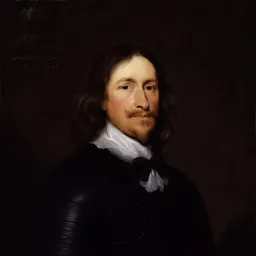



Related people
Same field, nearest in time

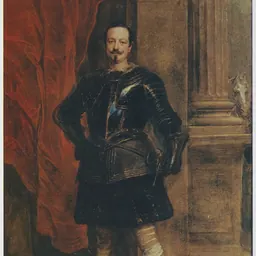
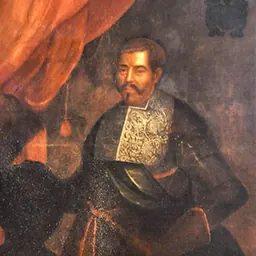
Contemporaries
People whose lives overlapped Edward Ford's





Frequently asked questions
Who was Edward Ford?
English soldier and inventor
When was Edward Ford born?
Edward Ford was born on 22 April 1605 in Uppark.
When did Edward Ford die?
Edward Ford died on 3 September 1670 in Ireland.
What was Edward Ford's occupation?
Edward Ford was a soldier and inventor.
Sources & further reading
· DBpedia: Edward Ford (soldier)
Cite this page
APA: Biography.guide. (2026). Edward Ford. https://biography.guide/edward-ford-soldier/
MLA: "Edward Ford." Biography.guide, https://biography.guide/edward-ford-soldier/.
Chicago: "Edward Ford." Biography.guide. https://biography.guide/edward-ford-soldier/.
Data last updated: 2026-09-20 · Spot an error? Report a correction.
Page generated 2026-09-27 05:20 UTC