
Edward F. Lawson
English newspaper manager and army officer
About Edward F. Lawson
Lived 1890 – 1963 (aged 73). Edward F. Lawson was a British military personnel, politician, ministry of Information (United Kingdom), the Daily Telegraph and war Office.
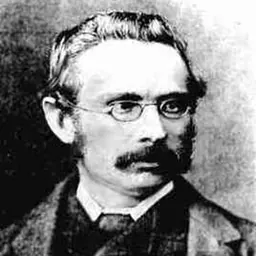
Major-General Edward Frederick Lawson, 4th Baron Burnham, (16 June 1890 – 4 July 1963) was a British newspaper executive and Territorial Army officer who served with distinction in both World Wars.
Early life and family Lawson was born on 16 June 1890, the eldest son of Colonel William Levy-Lawson (1864–1943) and his wife Sibyl Mary Marshall, eldest daughter of Lt-Gen Sir Frederick Marshall. His father was the younger son of Edward Levy-Lawson, 1st Baron Burnham, the proprietor of The Daily Telegraph, and had served in the Scots Guards and then in the part-time Royal Buckinghamshire Yeomanry (Royal Bucks Hussars), with which he had won a Distinguished Service Order (DSO) during the Second Boer War. His first cousin was Mrs Dorothy Coke (née Levy-Lawson, died 1937), wife of Major Sir John Coke (died 1957). His daughter Lucia wrote a book about Hall Barn, her home from age 11 and the seat of the Baron Burnham family.
Edward Lawson was educated at Eton College and Balliol College, Oxford, where he obtained a third-class degree in modern history in 1913 and played polo for the university. a cavalry regiment of the recently created Territorial Force (TF), of which his father became honorary colonel in 1913.
On leaving Oxford, Lawson joined the family newspaper, The Daily Telegraph, as a reporter, first in Paris and then in New York. On the outbreak of war in 1914 he returned to the UK to serve with the Royal Bucks Hussars.
2nd Mounted Division landed at Suvla Bay on the night of 17/18 August, with Lawson acting as landing officer. On reaching Chocolate Hill they paused to reorganise before moving on towards Scimitar Hill through blinding dust and smoke, with little idea of what they were supposed to do and suffering heavy casualties. Most of the division halted at Green Hill, but Brigadier-General Lord Longford led his 2nd South Midland Mounted Brigade (including the Royal Bucks Hussars) in a charge over Green Hill and up to the summit of Scimitar Hill. Longford was killed, and his men were finally driven from the summit.
The casualties at Scimitar Hill had been so severe, and manpower wastage through the summer was so heavy, that the 2nd South Midland Mounted Brigade had to be temporarily reorganised as a single regiment, and was evacuated to Egypt in November for rest and recuperation, where it was reunited with its horses. The regiment then transferred to the Yeomanry Mounted Division and fought with it in the Third Battle of Gaza and at the Battle of Mughar Ridge, where it participated in a notable mounted charge. It was involved in Allenby's entry into Jerusalem. During the final pursuit towards Damascus, Lawson's regiment was lent to T. E. Lawrence, under whose orders it charged the enemy rear and drove them into a trap, completing the destruction of the Turkish Fourth Army.
During the war Lawson was awarded a Distinguished Service Order, Military Cross and three mentions in despatches.
Newspaperman After the war, Lawson returned to the Daily Telegraph, where he was known as 'The Colonel', and served as effective second-in-command to his uncle Harry Levy-Lawson, 2nd Baron Burnham, who had inherited the newspaper and been created Viscount Burnham. On 28 January 1920 he married Marie Enid Robson, only daughter of Hugh Scott Robson.
Unusually for a Territorial officer, he was appointed Commander, Royal Artillery (CRA), of 48th (South Midland) Division in 1938, with the rank of Brigadier. When the Germans invaded France and the Low Countries in May, the BEF moved forward to occupy pre-planned positions in Belgium, but the rapid German breakthrough into France caused it to retreat towards Dunkirk.
On 23 May, 48th Division was pulled out to form a new defence line along the canal between Saint-Omer and the coast. Lawson was sent with 'X Force' of artillery, machine guns and infantry ahead of the division to occupy the chosen positions. However, the unexpected surrender of Belgian forces on 27 May 1940 led to a gap appearing between 48th Division in action around Saint-Omer and the coast at Nieuwpoort. Until II Corps could arrive to plug this gap, Lawson was responsible for what the Official History calls 'the most dangerously exposed part of the bridgehead'. He was ordered by the commander of the Dunkirk perimeter, Lt-Gen Ronald Adam to improvise a defence line along the canal and prevent the Germans breaking through to the vital beaches east of Dunkirk where much of the BEF was waiting to be evacuated. At 11.00 on 28 May, advanced German troops reached the canal line, but Lawson seized on the Territorial gunners of 53rd (London) Medium Regiment, Royal Artillery, who were marching towards Dunkirk having fired off all their ammunition and destroyed their guns. Together with detachments of Regular gunners from 2nd Medium Regiment and 1st Heavy Anti-Aircraft Regiment, and sappers from 7th Field Company Royal Engineers, they fought as infantry to hold the line. They came under heavy mortar and machine-gun fire, and the Germans seized a bridgehead at Nieuwpoort, but all subsequent attacks that day were repulsed. Lawson's scratch force was relieved next day and then evacuated to Britain.
Lawson was appointed a Companion of the Order of the Bath for distinguished service in this campaign.
In February 1941 he was promoted to the acting rank of major-general and appointed General Officer Commanding (GOC) of the new Yorkshire County Division, responsible for three independent infantry brigades that had been organised for home defence from newly raised battalions of conscripts.
On the death of his father on 14 June 1943, Edward Lawson succeeded as 4th Baron Burnham of Hall Barn, Beaconsfield, Buckinghamshire, and as the 4th Baronet. and permanent in 1945.
Postwar Lord Burnham returned to the Daily Telegraph as managing director in 1945, remaining in the post until his retirement in 1961. motto = Of Old I Hold
Don’t just read it —
keep it.
Full-length biographies made to live with: read them, listen on the way to work, watch them tonight.
- E-book
- Audio
- Video
Instant download · yours to keep · every purchase keeps this site free
Important facts
People in Edward F. Lawson's life
Named in this biography and alive at the same time






Related people
Same field, nearest in time



Contemporaries
People whose lives overlapped Edward F. Lawson's

Frequently asked questions
Who was Edward F. Lawson?
English newspaper manager and army officer (1890-1963)
When was Edward F. Lawson born?
Edward F. Lawson was born on 16 June 1890 in Mayfair.
When did Edward F. Lawson die?
Edward F. Lawson died on 4 July 1963 in Middlesex Hospital.
What was Edward F. Lawson's occupation?
Edward F. Lawson was a military personnel, politician, ministry of Information (United Kingdom), the Daily Telegraph and war Office.
What nationality was Edward F. Lawson?
Edward F. Lawson was British.
Sources & further reading
· DBpedia: Edward Lawson, 4th Baron Burnham
Cite this page
APA: Biography.guide. (2026). Edward F. Lawson. https://biography.guide/edward-f-lawson/
MLA: "Edward F. Lawson." Biography.guide, https://biography.guide/edward-f-lawson/.
Chicago: "Edward F. Lawson." Biography.guide. https://biography.guide/edward-f-lawson/.
Data last updated: 2026-09-20 · Spot an error? Report a correction.
Page generated 2026-09-27 05:11 UTC