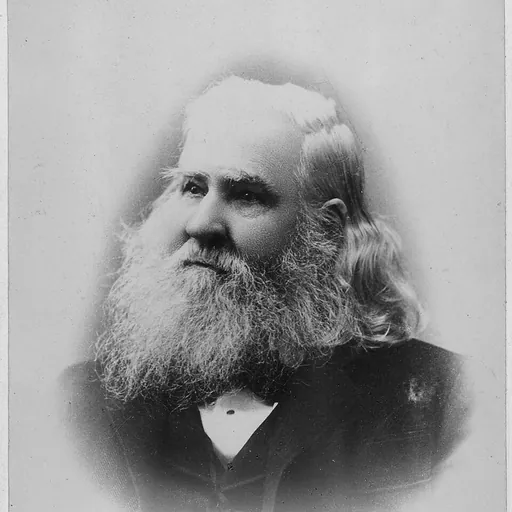
About Edward Cridge
Lived 1817 – 1913 (aged 95–96). Edward Cridge was a British and Canadian anglican priest.
Edward Cridge (December 17, 1817 – May 5, 1913) was a British-Canadian clergyman and social reformer. Born and raised in England and ordained in the Church of England, Cridge—a low church evangelical Anglican—disagreed with the then-ascendant high church movement in Anglicanism. Offered a new opportunity, he and his wife, Mary, migrated to the then-frontier outpost of Fort Victoria on Vancouver Island in 1855, where he was appointed to lead the congregation that eventually became known as Christ Church Cathedral. He also became a prominent advocate for the poor and underprivileged in the fast-growing city of Victoria. Cridge was the first superintendent of schools on Vancouver Island, and alongside Mary he was responsible for the creation of many of Victoria's nonprofit institutions. Among these organizations were the Protestant Orphans' Home (later renamed the Cridge Center for the Family, British Columbia's oldest continuously operating nonprofit organization) and the Royal Jubilee Hospital.
As an Anglican clergyman, Cridge was the first dean of the Diocese of British Columbia until 1874, when Bishop George Hills suspended his ministry in the Anglican church due to Cridge's vocal disagreement with Hills' views of ritualism. After his suspension and departure from the Anglican church, Cridge founded the Church of Our Lord in Victoria, after which became the first Canadian bishop of the newly formed Reformed Episcopal Church. Cridge was the rector of the Church of Our Lord until 1895 and remained active in Victoria's religious and civic affairs until his death in 1913.
Early life and education Cridge was born in 1817 in the Devonshire village of Bratton Fleming to John Cridge, a schoolmaster, and Grace Dyer Cridge. After working as a schoolmaster for some years, he entered Peterhouse, Cambridge, in his late 20s and studied for the clergy. He was ordained to the diaconate in 1848 and then as a priest in 1850, holding curacies at North Walsham, Norfolk, and then West Ham, where he met his future wife Mary Winmill.
During his West Ham curacy, the evangelical Cridge resisted the ascendant high church liturgy of the Oxford Movement, believing it hewed too close to Roman Catholicism. Some members of the West Ham church believed Cridge was promoting Calvinist doctrine and complained to the dean. The dean, himself an Anglo-Catholic, sought to solve the problem by recommending Cridge for a post as chaplain at Fort Victoria, the Hudson's Bay Company outpost on Vancouver Island. Cridge had already been corresponding with a fellow Cambridge alumnus who had held the post, and he became excited by the missionary opportunities the frontier station posed. The role of chaplain also included teaching in the fort's private school and overseeing the common school in the town. Cridge's arrival coincided with the transition from HBC rule of Vancouver Island to the establishment of local authority. The longtime HBC factor, James Douglas, had also been governor of the Colony of Vancouver Island since 1851. In 1856, Douglas was forced to convene the first elected Legislative Assembly of Vancouver Island, presided over by his son-in-law John Sebastian Helmcken. Cridge offered the prayers at the assembly's inaugural formal opening in August 1856. He made extensive reports of inadequate conditions and poor attendance at the schools. By 1866, shortly after Cridge stepped down as superintendent, 500 students were enrolled in the Victoria, Nanaimo and Craigflower schools, as well as in new ones Cridge had established in Esquimalt, South Saanich, Cowichan and elsewhere on the island. Unlike previous HBC chaplains, the Cridges were enthusiastic about life on the Pacific frontier and earned the respect of many throughout the colony. In 1858, he helped spearhead the formation of the first hospital in Victoria, which was rebuilt in a new location in 1890 as the Royal Jubilee Hospital. He also advocated for better conditions in Victoria's jail and helped to found the local YWCA and Victoria Central High School. Meanwhile, the gold rushes in the Fraser Canyon and the Cariboo had brought a massive population influx to Victoria, including a growth in the orphan population. Mary Cridge brought several orphans to live in the Cridge family home over the years, until 1873, when she and Edward co-founded the B.C. Protestant Orphans' Home. The home's stated purpose was "to receive and to provide a Home for Orphan, destitute and other children, under the age of ten years, requiring such care; and to educate them in the protestant Faith, and instruct them in the elements of secular knowledge."
The first orphanage at Blanchard Street and Rae Street housed 21; this building was replaced in 1883. By 1891, the orphanage was again outgrowing its facilities. A bequest from John George Taylor enabled the construction of a larger brick Richardsonian Romanesque building at Hillside Avenue and Cook Street and the lifting of the age 10 cap on orphanage residents. Hills immediately set up another congregation in Victoria and ordered a prefabricated iron frame structure for it, a decision that irked many of the local Anglicans who worried the town could not yet support two churches. However, despite their disagreements, Hills and Cridge were able to coexist since Hills was often absent from Victoria performing episcopal duties throughout his diocese and traveling back and forth to England to raise funds for the diocese.
During the REC's fourth general council in Ottawa in July 1876, Cridge was consecrated an REC bishop alongside Samuel Fallows. Cridge was assigned a missionary jurisdiction that encompassed British Columbia and all U.S. states west of the Rockies while remaining rector of the Church of Our Lord. Cridge also took on an international role for the REC in 1876, traveling to England to consecrate Free Church of England bishops.
Mary Cridge died in 1905 at the age of 78. Edward Cridge's health declined afterward, and he went blind in 1908. The B.C. Protestant Orphans' Home, which expanded its purpose in the 20th century to encompass broader child and family services, marked its 150th anniversary in 2023 and is known as the Cridge Center for the Family. Still based in the 1893 building, the organization was in 2023 British Columbia's oldest continuously operating nonprofit organization. A park adjacent to the church bears Cridge's name.
Don’t just read it —
keep it.
Full-length biographies made to live with: read them, listen on the way to work, watch them tonight.
- E-book
- Audio
- Video
Instant download · yours to keep · every purchase keeps this site free
Important facts
People in Edward Cridge's life
Named in this biography and alive at the same time




Related people
Same field, nearest in time
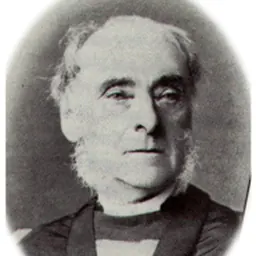
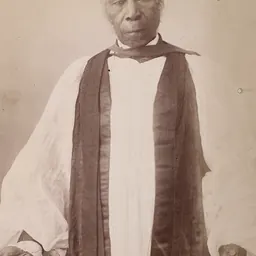

Contemporaries
People whose lives overlapped Edward Cridge's



Frequently asked questions
Who was Edward Cridge?
Canadian Reformed Episcopal bishop
When was Edward Cridge born?
Edward Cridge was born in 1817 in Bratton Fleming.
When did Edward Cridge die?
Edward Cridge died in 1913 in Victoria.
What was Edward Cridge's occupation?
Edward Cridge was an anglican priest.
What nationality was Edward Cridge?
Edward Cridge was British and Canadian.
Sources & further reading
Cite this page
APA: Biography.guide. (2026). Edward Cridge. https://biography.guide/edward-cridge/
MLA: "Edward Cridge." Biography.guide, https://biography.guide/edward-cridge/.
Chicago: "Edward Cridge." Biography.guide. https://biography.guide/edward-cridge/.
Data last updated: 2026-09-23 · Spot an error? Report a correction.
Portrait: Wikimedia Commons · author & licence
Page generated 2026-09-27 05:07 UTC