
About Edward Colville
Lived 1905 – 1982 (aged 76). Edward Colville was a British military personnel.
Major-General Edward Charles Colville (1 September 1905 – 10 January 1982) was a senior British Army officer. He commanded a brigade during Operation Plunder, the crossing of the Rhine, in March 1945 during the Second World War. He both planned and executed his brigade's successful attack. After serving as Chief of Staff at Headquarters Far East Land Forces in June 1954 during the Malayan Emergency, he spent three years as General Officer Commanding 51st (Highland) Division in a home defence role.
Military career Born the son of Admiral Sir Stanley Colville and Adelaide Jane Meade, Colville was educated at Marlborough College and commissioned into the Gordon Highlanders on 3 September 1925.
Colville served for two years from 1932 to 1934 as aide-de-camp to Vere Ponsonby, 9th Earl of Bessborough who was at that time officiating as Governor-General of Canada. In July 1934, towards the end of his tour in Canada, Colville spent nine days on an Atlantic salmon fishing trip with four other Canadian officials, including the governor-general, on the Jupiter River on Anticosti Island, in the Minganie Regional County Municipality of Quebec. He later contributed to a book that the five officials wrote and published about their experiences on the river. (The five officials on the trip were Bessborough, Alan Lascelles, Viscount Duncannon, Lieutenant-Colonel Eric Dighton Mackenzie, and Edward Colville.) They wrote and published under the collective pen name "Baldemec", taken from their initials. Participating in the Second World War, Colville was promoted from captain to major on 3 September 1942. He became commanding officer of the 2nd Battalion, Gordon Highlanders, in September 1943.
Colville was closely involved in Operation Plunder, the crossing of the Rhine, near Xanten in March 1945. He planned the 227th Brigade's attack, codenamed "Operation Nap", to assault with 10th Battalion, Highland Light Infantry on the right and 2nd Battalion, Argyll and Sutherland Highlanders on the left, aiming to seize the villages of Overkamp and Lohr respectively. The 2nd Battalion Gordon Highlanders would then cross and relieve the other two battalions, which would in turn advance to take the villages of Bellinguoven and Wisshof. Colville led the brigade during the subsequent chaotic (Some of Colville's tracked landing vehicles became stuck in the mud on the far side, and his troops came under heavy fire leading to many casualties.) His forward observation post was wiped out and one his battalions suffered over 100 casualties.
Towards the end of the campaign, on 30 April, Colville negotiated the surrender of the German city of Geesthacht, including a store of V-1 flying bomb fuel and poison gas. For his command of the brigade he received a bar to the DSO on 10 May and was mentioned in despatches on 4 April 1946.
After the war Colville became Defence adviser in Canada in December 1946, was promoted to colonel on 31 March 1949, and in November was appointed commander of the 128th Infantry Brigade, moving to become Assistant Chief of Staff (Operations) at British Army of the Rhine in June 1952. Promoted to substantive brigadier on 1 September 1953, he was further advanced to temporary major-general on 29 June 1954, and appointed to serve as Chief of Staff at Headquarters Far East Land Forces during the Malayan Emergency. Promoted to substantive major-general on 7 July 1955, for his services in the Far East Colville was appointed a Companion of the Order of the Bath on 25 October. He relinquished his post in Malaya on 15 January 1956, and in March received his final posting as General Officer Commanding 51st (Highland) Division, which was a Territorial Army unit in a home defence role. He retired on 12 April 1959.
In retirement Colville served as a deputy lieutenant of West Sussex but also had a home at Balformo House near Scone in Perthshire.
Colville died in January 1982, aged 76.
Family In 1934, Colville married Barbara Joan Denny; they had one son and two daughters.
Works (Colville was one of the five authors who contributed to the book under the collective pen name "Baldemec".)
Don’t just read it —
keep it.
Full-length biographies made to live with: read them, listen on the way to work, watch them tonight.
- E-book
- Audio
- Video
Instant download · yours to keep · every purchase keeps this site free
Important facts
People in Edward Colville's life
Named in this biography and alive at the same time
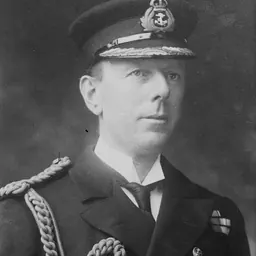


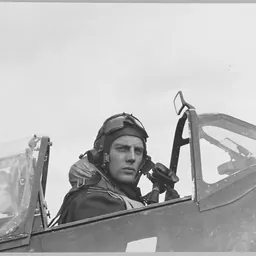
Related people
Same field, nearest in time



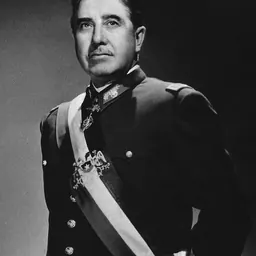
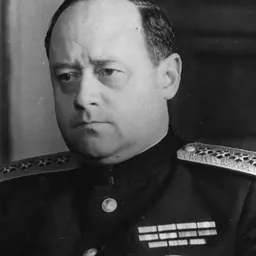
Contemporaries
People whose lives overlapped Edward Colville's



Frequently asked questions
Who was Edward Colville?
British Army general
When was Edward Colville born?
Edward Colville was born on 1 September 1905 in St George Hanover Square.
When did Edward Colville die?
Edward Colville died on 10 January 1982 in Stoughton.
What was Edward Colville's occupation?
Edward Colville was a military personnel.
What nationality was Edward Colville?
Edward Colville was British.
Sources & further reading
Cite this page
APA: Biography.guide. (2026). Edward Colville. https://biography.guide/edward-colville/
MLA: "Edward Colville." Biography.guide, https://biography.guide/edward-colville/.
Chicago: "Edward Colville." Biography.guide. https://biography.guide/edward-colville/.
Data last updated: 2026-09-20 · Spot an error? Report a correction.
Page generated 2026-09-27 05:25 UTC