
About Edward Calvin Kendall
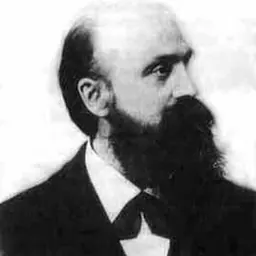
Lived 1886 – 1972 (aged 86). Edward Calvin Kendall was an American chemist and biochemist, known for Cortisone and Thyroid hormones.
Edward Calvin Kendall (March 8, 1886 – May 4, 1972) was an American biochemist. In 1950, Kendall was awarded the Nobel Prize for Physiology or Medicine along with Swiss chemist Tadeusz Reichstein and Mayo Clinic physician Philip S. Hench, for their work with the hormones of the adrenal glands. Kendall not only researched the adrenal glands, he also isolated thyroxine, a hormone of the thyroid gland and worked with the team that crystallized glutathione and identified its chemical structure.
Kendall was a biochemist at the Graduate School of the Mayo Foundation at the time of the Nobel award. He received his education at Columbia University. After retiring from his job with the Mayo Foundation, Kendall joined the faculty at Princeton University, where he remained until his death in 1972. Kendall Elementary School, in Norwalk is named for him.
Early life and education Kendall was born in South Norwalk, Connecticut in 1886. He attended Columbia University, earning a Bachelor of Science degree in 1908, a Master of Science degree in Chemistry in 1909, and a Ph.D. in Chemistry in 1910.
Research career After obtaining his Ph.D., his first job was in research for Parke, Davis and Company, and his first task was to isolate the hormone associated with the thyroid gland. He continued this research at St. Luke's Hospital in New York until 1914. Along with associates, Kendall was involved with the isolation of glutathione and determining its structure. His Nobel lecture focused on the basic research that led to his award, and was titled "The Development of Cortisone As a Therapeutic Agent." As of the 2010 awards, Kendall and Hench were the only Nobel Laureates to be affiliated with Mayo Clinic.
Kendall was elected to the United States National Academy of Sciences in 1950, and both the American Academy of Arts and Sciences and the American Philosophical Society in 1951.
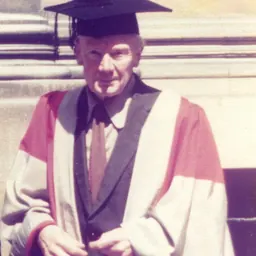
Kendall's career at Mayo ended in 1951, when he reached mandatory retirement age. He moved on to Princeton University, where he was a visiting professor in the Department of Biochemistry. He was awarded honorary doctorates from the University of Cincinnati, Western Reserve University, Williams College, Yale University, Columbia University, National University of Ireland, and Gustavus Adolphus College.
Family life Kendall married Rebecca Kennedy in 1915, and they had four children. He died in 1972 in Princeton, New Jersey. His wife died in 1973.
Don’t just read it —
keep it.
Full-length biographies made to live with: read them, listen on the way to work, watch them tonight.
- E-book
- Audio
- Video
Instant download · yours to keep · every purchase keeps this site free
Important facts
People in Edward Calvin Kendall's life
Named in this biography and alive at the same time

Related people
Same field, nearest in time





Contemporaries
People whose lives overlapped Edward Calvin Kendall's


Frequently asked questions
Who was Edward Calvin Kendall?
American chemist (1886-1972)
When was Edward Calvin Kendall born?
Edward Calvin Kendall was born on 8 March 1886 in South Norwalk.
When did Edward Calvin Kendall die?
Edward Calvin Kendall died on 4 May 1972 in Princeton.
What was Edward Calvin Kendall's occupation?
Edward Calvin Kendall was a chemist and biochemist.
What was Edward Calvin Kendall known for?
Edward Calvin Kendall was known for Cortisone and Thyroid hormones.
What nationality was Edward Calvin Kendall?
Edward Calvin Kendall was American.
Sources & further reading
· Wikipedia: Edward Calvin Kendall
· DBpedia: Edward Calvin Kendall
Cite this page
APA: Biography.guide. (2026). Edward Calvin Kendall. https://biography.guide/edward-calvin-kendall/
MLA: "Edward Calvin Kendall." Biography.guide, https://biography.guide/edward-calvin-kendall/.
Chicago: "Edward Calvin Kendall." Biography.guide. https://biography.guide/edward-calvin-kendall/.
Data last updated: 2026-09-20 · Spot an error? Report a correction.
Page generated 2026-09-27 05:27 UTC