
About Edward Bate Scott
Lived 1822 – 1909 (aged 87). Edward Bate Scott was an Australian civil servant and explorer.
Edward Bate Scott (3 April 1822 – 2 July 1909) was a pioneering colonist of South Australia who accompanied Edward John Eyre on several journeys and had a later career with the South Australian Police Force.
History
E. B. Scott was born in Gillingham, Kent, of a well-to-do family. His father was James Scott, of the Royal Navy. At the age of 16 years, he emigrated on Duke of Edinburgh to New South Wales, where he had a letter of introduction to John Macarthur, alas dead by the time Scott arrived. After a short time in Sydney he joined his brother John Mansel Scott, Master of the Revenue Cutter Ranger, at Port Phillip, then went to a station at Mount Macedon to experience sheep and cattle farming. This did not last long, as the station owner and his family were all drowned in a voyage from Sydney to Port Phillip, and the station was sold. In 1839 he joined his friend George Hamilton (later to be appointed Commissioner of the South Australia Police), droving a herd of cattle from Port Phillip to South Australia for William Mundy and Captain Smythe, reaching Adelaide in 1839.
With Edward John Eyre In Adelaide he met Edward John Eyre and Alfred M. Mundy, (who became Colonial Secretary in the first South Australian Legislative Council under Governor Grey, and was to marry Jane, the eldest daughter of John Hindmarsh). He was invited to join them in an expedition to Western Australia with sheep and cattle, which were shipped from the North Arm of the Port River to Albany, Western Australia, then drove them overland to Perth. To conserve water most of the travelling was done by night. Eyre wrote in his journal: "Mr. Scott, who ever since the commencement of our preparations had been most indefatigable and useful in his exertions, was even still more severely tasked on this day. At night, however, we were all amply rewarded by seeing everything completely and satisfactorily arranged; the bustle, confusion, and excitement over; and our drays all loaded and ready to commence on the morrow a journey of which the length, the difficulty, and the result were all a problem yet to be solved."
The party left Government House, Adelaide, on 18 June 1840. Somewhere past Crystal Brook, he wrote: "My own time, when not personally engaged in conducting the party, was occupied in keeping the journals and charts and in taking observations in the daily register, of the barometer, thermometer, winds, and weather, and in collecting specimens of flowers or minerals. My young friend Mr. Scott was equally busy, for in many of these duties he assisted me, and in some relieved me altogether. ... He was the only sportsman of the party, and upon his gun we were dependent for supplies of wallabies, pigeons, duck, or other game to vary our bill of fare and make the few sheep we had hold out as long as possible. As a companion I could not have made a better selection — young, active, and cheerful— I found him ready to render me all the assistance in his power." then on 7 July arrived at Albany. Eyre had achieved his goal, but at a considerable price.
Public servant and pastoralist Scott assisted Lieutenant Pullen in his task of surveying Lake Albert and the Murray mouth, and in 1841 mate on Pullen's boat Water Witch, which he negotiated from Wellington to Moorundie (5 km downstream from Blanchetown) on the River Murray, a distance of about . This journey helped establish Moorundie (often spelled "Moorundee") as the first European settlement on the River Murray in South Australia, and Eyre (who had explored the area in 1839) was appointed there as the Resident Magistrate and Protector of Aborigines.
He assisted Eyre in founding the Government station at Moorundie, which was established by Governor Grey to protect "overlanders" from the hostile attacks of the natives. He assisted Eyre in mapping parts of the River Darling which had been missed by Major Mitchell. inspector of native police, and returning officer. Eyre left for England and never returned to South Australia. Around this time Scott married and started a family. Scott remained at Moorundie until 1857, when the position was abolished by the Government. and developed outposts for the SA police Force including Overland Corner. In 1869 he was appointed supervisor of the Dry Creek Labor Prison, known as "The Stockade", now Yatala Labour Prison. He resigned October 1892 and was replaced by Robert H. Edmunds (1834 – 12 February 1917). He retired to his home, "Hamilton Lodge", Currency Creek, where he died after a short illness.
Family Edward married Celia Williams (died 11 January 1892) Heloise May (20 May 1854 – 9 December 1934) married Thomas William Higgins, son of Lieut-Colonel Higgins J.P. in 1874. Lived Burnt Oak Station, Currency Creek. Edward Dashwood Scott (9 June 1856 – 16 August 1934) of Hergott Springs Beresford George "Berry" Scott (9 December 1857 – ca.1934) of Mount Benson near Kingston SE Francis William "Frank" Scott (8 July 1860 – 15 April 1923) of Barrow Creek James Hamilton Scott (27 July 1862 7 December 1955) of Hamilton Lodge, Currency Creek Richard Henry Ki Scott (27 September 1865 – 1 May 1899) John Wynne Scott (28 July 1867 – 3 December 1967) Augusta Katherine Winifred (9 October 1970 – 24 May 1904) married Charless Gower Lermitte, M.R.C.S., lived at Gilberton His brother George Byng Scott (1824 – 17 February 1886) was Stipendiary Magistrate for Naracoorte, Government Resident of the Northern Territory, acting S.M. for Port Adelaide then Mount Gambier. He was father of George Beresford Scott by his first marriage
Recognition Several geographic features have been named for E. B. Scott: Scott Bay, Scott Point — near Fowler's Bay and Scott Creek, Mount Scott — in the North Flinders Ranges near Copley – all named for him by Eyre
Eyre's expedition was dramatised in the 1962 Australian radio play Edward John Eyre by Colin Thiele.
Don’t just read it —
keep it.
Full-length biographies made to live with: read them, listen on the way to work, watch them tonight.
- E-book
- Audio
- Video
Instant download · yours to keep · every purchase keeps this site free
Important facts
People in Edward Bate Scott's life
Named in this biography and alive at the same time

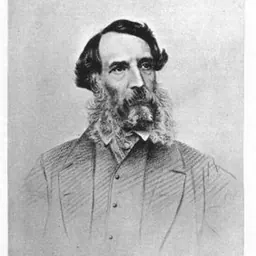

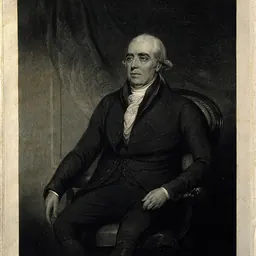

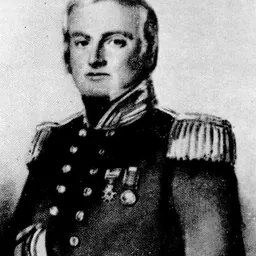
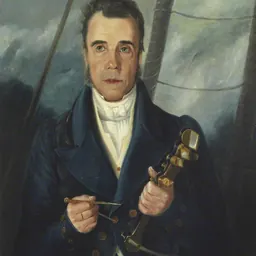
Related people
Same field, nearest in time




Contemporaries
People whose lives overlapped Edward Bate Scott's



Frequently asked questions
Who was Edward Bate Scott?
South Australian explorer, prison official (1822-1909)
When was Edward Bate Scott born?
Edward Bate Scott was born on 3 April 1822 in Gillingham.
When did Edward Bate Scott die?
Edward Bate Scott died on 2 July 1909.
What was Edward Bate Scott's occupation?
Edward Bate Scott was a civil servant and explorer.
What nationality was Edward Bate Scott?
Edward Bate Scott was Australian.
Sources & further reading
· Wikipedia: Edward Bate Scott
Cite this page
APA: Biography.guide. (2026). Edward Bate Scott. https://biography.guide/edward-bate-scott/
MLA: "Edward Bate Scott." Biography.guide, https://biography.guide/edward-bate-scott/.
Chicago: "Edward Bate Scott." Biography.guide. https://biography.guide/edward-bate-scott/.
Data last updated: 2026-09-20 · Spot an error? Report a correction.
Page generated 2026-09-27 05:19 UTC