
About Edward Bartow
Lived 1870 – 1958 (aged 88). Edward Bartow was an American chemist, known for Wastewater treatment.
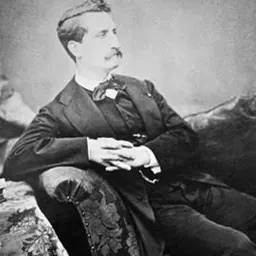
Edward Bartow (January 12, 1870 – April 12, 1958) was an American chemist and an expert in the field of sanitary chemistry. His career extended from 1897 to 1958 and he is best known for his work in drinking water purification and wastewater treatment. He was well known as an educator, and his many students went on to leadership positions in the fields of sanitary chemistry and engineering.
Early life and education
Bartow was born in Glenham, New York, on January 12, 1870. His early education took place at the Glenham School and at the Mount Beacon Academy at Fishkill, New York. He graduated from Williams College in 1892 with a degree in mathematics and science and he was elected to Phi Beta Kappa that same year. He attended the University of Göttingen and studied under Otto Wallach who would later receive the Nobel Prize in chemistry for his work on terpenes. Bartow was awarded a PhD in organic chemistry in 1895 for his thesis, which dealt with derivatives of meta-isocymene.
World War I service
Bartow saw service in World War I with the Sanitary Corps of the American Expeditionary Forces from 1917 to 1918. He was originally commissioned as a major and was promoted to lieutenant colonel before the end of his service. He directed the work of 80 officers and enlisted men who were responsible for providing safe drinking water and proper sanitation for U.S. forces. He devised a system of superchlorination of Seine River water followed by dechlorination with sulfur dioxide. In addition, he established a system of eleven analytical laboratories and several mobile units to keep the quality of drinking water for service men under control. He received the in silver from the French government for his work preventing serious disease outbreaks.
Limited list of publications
Bartow, Edward. (1903–04). “Water-Supplies of Southeastern Kansas.” Transactions of the Kansas Academy of Science. 19: (1903-1904): 39–48. Bartow, Edward and H.C. Allen. (1903–04). “A New Derivative of Diazo-Amido-Benzene.” Transactions of the Kansas Academy of Science. 19: (1903-1904): 69–70. Bartow, Edward. (1914). “Laboratory Control of Water Supplies.” Journal AWWA. 1:4(December 1914): 720–6. Bartow, Edward. (1916). “The Latest Method of Sewage Treatment.” Journal AWWA. 3:2(June 1916): 327–45. Jackson, Daniel D., Edward Wegmann and Edward Bartow. (1916). “Water Softening by Filtration Through Artificial Zeolite.” Journal AWWA. 3:2(June 1916): 423–33. Warren, R.M. and Edward Bartow. (1924). “Taste and Odor in Chlorinated Water.” Journal AWWA. 11:4(July 1924): 881–6. Bartow, Edward. (1930). “Electro-Osmose Treatment of Boiler Waters.” Journal AWWA. 22:8(August 1930): 1112–21. Bartow, Edward. (1936). “Progress in Sanitation.” Science. 84:2180(October 9, 1936): 317–22.
Don’t just read it —
keep it.
Full-length biographies made to live with: read them, listen on the way to work, watch them tonight.
- E-book
- Audio
- Video
Instant download · yours to keep · every purchase keeps this site free
Important facts
People in Edward Bartow's life
Named in this biography and alive at the same time

Related people
Same field, nearest in time




Contemporaries
People whose lives overlapped Edward Bartow's



Frequently asked questions
Who was Edward Bartow?
American chemist (1870-1958)
When was Edward Bartow born?
Edward Bartow was born on 12 January 1870 in Glenham.
When did Edward Bartow die?
Edward Bartow died on 12 April 1958 in Iowa City.
What was Edward Bartow's occupation?
Edward Bartow was a chemist.
What was Edward Bartow known for?
Edward Bartow was known for Wastewater treatment.
What nationality was Edward Bartow?
Edward Bartow was American.
Sources & further reading
Cite this page
APA: Biography.guide. (2026). Edward Bartow. https://biography.guide/edward-bartow/
MLA: "Edward Bartow." Biography.guide, https://biography.guide/edward-bartow/.
Chicago: "Edward Bartow." Biography.guide. https://biography.guide/edward-bartow/.
Data last updated: 2026-09-22 · Spot an error? Report a correction.
Page generated 2026-09-27 05:21 UTC