
About Edward Baines
Lived 1774 – 1848 (aged 73–74). Edward Baines was a British author, politician, historian and journalist.
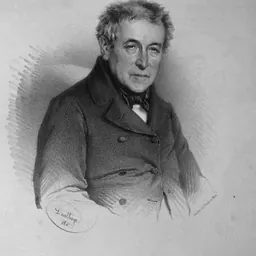
Edward Baines (1774–1848) was the editor and proprietor of the Leeds Mercury (which, by his efforts, became the leading provincial paper in England), politician, and the author of historical and geographic works of reference. On his death in 1848, the Leeds Intelligencer (a rival of the Mercury, and its political opponent for over forty years) described his as "one who has earned for himself an indisputable title to be numbered among the notable men of Leeds".
Of his character and physical appearance it remarked: "Mr Baines had great industry and perseverance, as well as patience and resolution; and with those he possessed pleasing manners and address, - that debonair and affable bearing, which conciliated even those who might have felt that they had reason to regard him as an enemy… In person he was of a firm well-built frame, rather above the average stature; his features were regular, his expression of countenance frank and agreeable; and he retained his personal comeliness as well as his vivacity and suavity of manners to the last". and then in the lower school of the grammar school in Preston. but within the year the Mercury was exchanging insults with the Cambridge Intelligencer, which accused the Mercury of dancing to the Government's tune with vague reports of (and editorial comment deploring) nocturnal meetings of the disaffected. In 1805 a new editor of the Leeds Intelligencer attacked the Mercury as "bespattered with ... sedition"; together with Baines' heated response this initiated a long-lasting state of mutual incivility between the two papers which makes each an unreliable source for the other's deeds and motives. According to counsel in an 1820 libel case "When there was a dearth of political news, nothing was more common for one Editor to attack another, and the public appeared to find amusement in their squabbles". The Mercury sent its own reporters to significant events outside its circulation area, such as York Assizes: a Mercury reporter was present and taking shorthand notes at the giant Reform meeting at Manchester which became the Peterloo massacre. That reporter was Baines' second son Edward, who from 1820 onwards progressively took over the everyday running of the Mercury as his father became more involved in local politics.
"The spy Oliver" On 14 June 1817, the first edition of the Mercury reported that ten Yorkshire men were held in Wakefield jail accused of planning insurrection. It noted that they had been arrested the previous week at a meeting near Dewsbury between them and a Mr Oliver, who had represented himself as a delegate from a central organising committee in London; its readers would probably infer that 'Oliver' was a spy. Following the arrest of the men, there had been disturbances at Huddersfield and Ossett. The second edition made three further charges, supported by the evidence of respectable named moderate reformers: firstly that 'Oliver' had repeatedly urged one of them a Dewsbury bookseller, to attend the meeting: secondly, that 'Oliver' had been seen by another of them at Wakefield after the arrests, and with no satisfactory explanation why he was still at liberty: thirdly that he had been seen in conversation with a liveried man-servant of General Byng, the army officer responsible for internal security in the North of England, the man-servant later saying that on a previous occasion he had driven Oliver from Byng's house to Wakefield to catch a coach. The Mercury made no charge against Byng, but asked who were the employers of 'this double-distilled traitor' and called upon local magistrates to investigate. "On the 16th the exposure of Oliver in the Leeds Mercury was read in both houses of parliament, by Earl Grey in the lords and Sir Francis Burdett in the commons. A strong sensation was produced; and those members, supported by the body of the opposition condemned in the most indignant language the atrocious proceedings brought to light".
Byng wrote to the Mercury, denying much of the initial report, but Baines printed the letter the following week accompanied by further evidence supporting the Mercury s account and rebutting Byng's. The report triggered revulsion locally against Oliver and against conviction of those led to crime by government agents. Earl Fitzwilliam, a Whig magnate and Lord Lieutenant of the West Riding, wrote to the Home Office saying that any disturbances in the Riding had been minor and were brought about by Oliver's activities (of which he complained) : the government should not use them to justify a renewed suspension of Habeas Corpus. Fitzwilliam advised the Huddersfield magistrates not to gather evidence against their rioters; that could only come from accomplices and hence be highly objectionable. At York assizes, the judge in his direction to the jury was even harsher than Fitzwilliam on the unreliability of the evidence of accomplices, and no convictions were secured. Whilst the Mercury s exposure of Oliver prevented the conviction of the Yorkshire prisoners, in Derbyshire the participants in the 'Pentridge rebellion' (also triggered by Oliver) were not so fortunate, having by mischance killed a man before dispersing when faced with the magistrates and twenty dragoons. Thirty-five were tried for high treason and twenty-three convicted; four being executed. Baines could therefore claim to have saved the lives of fellow-Yorkshiremen., and the unmasking of 'Oliver' gave Baines a national reputation.
However, critics such as William Cobbett pointed out that it was the suspicions of a linen-draper, rather than any investigation by the editor of the Mercury, that had unmasked Oliver, and objected to Baines's treatment of Joseph Mitchell. Oliver had made a previous tour of the North and Midlands with Mitchell, who knew and introduced him to potential insurrectionists. Mitchell was arrested in early May and Oliver made his second tour alone. After Oliver's exposure, Baines prevented Mitchell speaking at meetings of Yorkshire fellow reformers, alleging that Mitchell was under the gravest suspicion of being a spy too. No evidence (other than 'guilt by association') to support Mitchell being an informer - let alone an agent provocateur - was produced at the time, nor has any been revealed by subsequent investigation in Home Office archives. it put into the mouth of Sir George Strickland a speech in Parliament calling for Sadler's Bill of 1832 to go to a select committee, when Strickland had made no such speech and had called for the bill to be considered by a "Committee of the whole House" and not be delayed by a select committee; when Strickland attended a great county meeting in York on factory reform and disowned the words put in his mouth by the Mercury the Mercury s report put into Strickland's mouth its explanation of its mistake, avoiding any mention of the Leeds Mercury. The report of the county meeting alleged widespread drunkenness amongst the attendees, a point which had somehow gone unnoticed by other newspapers. Offended by the claims of drunkenness, factory reform supporters subsequently burnt Baines in effigy outside the Mercury offices; the effigy was labelled front and back "The Great Liar of the North", an epithet Cobbett had previously hurled at the Mercury and Baines, Cobbett later wrote more memorably, and more quotably, of
"BROUGHAM's grand puffer, "the GREAT LIAR OF THE NORTH," NED BAINES, publisher of that mass of lies and nonsense called the "Leeds Mercury" … this swelled-up, greedy, and unprincipled puffer, who has been the deluder of Yorkshire for twenty years past."
Authorship As well as his journalistic output, Baines was the author of a number of histories and gazetteers. His first book - a History of the Wars of the French Revolution - was published in 1817, having first been published as a part-work from 1814 onwards. Its account up to 1801 borrowed extensively (and sometimes verbatim) from another author's earlier work of 1803 on the same topic (A Stephens The History of the Wars Which Arose out of the French Revolution to Which is Prefixed a Review of the Causes of that Event (London 1803)). This went unacknowledged until Baines revised, expanded and retitled the work as a History of the Reign of King George III (1820); his new preface stating "To facilitate ... progress, and at the recommendation of the publisher and proprietor of Mr Alexander Stephens' s History of the Wars published in 1803, nearly half the details of the first volume were abridged from that work." This later led to denunciation of Baines as a plagiarist by one of the editors of the Intelligencer. He also produced history/directory/gazetteers for Yorkshire and for Lancashire, later reworking the latter as a county history, The History of the County Palatine of Lancaster which was continued by other authors.
Political career Leeds
As proprietor and editor of the Mercury Baines became an important figure in the affairs of Leeds. An obituary in 1848 noted Mr Baines took a part in the formation and support of many, if not most of the public institutions of Leeds. In early youth he was a visitor of the Benevolent, or Strangers' Friend Society, to which he always continued a warm friend. He assisted to establish the House of Recovery, the Dispensary, the Lancasterian School, the Philosophical Society, the Mechanics' Institution, the Literary Society, the New Library, the Tradesman's Benevolent Society, the Leeds and Yorkshire Insurance Company, our Provident institutions, our Waterworks…- in short, nearly all the institutions for public utility and benevolence established in Leeds within the last half century. He also became an important figure in Leeds politics, although as a Dissenter and a Reformer he was effectively excluded from Leeds Corporation which until the 1830s was a 'closed corporation'; vacancies were filled by election by the existing members of the corporation; they were Tories and generally Anglicans, and hence so were their successors. One area of political life from which Reformers and Dissenters could not be excluded was the vestry meeting of the (Anglican) parish church - all property owners (including Dissenters and other non-conformists) had to pay church rates and rate-payers were entitled to attend and vote. Baines fought a prolonged campaign to impose strict economy on church outgoings, starting in 1819 with a demand that accounts be published, and finally in 1828 managing to secure the election of churchwardens committed to economy. On the Whigs coming to power, Brougham became Lord Chancellor, necessitating a by-election: this time the Whigs of rural Yorkshire forestalled the West Riding and secured a more traditional candidate: Sir John Vanden-Bempde-Johnstone of Harkness Hall, near Scarborough.
Baines was a leading light in reform agitation in Leeds, and was commissioned by Lord John Russell to determine whether qualification in borough constituencies could safely be set as low as £10 (rates paid a year). ... Leeds has been regularly canvassed for the purposes of election, by twenty or thirty gentlemen, of respectable station and known character, in that chief seat of our woollen manufacture. The result of their canvass has been, that, in the quarters of the town chiefly inhabited by the working classes, not more than one in every fifty householders will have a vote under the 10l. clause. In the principal streets for shops, almost every male householder will have a vote. In the parts of the town occupied by dwelling houses, the number occupied by females makes a very material deduction from the number of votes. The working classes in Leeds, almost all live in houses of from 5l. to 8l. rent; out of 140 householders, heads of families (including several overlookers) employed in the mill of Messrs. Marshall and Co., not more than two will have votes; out of 160 householders in the mill of Messrs. C. Willans and Sons, Holbeck (including fifteen overlookers) many earning 25s. to 30s. a-week, not one will have a vote; out of 100 householders in the works of Messrs. Taylor and Wordsworth, machine makers, only one, even of this high class of mechanics, will have a vote; out of 11,000 inhabitants of the township of Holbeck, chiefly occupied by the working classes, but also containing mills, dye-houses, public-houses, and some respectable dwellings, there would be only 150 voters. The township of Wortley has nearly 6,000 individuals, and 130 voters. Armley, with 5,000 inhabitants, will have only 150 votes. Upon the whole, the unanimous opinion of the canvassers was, that the 10l. qualification does not admit any person who may not safely be intrusted with the elective franchise...
In the expectation that the Reform Bill of 1831, would pass, and would establish Leeds as a two-member borough constituency, the Leeds reformers chose two candidates in August 1831: John Marshall (whose father, also John Marshall was a leading Leeds millowner and had served as an MP for Yorkshire), and (at Baines's urging) Thomas Babington Macaulay, a gifted Whig orator with a national reputation, but no previous connection with Leeds. When elections for the first reformed parliament eventually took place in December 1832, the two Whigs comfortably defeated the sole Tory candidate Michael Thomas Sadler despite active support for Sadler from the Leeds radical reformers. Sadler had taken up the issue of factory reform; the Mercury (which had printed Richard Oastler's first letter on "Yorkshire Slavery" (the over-working and ill-treatment of children in the West Riding textile industry) before cooling on the issue) denounced this as a Tory trick to lure the gullible away from the Whig reform programme. (Baines and the Mercury were to hold similar views on the anti-Poor Law movement of the late 1830s; the underlying cause of working-class discontent was the Corn Laws, and all efforts should go into removing the underlying cause, rather than palliating its symptoms). Years of activity by Sadler and his brother in Leeds meant that much was known for and against him, and the Mercury was assiduous in reminding its readers of the 'against'.
The Tories and their Radical allies had attacked Macaulay as a placeman and a stranger: interested in Leeds only as providing him with a seat in Parliament; interested in a seat in Parliament largely as a means of securing comfortable sinecures for himself and his family (whose government appointments were currently yielding them a total annual income of over £4000). The Macaulay family was seriously financially embarrassed, and Macaulay soon decided that income from posts held only for so long as the Whigs held power was insufficiently secure. He resigned from parliament and went out to India in 1834 as a member of the supreme council of India, on an annual salary of £10,000. Baines was the Whig candidate at the ensuing by-election; there was a separate Radical candidate, but Baines's chief opponent was the Tory Sir John Beckett. Beckett was Leeds-born and educated; the Beckett family bank was pre-eminent in Leeds ("The Rothschilds and Barings of Leeds") and was recognised to have acted in the interests of Leeds as a whole in past crises, but Sir John had pursued a legal career away from Leeds, culminating in his appointment in mid-1817 (soon after his marriage to a daughter of the Earl of Lonsdale) as Judge Advocate-General, and consequent entry into Parliament in 1818 in Cockermouth, one of his father-in-law's pocket boroughs. As the Mercury pointed out, he had been Under-Secretary of State at the Home Office from 1806 to 1817, the Mercury going on to claim that it was from him that Oliver had received his instructions Baines failed to retrieve the situation by a subsequent editorial in the Leeds Mercury which asserted that whilst the vast majority of Dissenters thought any connection between church and state wrong, the vast majority of them did not see the existence of an established church as a political question, let alone a grievance; but was not believed. He spoke against the continuance of the English Regium Donum, and repeatedly argued that Queen Anne's Bounty ( a fund for augmenting the income of poor Church of England ministers) should be put on a much sounder basis: its revenue of 'First Fruits and Tenths' - calculated from revenues in the reign of Henry VIII - would be greatly increased by being calculated from current revenues. He supported Poulett Thomson's Bill of 1836 for relaxation of the 1834 Factory Act; he also voted for subsequent government factory regulation bills, but when he spoke in debates on them made it clear that he thought there was no need for them.
Children and legacy His son, Sir Edward Baines (1800–1890), of St Ann's Hill, Leeds, was editor and afterwards proprietor of the Leeds Mercury, M.P. for Leeds (1859–1874), and was knighted in 1880; his History of the Cotton Manufacture (1835) was long a standard authority, he also wrote a biography of his father The life of Edward Baines, late M.P. for the Borough of Leeds.
An elder son, Matthew Talbot Baines (1799–1860), went to the bar; he became recorder of Kingston upon Hull in (1837), M.P. for Kingston upon Hull in 1847, president of the Poor Law Board in 1849, was returned as M.P. for Leeds 1852, again became president of the Poor Law Board (until 1855), and entered the cabinet as Chancellor of the Duchy of Lancaster in 1856.
He had two further surviving sons: Thomas Baines (1806–1881) and Frederick Baines (1811–1893); his fourth and fifth sons died during childhood.
The youngest daughter of Edward Baines – Margaret (d. 1891) – married another political figure, Charles Reed, in 1844.
Another daughter, Charlotte, was the mother of South Australian politician and mayor of Adelaide, Theodore Bruce.
Publications
These became volumes 2 and 3 in an expanded four volume work:
(In 1820, an enterprising American published those parts of volume 2 of Baines' "History of the Wars." dealing with the War of 1812 as ) ; later reworked as
Don’t just read it —
keep it.
Full-length biographies made to live with: read them, listen on the way to work, watch them tonight.
- E-book
- Audio
- Video
Instant download · yours to keep · every purchase keeps this site free
Important facts
Family & relationships
People in Edward Baines's life
Named in this biography and alive at the same time

Related people
Same field, nearest in time

Contemporaries
People whose lives overlapped Edward Baines's




Frequently asked questions
Who was Edward Baines?
British politician (1774-1848)
When was Edward Baines born?
Edward Baines was born in 1774 in Walton-le-Dale.
When did Edward Baines die?
Edward Baines died on 3 August 1848 in Leeds.
What was Edward Baines's occupation?
Edward Baines was an author, politician, historian and journalist.
What nationality was Edward Baines?
Edward Baines was British.
Sources & further reading
· DBpedia: Edward Baines (1774–1848)
Cite this page
APA: Biography.guide. (2026). Edward Baines. https://biography.guide/edward-baines/
MLA: "Edward Baines." Biography.guide, https://biography.guide/edward-baines/.
Chicago: "Edward Baines." Biography.guide. https://biography.guide/edward-baines/.
Data last updated: 2026-09-22 · Spot an error? Report a correction.
Page generated 2026-09-27 05:23 UTC