
About Edward B. Greene
Lived 1878 – 1957 (aged 79). Edward B. Greene was a businessperson.
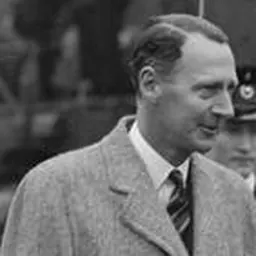
Edward Belden Greene (July 26, 1878 — October 20, 1957) was an American banking, mining, and steel company executive. He joined the Cleveland Trust Company in 1900, and by 1914 was a vice president. He later was a director and chairman of its executive committee, and served on state and federal emergency credit and banking organizations during the Great Depression. He left in 1933 to become chairman of the board of directors of the Cleveland-Cliffs Iron Mining Company. He oversaw the purchase of Corrigan, McKinney Steel, and later its sale.
Early life Edward Greene was born in Cleveland, Ohio, on July 26, 1878, to Jon Eliot and Mary ( Seymour) Greene. Jon Greene rose from clerk at the William Bingham Company (a large local hardware and metals concern) to partner, and succeeded founder William Bingham as president when Bingham died in April 1904. Edward had a brother, William, and three sisters, Mary, Lucy, and Helen.
Greene graduated from Cleveland High School. While in college, Greene joined the fraternity Alpha Delta Phi and was a member of the exclusive Wolf's Head Society. in 1898 at the Cleveland Trust Company as a general messenger, clerk, and teller. He was made an assistant treasurer in January 1906.
After being elected to Cleveland Trust's board of directors in January 1907, the board elected Green chairman of its executive committee and made him an ex-officio member of all of the bank's other committees.
Greene was appointed a vice president of Cleveland Trust in January 1914. His extensive outside business interests led him to resign as vice president in 1926, although he remained a director and member of the board.
Steel manufacturing career Eaton and steel mergers
There was rapid consolidation in the steel industry in the 1920s, much of it led by Canadian American investor Cyrus S. Eaton. Eaton entered the utilities field in Canada in 1907, obtaining bank loans and purchasing natural gas and electric utilities, merging them, and achieving large profits through economies of scale. In 1912, Eaton settled in Cleveland, Ohio, and joined the investment banking firm of Otis & Co. Efn|In 1895, Charles A. Otis formed the brokerage firm and investment bank of Otis, Hough & Co. with Addison H. Hough, a Cleveland stock broker and investment banker. It was reorganized as Otis & Hough in 1900, and as Otis & Co. in 1912 upon the retirement of Hough and the inclusion of new partners, among them Cyrus Eaton. He purchased a controlling interest in the financially troubled Trumbull Steel Co. in 1925.Efn|These shares were later transferred to Continental Shares. whose purpose was to acquire stock in various steel companies.
In July 1926, Eaton acquired the United Alloy Steel Corporation, the Central Steel Co., and the United Furnace Co., and combined them to form and incorporate the Central Alloy Steel Corporation. He also began buying stock in the Republic Iron and Steel Company, and by early 1927 had won control of four seats on the company's board of directors. Eaton then began buying shares in the Youngstown Sheet & Tube steel company in 1927. In 1928, Eaton merged Trumbull Steel with Republic Iron and Steel, and Trumbull Steel purchased Sheet & Tubes, Inc.Efn|Eaton also purchased significant amounts of stock in the Inland Steel Company, the Otis Steel Company, and then Wheeling Steel Company. In 1929, Donner Steel purchased the Witherow Steel Corporation. In 1930, Trumbull Steel merged with the Union Drawn Steel Co.
Creation of Cliffs Corp. Eaton now controlled companies which consumed a good deal of iron ore provided by Cleveland-Cliffs. Additionally, Cleveland-Cliffs had invested in Central Alloy Steel, Donner Steel, Republic Iron & Steel, and Trumbull Steel, and supplied substantial amounts of ore to these companies.Efn|Cleveland-Cliffs acquired stock in Trumbull Steel via numerous small purchases throughout the 1910s. In 1920, Cleveland-Cliffs and Trumbull Steel jointly created the Trumbull-Cliffs Furnace Company, a coking firm. It is unclear when Cleveland-Cliffs invested in Central Steel, but it had a large block of 80,000 shares by July 1926. When Central Steel merged with United Alloy Steel to form Central Alloy Steel, Cleveland-Cliffs received Central Alloy stock in exchange for its Central Steel stock. and Eaton accompanied Mather on an inspection tour of Cleveland-Cliffs' Michigan mining properties in June 1927 (during which Eaton stayed at Mather's Michigan cottage).
According to Greene, Eaton asked the Cleveland-Cliffs Company if it wanted to become part of his emerging conglomerate. He felt it would be advantageous to Cleveland-Cliffs, but the addition of Cleveland-Cliffs would also help him bring other steel companies into the merger.
Mather and Eaton met in Cleveland in March 1929 to begin working out how the two could work together.
In the April, Eaton went to Mather's summer home in Pasadena, California, where he met with Mather, Greene, Samuel Livingston Mather III (Samuel Mather's son), George Garretson Wade, and William P. Belden in Pasadena, California. At this meeting, Eaton proposed merging Cleveland-Cliffs with his soon-to-be-announced Republic Steel. Mather declined. Instead, the Mather group offered to establish a new firm, Cliffs Corporation. Cleveland-Cliffs issued new 1.25 shares of preferred stock to all of its shareholders in exchange for 1 share of common stock. To create the new company, Cleveland-Cliffs invested 500,000 shares of preferred and 800,000 shares of common stock. Eaton's investment in the new company was all the stock he held in Inland Steel, Republic Iron & Steel, Wheeling Steel, and Youngstown Sheet & Tube. Cliffs Corporation would issue 800,000 shares. Cleveland-Cliffs stockholders were permitted to exchange one common share of Cleveland-Cliffs for one common share of Cliffs Corp., while Eaton got the other half of Cliffs Corp. stock. Efn|All the Cleveland-Cliffs preferred and common stock was placed into a voting trust first, to put Cleveland-Cliffs on an equal footing with Eaton. William G. Mather, chairman of Cleveland-Cliffs, assured stockholders that this scheme gave Cleveland-Cliffs the inside track on ore sales, and diversified Cleveland-Cliffs' revenue streams to ensure against economic downturns.
On December 17, 1929, Eaton announced that he was merging the Bourne-Fuller Co., Central Alloy Steel, Donner Steel, and Republic Iron & Steel into a new company, to be named Republic Steel Corporation. Tom M. Girdler was named the chairman of the board of directors of the company. Girdler had announced his surprise resignation as president of Jones & Laughlin Steel on October 21, 1929. Girdler had resigned because Eaton, Samuel Livingston Mather II, and Greene assured him he would be chairman of Eaton's planned steel merger.
Purchase of Corrigan, McKinney Steel On March 21, 1930, Cleveland-Cliffs bought 62.5 percent of the shares of Corrigan, McKinney Steel. The cost of the transaction was $35.5 million. The acquisition seemed to make sense: Corrigan, McKinney was a ready customer for Cleveland-Cliffs ore, and the steel firm owned several iron mines in Michigan. Cleveland-Cliffs did not intend to get into the steel business, but rather intended to sell the blast furnaces and steel mills to Eaton.
To finance the deal, Cleveland-Cliffs paid $5 million in cash and borrowed $25 million from eight banks.
Working with William G. Mather, Greene oversaw the purchase of Corrigan, McKinney Steel. The merger effectively prevented both Bethlehem Steel and U.S. Steel from entering Cleveland.
The Corrigan, McKinney deal proved disastrous for Cleveland-Cliffs. Although the Great Depression had begun in late October 1929, Greene and other Cleveland-Cliffs directors and officers believed the economy had only entered a short-term recession. They were disabused of that idea by early 1931.
Cleveland-Cliffs soon lost control of Corrigan, McKinney Steel. McKinney Steel Holdings (MSH) had issued MSH common stock and given it to shareholders of Corrigan, McKinney in exchange for their shares. But only 40 percent of Corrigan, McKinney shares had been purchased this way. Another 13.75 percent of Corrigan, McKinney stock had been purchased with MSH preferred stock. The Union Trust Company of Cleveland and more than 1,000 members of the public owned the shares of MSH preferred. Under normal circumstances, MSH common stock had voting privileges; MSH preferred did not. However, if dividends on MSH preferred were not made, the MSH common stock lost its voting privileges and MSH preferred gained them. In other words, due to the way MSH common and preferred stock had been issued, just 13.75 percent of all Corrigan, McKinney shares could control 53.75 percent of Corrigan, McKinney shares if dividends ceased.
Cleveland-Cliffs owned only 88 of the 72,500 shares of MSH preferred. To keep control of Corrigan, McKinney, Cleveland-Cliffs had to ensure that Corrigan, McKinney paid the required preferred dividend to MSH so that MSH could pass it on to MSH preferred stockholders to keep them happy, even though Cleveland-Cliffs could ill-afford to do so.Efn|With Corrigan, McKinney losing money and unable to pay dividends itself, Cleveland-Cliffs would have to loan or grant it money pay those dividends. While Cleveland-Cliffs had a profit of $4.8 million in the year ending December 31, 1930, it lost $21,360 in 1931, lost $2.5 million in 1932, and had a profit of $105,274 in 1933. Despite his heavy new responsibilities, Greene remained chairman of the Cleveland Trust executive committee and a director of that bank.
Corrigan, McKinney stopped paying dividends in 1931. Cleveland-Cliffs took out a $3.5 million loan to pay dividends on Corrigan, McKinney stock for a while, but Corrigan, McKinney stopped paying dividends after March 1932. This enabled preferred shareholders in McKinney Steel Holdings to vote their Corrigan, McKinney stock, and stripped voting privileges from all other Corrigan, McKinney shareholders. The Union Trust bank, which held 23,244 of the preferred shares in MSH,
Cleveland-Cliffs entered into negotiations to sell Corrigan, McKinney in May 1933, but these did not bear fruit.
Greene and Mather were re-elected to the board of McKinney Steel Holding in February 1934. Kraus, O'Neill, and Coney were replaced by John Watson, attorney with the firm M.B. and H.H. Johnson; Ernest N. Wagley, assistant vice president of Union Trust; and Harry F. Burmester, assistant conservator of Union Trust.
Corrigan, McKinney Steel again paid no dividends throughout the fiscal year ending April 1, 1934.
In July 1934, Cleveland-Cliffs entered into negotiations to sell Corrigan, McKinney Steel to Republic Steel — coal mines and all. Greene and William G. Mather worked with Tom Girdler of Republic Steel, with negotiations assisted by Crispin Oglebay. (Oglebay was head of Oglebay Norton, an ore mining and shipping company. He was also a director of both Corrigan, McKinney Steel and Republic Steel.) On October 25, 1934, the preferred shareholders of McKinney Steel Holdings approved of the merger. The Department of Justice sued to stop the merger on antitrust grounds in February 1935, but a federal court ruled in favor of the merger in May 1935. Efn|By then, Corrigan, McKinney owed $1.305 million to preferred shareholders of MSH. The plan, announced in mid October, was to refinance three-quarters of its outstanding debt of $22.6 million through the sale of bonds. These five-year bonds, secured by mortgages on land, mines, and shipping vessels owned by Cleveland-Cliffs, carried an interest rate of 4.75 percent and would be marketed privately. The remainder of the debt would be paid by issuing a deed of trust against stocks and bonds owned by Cleveland-Cliffs. It, too, would carry an interest rate of 4.75 percent.
With the sale of Corrigan, McKinney to Republic Steel, McKinney Steel Holding no longer had any purpose. The first step in winding up the company would be to redeem all outstanding preferred shares. This would also help Cox liquidate the Union Trust by converting the shares it owned into cash. MSH's preferred shareholders approved a plan that would allow MSH to redeem 10,000 preferred shares a year by liquidating the Republic Steel securities held by MSH.Efn|As part of the purchase of Corrigan, McKinney, MSH had received Republic Steel 5.5 percent bonds worth $6.396 million, 13,437 shares of Republic Steel 6 percent preferred stock, and 335,937 share of Republic Steel common stock. Selling the bonds and preferred stock too quickly would drive down the price. If certain conditions for the price of these Republic Steel securities were met, another 10,000 preferred shares per year could be retired as well.
On November 1, a syndicate of eastern banks agreed to buy all of Republic Steel bonds and preferred stock held by MSH. This would allow MSH to retire 11,056 shares of MSH preferred by December 31, 1935. MSH president Oscar L. Cox also asked MSH preferred shareholders give the MSH board of directors the power to sell assets, retire the preferred stock in any amount, and shorten the time for stock redemption from 30 days to 10. Redemption of MSH preferred, due to occur on December 2,
The day the MSH preferred stock was retired, Green won approval from the Cleveland-Cliffs board of director to sell $16.5 million in bonds and sign a $5 million deed of trust note to refinance the company's short-term debt. The company anticipated $500,000 a year in interest savings. The $1.6 million in cash still held by MSH was transferred to Cleveland-Cliffs. or about $13.23 million. Efn|Cleveland-Cliffs had an arrearage of $23.50 on its preferred stock at the end of 1935. That fluctuated slightly over the next decade — $24.66 at the end of 1936, $23.16 at the end of 1937, $28.16 at the end of 1938, $30 at the end of 1939, $29.16 at the end of 1940, — but essentially remained fairly constant. A sinking fund was set up to pay the arrearage, but it was constantly delinquent. Cutright was a vice president of Pittston Company, a coal mining firm located in West Virginia. The total market value of preferred shares was $39.7 million, and total market value of common shares was $6.0 million. Cliffs Corp. owned almost all Cleveland-Cliffs common stock. All the preferred stock issued by Cleveland-Cliffs was owned by directors and officers of Cleveland-Cliffs, but did admit that officers and directors of both companies had been working out how to pay dividends on Cleveland-Cliffs preferred stock for some time. Efn|As early as 1937, Greene told the press that it had been "constantly under consideration" for the past few years. but this seems inaccurate as Eaton mediated between the two sides later. The board's resolution proposed giving each shareholders of Cliffs Corp. two shares in Cleveland-Cliffs.
Title to the Cliffs Corp. $25 million portfolio of steel company stock The 89-year-old had fallen seriously ill in his office in early April, and resigned as chairman and a director of both Cleveland-Cliffs and Cliffs Corp. for reasons of health. Greene was elected chairman of Cleveland-Cliffs on April 25. Alexander C. Brown resigned his positions as a director and vice president of Cliffs Corp., and was elected a director of Cleveland-Cliffs. He was also elected president.
Shareholder lawsuit In April 1947, a group of Cliffs Corp. preferred shareholders filed two lawsuits against the merging corporation. Stockholders involved included the Edna McConnell Clark Foundation, the Leatherstocking Corporation, New York City attorney William Rosenblatt, the Scriven Foundation, and Mary Imogene Bassett Hospital. The group began contacting other Cliffs Corp. stockholders to urge them to contact the U.S. Securities and Exchange Commission petition it to make an advisory report on the advisability of the merger. and rescheduled for June 9. The meeting of Cleveland-Cliffs shareholders, set for May 20, was rescheduled to June 16.
On May 25, the Securities & Exchange Commission said it lacked the legal authority to issue an advisory report.
After a multi-day meeting, Cliffs Corp shareholders on June 13 voted 87.9 percent against a resolution liquidating Cliffs Corp. They then voted 67.9 percent in favor of the merger. Dissenting Cliffs Corp. common shareholders demanded that they receive $43 for each of their shares.
The Cliffs/Cleveland-Cliffs merger was finalized on July 9, 1947.
The day the merger was complete, 61 holders of Cliffs Corp. preferred stock (representing 4,427 shares) filed suit in Cuyahoga County Common Pleas Court, arguing the merger was illegal. They asked the court to reverse the merger, and for Cliffs to pay them $128.66 a share (value plus dividends and interest) to redeem their shares.
On October 1, 1947, two more lawsuits were filed against Cliffs Corp. in Cuyahoga County. One group, led by the Clark Foundation, represented 86 Cliffs Corp. preferred stockholders owning 43,182 shares. The second group, led by businessman Robert Congdon of Duluth, Minnesota, represented 161 Cliffs Corp. common stockholders owning 23,039 shares. Efn|In December 1947, 84 more preferred shareholders (representing 2,652 shares) joined the preferred shareholder group's lawsuit. Five more common shareholders (representing 383 shares) joined the common shareholder group's lawsuit. for a total payout of $4.8 million.
Cliffs Corp. settled the common shareholder group's lawsuit out of court in June 1948, paying $39 a share.
Regarding the illegality of the merger, Cuyahoga County Common Pleas Judge Charles J. McNamee ruled in favor of Cliffs Corp. on June 10, 1948. An Ohio court of appeals upheld the Judge McNamee's ruling in April 1949, and the Ohio Supreme Court declined to hear an appeal in June.
In the preferred shareholder group's valuation lawsuit, McNamee ruled the same day that an appraisal should be made. An appraisal was needed, the court held, because Ohio law said market value was not the deciding factor in stock valuation. Additionally, Cliffs Corp. and the plaintiffs in the suit disagreed sharply over the value of mines, railroads, freights, hydro-electric power plants, and various real estate, timber, and other lands owned by Cleveland-Cliffs. Three appraisers were appointed.
In their report, presented to the court on March 9, 1949, the appraisers valued Cliffs Corp. preferred stock at $112 per share. McNamee approved the appraisers' report. After the plaintiffs and defendants agreed to accept McNamee's ruling, Cliffs Corp. (and its successor) was ordered to pay $3.2 million to the preferred shareholders who participated in the lawsuit.
The 73-year-old Greene retired as chairman of Cleveland-Cliffs on June 21, 1952. His successor was Alexander C. Brown. Greene continued to act as honorary chairman, presiding at board meetings and advising Brown.
Greene was also a director of several railroads, including the New York Central Railroad, the New York and Harlem Railroad, the West Shore Railroad, the Cleveland, Cincinnati, Chicago and St. Louis Railway, the Michigan Central Railroad, and the Lake Superior and Ishpeming Railroad.
As head of a major Great Lakes shipping company, Greene also served on the board of directors of the Lake Carriers Association, the trade association for major Lake freighter companies. He also served on the board of the Lake Superior Ore Association, a trade association of mine owners. He served on its successor body, the State Banking Advisory Board, which issued major recommendations to modernize Ohio's banking laws in October 1934. He also co-founded the Cleveland chapter of the American Institute of Banking. He was also a trustee of the Cleveland Institute of Art, Playhouse Foundation, and the John Huntington Art and Polytechnic Institute (precursor to the Cleveland Museum of Art).
During the last years of his life, Greene suffered from poor health. He was confined to his home in the months before his death. He died at his home on October 10, 1957.
Legacy Greene was an art collector. He donated 100 ivory and porcelain miniature portraits to the Cleveland Museum of Art, which subsequently named a wing of the museum after him.
The Lake freighter MV Edward B. Greene was named for him. It was christened the day he retired in 1952, and for many years was the flagship of the Cleveland-Cliffs fleet.
Don’t just read it —
keep it.
Full-length biographies made to live with: read them, listen on the way to work, watch them tonight.
- E-book
- Audio
- Video
Instant download · yours to keep · every purchase keeps this site free
Important facts
People in Edward B. Greene's life
Named in this biography and alive at the same time





Related people
Same field, nearest in time

Contemporaries
People whose lives overlapped Edward B. Greene's



Frequently asked questions
Who was Edward B. Greene?
American banker and mining and steel executive
When was Edward B. Greene born?
Edward B. Greene was born on 26 July 1878.
When did Edward B. Greene die?
Edward B. Greene died on 20 October 1957.
What was Edward B. Greene's occupation?
Edward B. Greene was a businessperson.
Sources & further reading
Cite this page
APA: Biography.guide. (2026). Edward B. Greene. https://biography.guide/edward-b-greene/
MLA: "Edward B. Greene." Biography.guide, https://biography.guide/edward-b-greene/.
Chicago: "Edward B. Greene." Biography.guide. https://biography.guide/edward-b-greene/.
Data last updated: 2026-09-20 · Spot an error? Report a correction.
Page generated 2026-09-27 05:29 UTC