
Eduardo Rózsa-Flores
Bolivian-Hungarian-Croatian soldier, journalist, actor, and secret agent
About Eduardo Rózsa-Flores
Lived 1960 – 2009 (aged 49). Eduardo Rózsa-Flores was a Bolivian and Hungarian journalist, actor, writer, film producer, poet and mercenary.
Eduardo Rózsa-Flores (; 31 March 1960 – 16 April 2009) was a Bolivian-Hungarian-Croatian soldier, journalist, actor, poet, writer, and alleged intelligence agent.
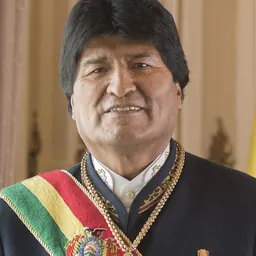
Accused of leading a terrorist organization that intended to assassinate President Evo Morales and Vice President Álvaro García Linera, Rózsa-Flores was killed by Bolivian Police during a raid on the Hotel Las Américas.
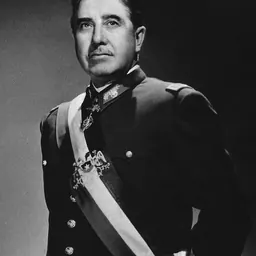
Early life Eduardo Rózsa-Flores was born in Santa Cruz de la Sierra, Bolivia. His father, György Obermayer Rózsa, was a Hungarian Jewish painter, who left Hungary in 1948, moving first to Paris, and, in 1952, to Bolivia with a French ethnographic mission, adopting the forename Jorge. He stayed on, lecturing art, and married Nelly Flores Arias, a Catalan immigrant and high school teacher. A committed communist, Jorge Rózsa moved the family to Chile to escape the Hugo Banzer dictatorship in 1972, but emigrated to Sweden in 1973 after Augusto Pinochet came to power. In 1974, they moved to Hungary.
Rózsa-Flores attended secondary school in Budapest. After military service, he went for a short period of intelligence training at the Felix Dzerzhinsky KGB Academy in the Soviet Union. He later joined the Hungarian intelligence services. He attended Eötvös Loránd University (ELTE), earning his degree in 1991. He was the last Secretary of the Communist Youth Organization at ELTE in 1990. He allegedly had cooperated with the Hungarian secret services as a student. Allegedly, he was once the interpreter for "Carlos" Ilich Ramirez Sanchez, who resided for a time in Hungary. His first journalism work was for Cuba's Prensa Latina. He was a founding member of the Hungarian Jewish Cultural Association, editor of jobbik.net, contributor to the magazines Kapu and Leleplező, and founding editor-in-chief of Ellenkultúra.info. In the late 1980s he reportedly joined Opus Dei, after which he embraced Islam.
War At the start of the Croatian War of Independence, Rózsa-Flores – known then as Jorge Eduardo Rózsa – worked as a correspondent for the Barcelona newspaper La Vanguardia and the Spanish unit of the BBC World Service. He arrived in Yugoslavia in June 1991, initially sympathetic to the Yugoslav cause. While reporting on and witnessing the war there, during which his car was shot at, he began seeing the Croats as the victims.
In the autumn of 1991, he joined the Croatian National Guard in Osijek as its first foreign volunteer, and he took part in several battles in Slavonia, mostly defending Laslovo, where he set up the Croatian army's First International Unit.
He later served as a commander of the special forces. He was wounded three times in battle and obtained the rank of colonel in 1993. Unconfirmed press reports have linked him to the deaths of two foreign journalists also in Croatia at that time, Swiss national Christian Würtenberg (who was in the First International Unit) and British photographer Paul Jenks.
He was promoted to major and then to a colonel in the Croatian Army. After the war, he mostly lived in Budapest.
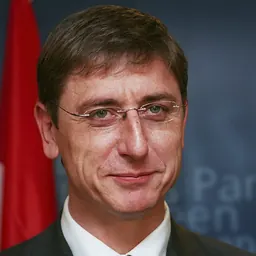
He is believed to have been involved in the leaking of a speech by Ferenc Gyurcsány. The editor-in-chief of Kapu magazine (who distributed the material in the Hungarian press) said that he received the audio material from him.
On 16 April 2009, Bolivian police killed Rózsa-Flores during a raid in the Las Americas hotel in Santa Cruz. Two others, a Hungarian national, Árpád Magyarosi and an Irish citizen, Michael Martin Dwyer, were also killed. Two others, Mario Tadić, a Croatian, and Előd Tóásó, a Hungarian – were arrested. Bolivian authorities said that Rózsa-Flores was the leader of a terrorist group which intended to assassinate Bolivian president Evo Morales. In 2011, members of the Police unit that performed the raid were awarded the Medal of Valor.
After 10 years of investigation, the trial is not over, and the opposition leaders claim that the terrorism issue was planned and financed by the government to persecute the principal leaders of the opposition as Branko Marinković. They argue that the case is not founded and, based on the law, it should be dismissed following the process prescribed.
Last interview (Különös Történetek) On 21 April 2009, Magyar Televízió (Hungarian television) broadcast an interview recorded in September 2008 by Hungarian journalist András Kepes prior to his last trip to Bolivia, and asked Kepes not to release the interview until he returned or in case something happened to him. He claimed in the interview that he was asked by the Bolivian opposition to help organise the defence of the city of Santa Cruz, drawing on his previous military experience. The city's leaders feared attacks from the central authorities and militias they had fomented. He also claimed that they were not preparing for offensive but defensive combat. He also said that he was not accepting any payment for the mission, which he undertook out of a sense of commitment, as he felt obliged to help his homeland.
Don’t just read it —
keep it.
Full-length biographies made to live with: read them, listen on the way to work, watch them tonight.
- E-book
- Audio
- Video
Instant download · yours to keep · every purchase keeps this site free
Important facts
People in Eduardo Rózsa-Flores's life
Named in this biography and alive at the same time



Related people
Same field, nearest in time


Contemporaries
People whose lives overlapped Eduardo Rózsa-Flores's


Frequently asked questions
Who was Eduardo Rózsa-Flores?
Bolivian-Hungarian-Croatian soldier, journalist, actor, and secret agent
When was Eduardo Rózsa-Flores born?
Eduardo Rózsa-Flores was born on 31 March 1960 in Santa Cruz de la Sierra.
When did Eduardo Rózsa-Flores die?
Eduardo Rózsa-Flores died on 16 April 2009 in Santa Cruz de la Sierra.
What was Eduardo Rózsa-Flores's occupation?
Eduardo Rózsa-Flores was a journalist, actor, writer, film producer, poet and mercenary.
What nationality was Eduardo Rózsa-Flores?
Eduardo Rózsa-Flores was Bolivian and Hungarian.
Sources & further reading
· Wikipedia: Eduardo Rózsa-Flores
· DBpedia: Eduardo Rózsa-Flores
Cite this page
APA: Biography.guide. (2026). Eduardo Rózsa-Flores. https://biography.guide/eduardo-rozsa-flores/
MLA: "Eduardo Rózsa-Flores." Biography.guide, https://biography.guide/eduardo-rozsa-flores/.
Chicago: "Eduardo Rózsa-Flores." Biography.guide. https://biography.guide/eduardo-rozsa-flores/.
Data last updated: 2026-09-20 · Spot an error? Report a correction.
Page generated 2026-09-27 05:08 UTC