
About Eduardo Barrón
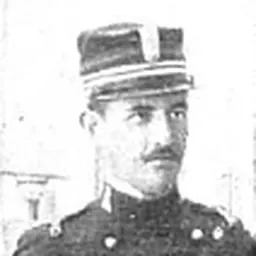
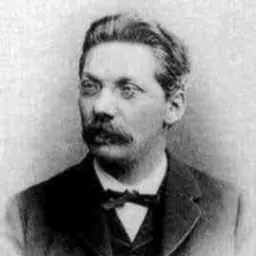
Lived 1888 – 1949 (aged 60). Eduardo Barrón was a Spanish military personnel and military flight engineer.
Loring R-1, the first aircraft designed by Barrón for Talleres Loring that was produced in significant numbers. The Loring R-3, the most successful plane designed by Barrón. Eduardo Barrón (full name Eduardo Barrón y Ramos de Sotomayor; 7 September 1888 – 13 January 1949) was a Spanish aeronautical engineer and military pilot who led the design department at Talleres Loring from 1923 to 1930.
Biography Eduardo Barrón was born in a village in Colonial Cuba. His family moved to Spain towards the turn of the century, settling in Madrid. He studied at the Academy of Military Engineering of Guadalajara in 1902, becoming an apprentice lieutenant in 1907. Barrón was posted to the Compañía de Aeroestación y Alumbrado en Campaña aerostat section in 1908 under Colonel Vives, becoming a certified balloon pilot in July 1909. His unit was transferred to Spanish North Africa where he took part in the local military campaigns between 1909 and 1910.
In 1911 Barrón was transferred back to peninsular Spain where he was selected to become an aircraft pilot, together with pioneering Spanish military airmen Alfredo Kindelán, Emilio Herrera, Enrique Arrillaga and José Ortiz Echagüe. Barrón became the second person to pass the first military pilot training course in Spain. The following year he was promoted to captain of the newly created Aeronautics section that was separated from the aerostat section under the orders of Alfredo Kindelán. Following the successful demonstration the Carde y Escoriaza company, based in Saragossa, was commissioned to build twelve Flecha planes that would not be ready until 1916.
Barrón continued modifying the Flecha prototype, producing a new Hispano-Suiza-fitted model which had improved visibility for the pilot and which he named Barrón W. Subsequently, twelve Barrón W were built at the Cuatro Vientos workshops. However, the stock of cheap and more technologically advanced World War I planes available at the end of the conflict foreclosed any incentive for the development of a local aircraft industry for the time being. Meanwhile, General Primo de Rivera took power and began a dictatorship that sought to protect and promote local industries. Thanks to this support, Barrón's following project, the Loring R.I reconnaissance and light bomber, went into production and thirty units were built for the Aeronáutica Militar of the Spanish Army. Based on this plane he designed and developed the Loring R-III, an aircraft of similar characteristics powered by a Hispano-Suiza 12Hb, which went into production with a total of 110 units built. These were delivered to the Aeronáutica Militar beginning in 1929, still during Primo de Rivera's dictatorship.
By 1930 Barrón suffered a stroke followed by hemiplegia and had to interrupt all professional activity at Loring Aeronautical Works. A prototype was built of his Loring T-3 three-engined commercial monoplane, also known as Barrón Colonial in 1931, but other designs, including the Loring B-2 a 4,000 kg payload bomber powered by six engines, remained in the project stage.
Barrón moved to Seville, his wife's town, in 1933 where he lived in semi-retirement. In July 1936, at the outbreak of the Spanish Civil War, he was commissioned by General Queipo de Llano to adapt local industries to the war effort. At the end of the civil war, he was promoted to the rank of colonel of the Corps of Aeronautical Engineers. In 1944 he was given the largely ceremonial post of inspector at the Dirección General de Industria y Material, and had to move to Madrid, ascending to the rank of general in 1945. He died in Madrid in 1949, following a new stroke.
Don’t just read it —
keep it.
Full-length biographies made to live with: read them, listen on the way to work, watch them tonight.
- E-book
- Audio
- Video
Instant download · yours to keep · every purchase keeps this site free
Important facts
People in Eduardo Barrón's life
Named in this biography and alive at the same time
Related people
Same field, nearest in time





Contemporaries
People whose lives overlapped Eduardo Barrón's


Frequently asked questions
Who was Eduardo Barrón?
Spanish aviation pioneer
When was Eduardo Barrón born?
Eduardo Barrón was born on 7 September 1888 in Matanzas.
When did Eduardo Barrón die?
Eduardo Barrón died on 13 January 1949 in Madrid.
What was Eduardo Barrón's occupation?
Eduardo Barrón was a military personnel and military flight engineer.
What nationality was Eduardo Barrón?
Eduardo Barrón was Spanish.
Sources & further reading
Cite this page
APA: Biography.guide. (2026). Eduardo Barrón. https://biography.guide/eduardo-barron-military-personnel/
MLA: "Eduardo Barrón." Biography.guide, https://biography.guide/eduardo-barron-military-personnel/.
Chicago: "Eduardo Barrón." Biography.guide. https://biography.guide/eduardo-barron-military-personnel/.
Data last updated: 2026-09-20 · Spot an error? Report a correction.
Page generated 2026-09-27 05:21 UTC