
Eduard von Borsody
Austrian cinematographer, film director, film editor
About Eduard von Borsody
Lived 1898 – 1970 (aged 71). Eduard von Borsody was an Austrian film director, screenwriter, cinematographer, film editor, director and writer.
Eduard von Borsody (; 13 June 1898 – 1 January 1970) was an Austrian cameraman, film editor, film director, and screenplay writer.
Biography His film career began as a cameraman. Among his first jobs were three films on which Mihály Kertész (later Michael Curtiz) carried out the production design for the Vienna-based Sascha-Film: an Arthur Schnitzler adaptation Young Medardus (1923), the romance Fiaker Nr. 13 and the artist's life Der goldene Schmetterling (both 1926). Later he worked with such different directors as Carl Wilhelm, Ernő Metzner, Gustav Ucicky and Max Nosseck.
After the switch to sound film he was engaged by the German industry leader Universum Film AG (Ufa) as a film editor (cutter). Eduard von Borsody thereafter often worked under Ucicky's direction and edited for him, among many other films, the National Socialist propaganda films Morgenrot and Refugees. In 1937, after some experience as assistant director, also with Ucicky, and a series of short dramas, he directed his first film for Ufa: Diamonds. Rubber (1938), with René Deltgen and Gustav Diessl, was an adventure film about the real-life English explorer, Henry Wickham, who in 1876 smuggled rubber seeds to England in order to break Brazil's rubber monopoly. Sensationsprozeß Casilla (1939) was about a child abduction. With Congo Express (also in 1939) Borsody again shot an adventure film in a tropical setting in an attempt to capitalise on the success of Rubber. Willy Birgel, Marianne Hoppe and René Deltgen starred.
Once World War II began, light cheerful escapist films were much in demand, and von Borsody was cinematographer for the romantic musical drama Wunschkonzert ("Request Concert"), one of the most successful films of the entire Nazi period. Ilse Werner plays a young Berliner, who patiently and trustingly awaits the return of the man to whom she is engaged, played by Carl Raddatz, ordered on a secret mission to Spain. The film was classified as "politically valuable", "artistically valuable", "valuable for the people". and "valuable for youth", and took 7.6 million Reichsmarks.
The science fiction film Weltraumschiff 18 (i.e. Spaceship 18), which he directed and had already begun filming had to be abandoned because of the outbreak of the war. Material was used in the short science-fiction movie, Weltraumschiff 1 startet (Spaceship 1 takes off). The last film Borsody shot before the end of the war, the Gottfried Keller adaptation Jugendliebe fell afoul of the film censors and did not open until 1947. After the end of the war Borsody had no trouble continuing his film career despite his previous involvement in propaganda films. After a number of Heimatfilme came his best-known post-war film, the romantic comedy of 1956 Dany, bitte schreiben Sie ("Dany, Please Write!"), with Sonja Ziemann and Rudolf Prack, and the smuggling film Liane, das Mädchen aus dem Urwald, with which he returned to the exotic. His next film, Skandal um Dodo (1958), was one of the first post-war films in German to star a black woman.
His 1965 film Bergwind was entered into the 4th Moscow International Film Festival.
Family Von Borsody was the father of actor Hans von Borsody. He was the younger brother of set designer Julius von Borsody. His granddaughter, Suzanne von Borsody, is a German actress.
Filmography Silent films as cameraman if not indicated otherwise: Young Medardus (dir. Michael Curtiz, 1923) – camera (with Gustav Ucicky) Nameless (dir. Michael Curtiz, 1923) – camera (with Gustav Ucicky) Die vertauschte Braut (dir. Carl Wilhelm, 1925) Love Story (1925) Der Bastard (1925) Die Mühle von Sanssouci (1926) - camera assistant Fiaker Nr. 13 (1926) – camera (with Gustav Ucicky) Dürfen wir schweigen? (1926) The Third Squadron (dir. Carl Wilhelm, 1926) - camera (with Gustav Ucicky) Der goldene Schmetterling (1926) – camera (with Gustav Ucicky) Die Pratermizzi (dir. Gustav Ucicky, Karl Leiter, 1927) Tingel Tangel (dir. Gustav Ucicky, 1927) Höhere Töchter (1927) Polizeibericht Überfall (1928) It Attracted Three Fellows (dir. Carl Wilhelm, 1928) The Case of Prosecutor M (1928) Die Dame auf der Banknote (1929) The Call of the North (1929) The Missing Wife (1929) Liebeskleeblatt (1930) Die Jugendgeliebte/Goethe's Jugendgeliebte (1930) Rivals for the World Record (1930) Dance Into Happiness (1930)
Sound films to 1945 Yorck (dir. Gustav Ucicky, 1931) - assistant director, editor Two Hearts Beat as One (dir. Wilhelm Thiele, 1932) The Beautiful Adventure (dir. Reinhold Schünzel, 1932) - editor The Beautiful Adventure (dir. Reinhold Schünzel, Roger Le Bon, 1932) - editor Morgenrot (dir. Gustav Ucicky, 1933) - editor Season in Cairo (dir. Reinhold Schünzel, 1933) Refugees (dir. Gustav Ucicky, 1933) - assistant director, editor The Young Baron Neuhaus (dir. Gustav Ucicky, 1934) - editor Night in May (dir. Gustav Ucicky, Henri Chomette, Raoul Ploquin, 1934) Fresh Wind from Canada (dir. Erich Holder, 1935) - editor Joan of Arc (dir. Gustav Ucicky, 1935) - assistant director, editor Schnitzel fliegt (1935; drama short film) - director, screenplay The Last Four on Santa Cruz (dir. Werner Klingler, 1936) - editor Savoy Hotel 217 (dir. Gustav Ucicky, 1936) - editor Was ein Häkchen werden will (1936; drama short film) - director Stradivaris Schülergeige (1936; drama short film) - director Rosen und Liebe (1936; drama short film) - director Patentkunstschloss (1936; drama short film) - director In 40 Minuten (1936; drama short film) - director Die Hochzeitsreise (1936; drama short film) - director Früh übt sich (1936; drama short film) - director Du bist so schön, Berlinerin (1936; drama short film) - director The Man Who Was Sherlock Holmes (dir. Karl Hartl, 1937) - assistant director Jürgens riecht Lunte (1937; drama short film) - director, screenplay Diamonds (1937) - director Die Bombenidee (1937; drama short film) - director Rubber (1938) - director, screenplay The Sensational Casilla Trial (1939) - director Congo Express (1939) - director, screenplay Wunschkonzert (1940) - director, screenplay Whom the Gods Love (dir. Karl Hartl, 1942) - screenplay
Post-war films Jugendliebe/Übers Jahr, wenn die Kornblumen blühen (1944/47) - director (Austria 1948, with Brigitte Horney) - director, screenplay Arlberg Express (Austria 1948, with Paul Hubschmid and Elfe Gerhart) - director White Gold (Austria 1949, with Angela Salloker) - director, screenplay Wedding with Erika (West Germany 1950, with Marianne Schönauer and Wolfgang Lukschy) - director, screenplay Die Kreuzlschreiber (1950) - director, screenplay The Fourth Commandment (Austria 1950, with Attila Hörbiger) - director, screenplay Sensation in Savoy (West Germany 1950, with Sybille Schmitz and Harald Paulsen) - director One Night's Intoxication (West Germany 1951, with Christl Mardayn) - director Vanished Melody (Austria 1952, with Elfie Mayerhofer) - director, screenplay Ich hab' mich so an Dich gewöhnt/Geschiedenes Fräulein (Austria 1952, with Inge Egger and O. W. Fischer) - director, screenplay The Landlady of Maria Wörth (Austria 1952, with Isa and Jutta Günther) - director, screenplay (Austria 1953, with Attila Hörbiger) - director, screenplay If I Only Have Your Love (Austria 1953) - director Maxie (Austria 1954, with Cornell Borchers) - director, screenplay The Major and the Bulls (West Germany 1955, with Attila Hörbiger and Christiane Hörbiger) - director Geliebte Corinna (West Germany 1956, with Elisabeth Müller and Hans Söhnker) - director Dany, bitte schreiben Sie (West Germany 1956) - director, screenplay Liane, Jungle Goddess (West Germany 1956, with Marion Michael and Hardy Krüger) - director (Austria 1958, with Olive Moorefield and Karin Dor) - director Der Schäfer vom Trutzberg (West Germany 1959, with Heidi Brühl and Hans von Borsody) - director Traumrevue (Austria 1959, with Waltraut Haas and Eva Pawlik) - director When the Bells Sound Clearly (Austria 1959, with Willy Birgel) - director, screenplay Romance in Venice (Austria 1962, with Willy Birgel and Ann Smyrner) - director, screenplay Bergwind (Austria 1963, with and Hans von Borsody) - director, screenplay
Don’t just read it —
keep it.
Full-length biographies made to live with: read them, listen on the way to work, watch them tonight.
- E-book
- Audio
- Video
Instant download · yours to keep · every purchase keeps this site free
Important facts
People in Eduard von Borsody's life
Named in this biography and alive at the same time


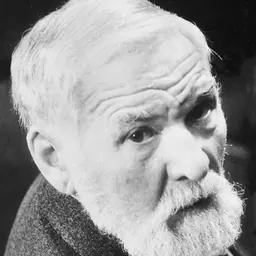
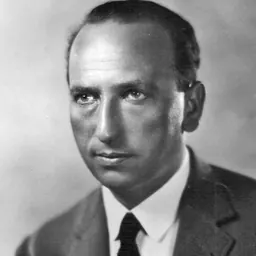
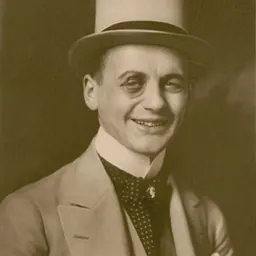


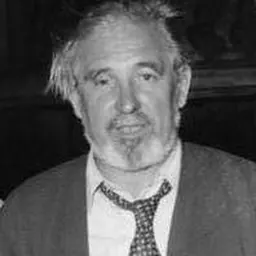
Related people
Same field, nearest in time
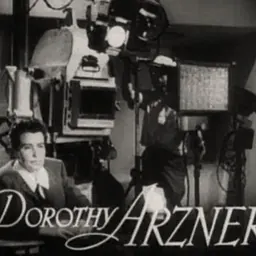

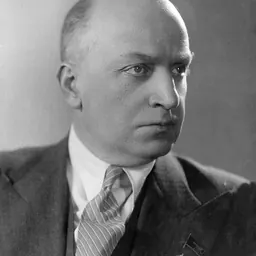

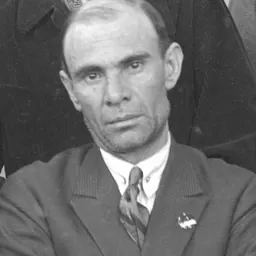

Contemporaries
People whose lives overlapped Eduard von Borsody's
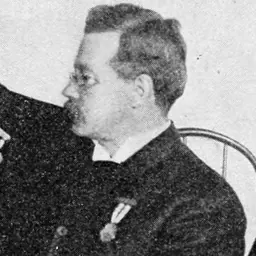

Frequently asked questions
Who was Eduard von Borsody?
Austrian cinematographer, film director, film editor (1898–1970)
When was Eduard von Borsody born?
Eduard von Borsody was born on 13 June 1898 in Vienna.
When did Eduard von Borsody die?
Eduard von Borsody died on 1 January 1970 in Vienna.
What was Eduard von Borsody's occupation?
Eduard von Borsody was a film director, screenwriter, cinematographer, film editor, director and writer.
What nationality was Eduard von Borsody?
Eduard von Borsody was Austrian.
Sources & further reading
· Wikipedia: Eduard von Borsody
Cite this page
APA: Biography.guide. (2026). Eduard von Borsody. https://biography.guide/eduard-von-borsody/
MLA: "Eduard von Borsody." Biography.guide, https://biography.guide/eduard-von-borsody/.
Chicago: "Eduard von Borsody." Biography.guide. https://biography.guide/eduard-von-borsody/.
Data last updated: 2026-09-20 · Spot an error? Report a correction.
Page generated 2026-09-27 05:11 UTC