
About Eduard Seler
Lived 1849 – 1922 (aged 72). Eduard Seler was a German anthropologist, archaeologist, university teacher, paleontologist, botanist and botanical collector.
Eduard Georg Seler (December 5, 1849 – November 23, 1922) was a prominent German anthropologist, ethnohistorian, linguist, epigrapher, academic and Americanist scholar, who made extensive contributions in these fields towards the study of pre-Columbian era cultures in the Americas.
Research Seler is best known for his foundational studies concerning the ethnography, documents, and history of Mesoamerican cultures, for which he is regarded as one of the most influential scholars active around the turn of the 20th century. Seler laid many fundamentals in understanding and deciphering the Aztec pictorial script. A main contribution was the re-discovery and analysis of the basic Aztec calendar system: the existence of two Aztec calendars, a 365-day solar profane (everyday use) and a 260-day religious calendar. He also noted from the sources that the ceremonial killing victim figures alleged by Spanish priests and military (repeatedly reported as being greater than 10,000 or even 100,000) were most probably vastly exaggerated propaganda. This was supported by excavations in the late 20th century. Seler also brought Lienzo Seler II, an indigenous manuscript, to Berlin in 1897.
Being poor and of ailing health, he was helped and supported for decades by his wife Cäcilie (Cecilia) Seler-Sachs (1855–1935), physically and intellectually. Her photos of Aztec temples and pyramids are still useful to scientists, and after her husband's death she went about verifying his works and publishing them. Seler was also helped by a Mexican scholar and by historians Antonio Peñafiel and Manuel Martínez Gracida.
Timeline 1863-69 — Attendance at Joachimsthalsche Gymnasium, Berlin 1870-71 — Military service (during the Franco-Prussian War) 1871-75 — Studied at University of Berlin 1875-79 — Teaching science and mathematics 1887 — Doctoral degree from University of Leipzig 1895-97 — Investigation of Maya cave sites including Quen Santo 1904-22 — Directorship of American Division, Königliches Museum für Völkerkunde in Berlin
Writings by Eduard Seler Gesammelte Abhandlungen zur Amerikanischen Sprach- und Alterthumskunde. 5 vols. Berlin : A. Asher, 1902-1923. Collected Works in Mesoamerican Linguistics and Archaeology. Culver City (CA) : Labyrinthos, 1990-1998; translated (by Charles P. Bowditch & Frank E. Comparato) into English.
Don’t just read it —
keep it.
Full-length biographies made to live with: read them, listen on the way to work, watch them tonight.
- E-book
- Audio
- Video
Instant download · yours to keep · every purchase keeps this site free
Important facts
People in Eduard Seler's life
Named in this biography and alive at the same time

Related people
Same field, nearest in time
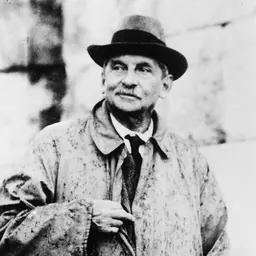


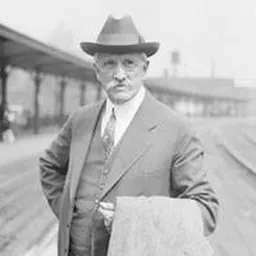

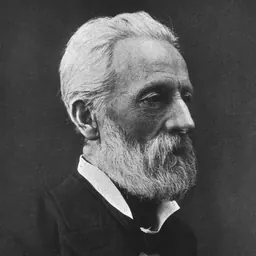
Contemporaries
People whose lives overlapped Eduard Seler's

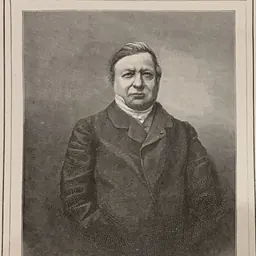


Frequently asked questions
Who was Eduard Seler?
German academic (1849–1922)
When was Eduard Seler born?
Eduard Seler was born on 5 December 1849 in Krosno Odrzańskie.
When did Eduard Seler die?
Eduard Seler died on 23 November 1922 in Berlin.
What was Eduard Seler's occupation?
Eduard Seler was an anthropologist, archaeologist, university teacher, paleontologist, botanist and botanical collector.
What nationality was Eduard Seler?
Eduard Seler was German.
Sources & further reading
Cite this page
APA: Biography.guide. (2026). Eduard Seler. https://biography.guide/eduard-seler/
MLA: "Eduard Seler." Biography.guide, https://biography.guide/eduard-seler/.
Chicago: "Eduard Seler." Biography.guide. https://biography.guide/eduard-seler/.
Data last updated: 2026-09-25 · Spot an error? Report a correction.
Page generated 2026-09-27 05:11 UTC