
About Eduard Gans
Lived 1797 – 1839 (aged 42). Eduard Gans was a German jurist, philosopher, university teacher and historian.
Eduard Gans (March 22, 1797 – May 5, 1839) was a German jurist.
Biography Gans was born in Berlin to prosperous Jewish parents. He studied law first at the Friedrich Wilhelm University, Berlin, then at Göttingen, and finally at Heidelberg, where he attended G. W. F. Hegel's lectures and became thoroughly imbued with the principles of Hegel's philosophy. In 1820, after taking his doctor's degree, he returned to Berlin as a lecturer. In 1825 he converted to the Evangelical Church in Prussia, and the following year was appointed extraordinary, and in 1828 ordinary, professor in the Berlin University faculty of law. Before converting, he was a member of the Society for the Culture and Science of the Jews, alongside Joel Abraham List, Isaac Marcus Jost and Leopold Zunz.
At this period, the historical school of jurisprudence was coming to the front. Gans, with his Hegelian tendencies predisposing him to treat law historically, applied the method to one special branch—the right of succession. His great work, Erbrecht in weltgeschichtlicher Entwicklung (1824, 1825, 1829 and 1835), contains an extensive survey of facts, and presents the general theory of the slow evolution of legal principles.
In 1830, and again in 1835, Gans visited Paris, and formed an intimate acquaintance with the leaders of literary culture and criticism there. The liberality of his views, especially on political matters, drew upon Gans the displeasure of the Prussian government, and his course of lectures on the history of the last fifty years (published as Vorlesungen über die Geschichte der letzten fünfzig Jahre, Leipzig, 1833–1834) was prohibited. He died in Berlin.
Other works are a treatise on the fundamental laws of property (Über die Grundlage des Besitzes, Berlin, 1829), a portion of a systematic work on the Roman civil law (System des römischen Zivilrechts, 1827), and a collection of his miscellaneous writings (Vermischte Schriften. 1832). Gans edited the Philosophie der Geschichte in Hegel's Werke, and contributed a preface. He also wrote Das Erbrecht in Weltgeschichtlicher Entwickelung (4 vols., 1834) which was translated into French.
Don’t just read it —
keep it.
Full-length biographies made to live with: read them, listen on the way to work, watch them tonight.
- E-book
- Audio
- Video
Instant download · yours to keep · every purchase keeps this site free
Important facts
People in Eduard Gans's life
Named in this biography and alive at the same time
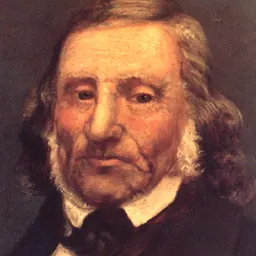
Related people
Same field, nearest in time
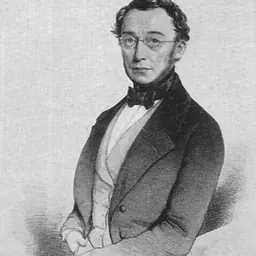



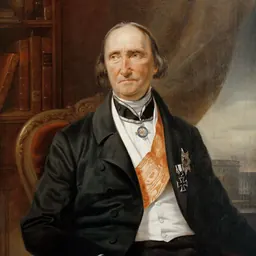
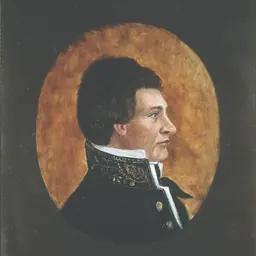
Contemporaries
People whose lives overlapped Eduard Gans's






Frequently asked questions
Who was Eduard Gans?
German jurist (1797–1839)
When was Eduard Gans born?
Eduard Gans was born on 22 March 1797 in Berlin.
When did Eduard Gans die?
Eduard Gans died on 5 May 1839 in Berlin.
What was Eduard Gans's occupation?
Eduard Gans was a jurist, philosopher, university teacher and historian.
What nationality was Eduard Gans?
Eduard Gans was German.
Sources & further reading
Cite this page
APA: Biography.guide. (2026). Eduard Gans. https://biography.guide/eduard-gans/
MLA: "Eduard Gans." Biography.guide, https://biography.guide/eduard-gans/.
Chicago: "Eduard Gans." Biography.guide. https://biography.guide/eduard-gans/.
Data last updated: 2026-09-20 · Spot an error? Report a correction.
Page generated 2026-09-27 05:30 UTC