
About Eduard Dietl
Lived 1890 – 1944 (aged 53). Eduard Dietl was a German military personnel, generaloberst, military officer and soldier.
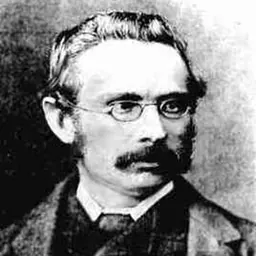
Eduard Wohlrat Christian Dietl (21 July 1890 – 23 June 1944) was a German Heer general in the Wehrmacht of Nazi Germany during World War II who commanded the 20th Mountain Army. He received the Knight's Cross of the Iron Cross with Oak Leaves and Swords.
Military career Born in 1890, Dietl joined the army on 1 October 1909 as a Fahnenjunker in the 5th Infantry Regiment "Grand Duke Ernst Ludwig of Hesse" of the Bavarian Army in Bamberg. In World War I, he was deployed on the Western Front and he was wounded in October 1914 and October 1918. During the Weimar Republic, he joined the German Workers' Party (DAP), the precursor to the National Socialist German Workers' Party (NSDAP; Nazi Party), and the paramilitary group Freikorps of Franz Ritter von Epp in 1919. Dietl continued to serve in the German Army and, as a Generalmajor, he helped organise the 1936 Winter Olympics held at Garmisch-Partenkirchen.
Dietl commanded the German 3rd Mountain Division that participated in the German invasion of Norway on 9 and 10 April 1940. Most of this division was landed at Narvik by a German naval force of ten destroyers, commanded by Commodore Friedrich Bonte, subsequently all ten destroyers that had ferried Dietl's troops to Narvik were sunk in the First and Second Battles of Narvik. Dietl's mountaineers withdrew into the hills and later retook the town when Britain abandoned her efforts to evict the Germans from Norway due to German success on the Western Front (the Franco-German border, Luxembourg, Belgium and the Netherlands). Outnumbered by Norwegian, British, French and Polish forces, his skilful defence utilized ammunition, food and sailors (re-drafted as infantrymen) from the sunken ships. This gained him the nickname "The hero of Narvik".
Dietl subsequently commanded German forces in Norway and northern Finland and in Eastern Europe and rose to the rank of Generaloberst, commanding the 20th Mountain Army on the northern Eastern Front, where the results of the German Arctic campaign were disappointing. Dietl initially turned down his promotion, but was convinced to accept the appointment by Generaloberst Alfred Jodl. Soviet troops presented challenges for his command.
Death On 23 June 1944, the Ju 52 aircraft carrying Dietl, General der Infanterie Thomas-Emil von Wickede, General der Gebirgstruppe Karl Eglseer, Generalleutnant and three other passengers crashed in the vicinity of the small village of Rettenegg, Styria. There were no survivors. Hitler eulogized him at Dietl's state funeral.
Until 1997, the municipality of Ringelai in the Bavarian Forest honoured Dietl with a memorial plaque. In 1997, the site changed into one honoring World War I veteran Albert Leo Schlageter instead. The Bavarian town Freyung honoured Dietl by naming a street General-Dietl-Straße (renamed Jan. 1998).
Assessment Dietl was sent to Finland designated to be the "hero in the snow" (to be a counterpart to Rommel who would be the "hero in the sun", also given a secondary theatre leaving the main stage to Hitler). A convinced National Socialist and one of Hitler's favourite generals, he was the first German soldier to be awarded the oak leaves cluster to the Knight's Cross of the Iron Cross - on 19 June 1940. Dietl was also popular among his men and his Finnish allies.
Dietl was involved in numerous war crimes. The first was the passing of the Commissar Order. Dietl was responsible for troops who employed the use of slave labourers in Wehrmacht penal camps in Finland and Norway. The camps employed extermination through work. The so-called probation program included the walk from Rovaniemi to Petsamo on the Arctic Ocean, in which tired penal soldiers were killed with shots in the neck. From the summer of 1942 onwards, there were arbitrary shootings and sadistic abuse of German penal soldiers by Wehrmacht guards in Finland and northern Norway. In a speech on 16 June 1942, Dietl himself threatened to murder the penal soldiers if they did not take part in the marches.
Awards
Prince Regent Luitpold Medal (Bavaria; 12 March 1911) Iron Cross (1914) 2nd class (16 September 1914) & 1st class (3 September 1916) Clasp to the Iron Cross (1939) 2nd class (24 September 1939) & 1st class (15 April 1940) 1st Oak Leaves as Generalleutnant and commanding general of the Gebirgs-Korps Norwegen (19 July 1940) Swords as Generaloberst and commander in chief of the 20. Gebirgs-Armee (1 July 1944, posthumously) Pilot/Observer Badge in Gold with Diamonds(5 January 1941)
Order of Merit, Commander's Cross with carry permit (Chile; 16 March 1934) Order of the White Rose of Finland, Grand Cross with Breast Star and Swords (Finland; 9 November 1941) Order of the Cross of Liberty 1st class with Star, Oak leaves and Swords (20 January 1944) & Grand Cross (Finland; 28 June 1944)
Don’t just read it —
keep it.
Full-length biographies made to live with: read them, listen on the way to work, watch them tonight.
- E-book
- Audio
- Video
Instant download · yours to keep · every purchase keeps this site free
Important facts
People in Eduard Dietl's life
Named in this biography and alive at the same time



Related people
Same field, nearest in time





Contemporaries
People whose lives overlapped Eduard Dietl's


Frequently asked questions
Who was Eduard Dietl?
German general (1890-1944)
When was Eduard Dietl born?
Eduard Dietl was born on 21 July 1890 in Bad Aibling.
When did Eduard Dietl die?
Eduard Dietl died on 23 June 1944 in Hartberg.
What was Eduard Dietl's occupation?
Eduard Dietl was a military personnel, generaloberst, military officer and soldier.
What nationality was Eduard Dietl?
Eduard Dietl was German.
Sources & further reading
Cite this page
APA: Biography.guide. (2026). Eduard Dietl. https://biography.guide/eduard-dietl/
MLA: "Eduard Dietl." Biography.guide, https://biography.guide/eduard-dietl/.
Chicago: "Eduard Dietl." Biography.guide. https://biography.guide/eduard-dietl/.
Data last updated: 2026-09-20 · Spot an error? Report a correction.
Page generated 2026-09-27 05:20 UTC