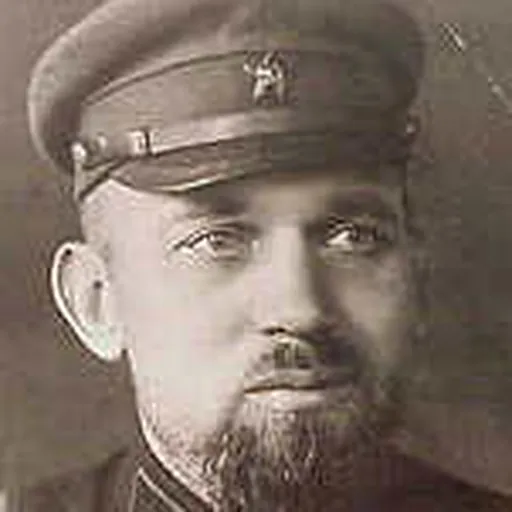
About Eduard Berzin
Lived 1894 – 1938 (aged 44). Eduard Berzin was a Latvian and Russian torturer, military officer, revolutionary and politician.
Eduard Petrovich Berzin (, ; 19 February 1894 – 1 August 1938) was a Latvian Bolshevik, Chekist and NKVD officer that set up Dalstroy, which instituted a system of slave-labor camps in Kolyma, North-Eastern Siberia, one of the most brutal Gulag regions, where hundreds of thousands of political prisoners died or were murdered in subsequent decades.
Biography Early life
Bērziņš was born in to a Latvian peasant family. Before World War I, Bērziņš studied painting at the Royal Academy of the Arts in Berlin, where he met his wife, Elza Mittenberga, who was also an artist, from Riga. In 1915, he joined the Russian army and fought in the First World War, where he was awarded the Cross of St. George and became an officer.
After the outbreak of the Russian Revolution of 1917, he joined the communists. In 1918, Berzin became a commander of the First Artillery Division of the Red Latvian Riflemen with special responsibilities for Vladimir Lenin's protection. Gaining the trust of Feliks Dzerzhinsky, he soon became a member of the Cheka secret political police.
In 1926, Joseph Stalin gave Berzin the task of setting up the Vishera complex of labour camps in the Urals known as Vishlag where cellulose and paper were to be produced. This he did with great enthusiasm and success. The 70,000 prisoners there were in most cases treated surprisingly well, even receiving wages and benefitting from cinemas, libraries, discussion clubs and dining halls.
As head of Dalstroy
It was apparently on the basis of this success that in 1931, Stalin appointed him head of Dalstroy, the authority which was to develop Kolyma, making use essentially of forced labour consisting of some convicted criminals, but mainly political prisoners. He arrived in Nagaev Bay by steamship on 2 February 1932 together with a few prisoners (mainly mining engineers) and some security guards.
It is reported that Berzin's primary aim was to exploit the region to the fullest capacity, in line with the objectives of Stalin's first five-year plan. The prisoners were simply, his workforce. The focus of his attention was gold mining, as gold was needed to pay for industrial development across Russia. This required construction of the harbour town of Magadan, substantial road building, some lumbering, and building numerous labour camps.
From the very start, however, the lack of proper preparations combined with an exceptionally hard winter in 1932 and 1933 led to tremendous hardship, particularly for the prisoners sent up into the River Kolyma valley to build roads and mine gold, very many of whom perished in the cold.
It was said that Berzin tried to treat his prisoners comparatively well in order to enable them to carry out their work as efficiently as possible. In reality, this was only a half-truth: while Berzin allowed hard-working prisoners shortened sentences—and even paid them salaries—he also sent less valuable prisoners to smaller camps, known as lagpunkts, where many were tortured and killed.
The years of 1934 to 1937 were remembered as a comparatively good period, particularly in the light of what was to follow under later leaders. The Soviet Union purchased the ships in the Netherlands for the sea fleet of "Dalstroy" in April and May 1935, and Eduard Berzin arrived in Amsterdam to see and check two purchased steamers Brielle and Almelo, which were renamed Dzhurma and «Яго́да» (later was renamed «Дальстрой»), and to hasten the purchase the third ship «Кулу».
Upon returning to Kolyma, no doubt as a result of instructions he had received, he issued even harsher orders. Prisoners were required to work in the opencast mines at temperatures as low as -55 C. As a result, annual gold output rose to 33 tons.
Despite the dreadful conditions and the high death toll, over the years Berzin succeeded in having a road built to Seymchan high up in the Kolyma valley which was to lead to even higher gold outputs in subsequent years.
Family life in Kolyma
In her memoirs, his wife Elza describes their family life in Magadan in some detail. Berzin, clad in a bearskin coat, would spend the days travelling around the camps in the Rolls-Royce that used to be Lenin's car to personally oversee the work in progress. He only saw his children - Petia aged 12 and Mirza aged 15 - at breakfast and dinner. He enjoyed music, listened to gramophone records of Tchaikovsky, Schubert and Edvard Grieg (which he had bought on an official visit to Philadelphia in 1930), and encouraged the children to perform in the school theatre under the guidance of artistic prisoners.
Shortly after a holiday with his family in Italy with visits to Rome, Venice and Sorrento, Berzin left Magadan on 4 December 1937 and was arrested upon his arrival in Moscow on 19 December, accused of spying for Britain and Germany and planning to put Magadan under the control of the Japanese. On 1 August 1938, at the end of the Great Purge, Berzin was tried and immediately shot at Lubyanka prison. He was posthumously rehabilitated in 1956.
Assessment and commemoration
While Berzin used increasingly brutal methods in the Kolyma camps, his tactics were not as dreadful as those used by his successors. Nevertheless, under pressure from Stalin, he drove his workforce to impossible levels of hardship which inevitably resulted in illness, starvation, and death in even higher proportions.
In 2018, Eduard Berzin was in the short list of potential new official names for the airport of Magadan, eventually losing to Vladimir Vysotsky.
Don’t just read it —
keep it.
Full-length biographies made to live with: read them, listen on the way to work, watch them tonight.
- E-book
- Audio
- Video
Instant download · yours to keep · every purchase keeps this site free
Important facts
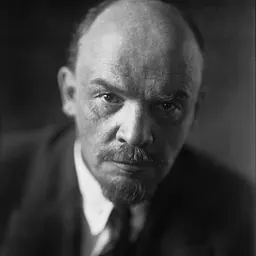
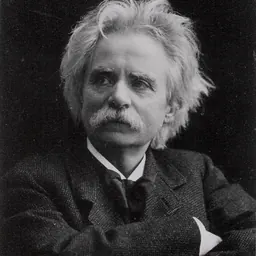
People in Eduard Berzin's life
Named in this biography and alive at the same time

Related people
Same field, nearest in time
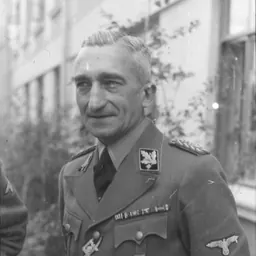


Contemporaries
People whose lives overlapped Eduard Berzin's

Frequently asked questions
Who was Eduard Berzin?
Latvian NKVD officer (1894–1938)
When was Eduard Berzin born?
Eduard Berzin was born on 19 February 1894 in Riga.
When did Eduard Berzin die?
Eduard Berzin died on 1 August 1938 in Moscow.
What was Eduard Berzin's occupation?
Eduard Berzin was a torturer, military officer, revolutionary and politician.
What nationality was Eduard Berzin?
Eduard Berzin was Latvian and Russian.
Sources & further reading
Cite this page
APA: Biography.guide. (2026). Eduard Berzin. https://biography.guide/eduard-berzin/
MLA: "Eduard Berzin." Biography.guide, https://biography.guide/eduard-berzin/.
Chicago: "Eduard Berzin." Biography.guide. https://biography.guide/eduard-berzin/.
Data last updated: 2026-09-21 · Spot an error? Report a correction.
Portrait: Wikimedia Commons · author & licence
Page generated 2026-09-27 04:59 UTC