
About Eduard Bargheer
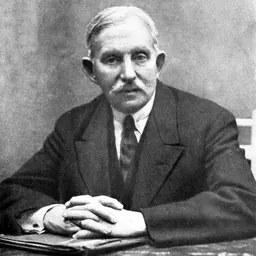
Lived 1901 – 1979 (aged 77). Eduard Bargheer was a German and Italian painter, interpreter, printer, graphic artist, mosaicist and muralist.
Eduard Bargheer (25 December 1901 – 1 July 1979) was a German painter and printmaker. His early oeuvre had a close affinity to Expressionism.
Life and work Eduard Bargheer was born in Finkenwerder, Hamburg as son of Karl Bargheer, a primary school headmaster, and grew up together with his elder brother Ernst Bargheer (pedagogue and, later, ethnologist) and his five sisters. His father died in 1914, his mother in 1919. Ernst Bargheer, 24 years old at the time, assumed the guardianship of his younger brother and sisters and at his insistence Eduard trained to become a primary school teacher. During these early years, Eduard Bargheer not only benefited from his artistic training at the college of arts and crafts in Hamburg-Lerchenfeld but also embarked upon his own private studies, which he continued throughout his entire life. In 1924, the two brothers, Ernst and Eduard, fell out with one another, and Eduard set his own course toward becoming a painter.
In 1925, Eduard Bargheer visited Italy for the first time, where he spent a long time in Florence. His deep affection for Italy and its culture was to be a principal theme of his life. Extended travels to Paris followed in 1926 and 1927. In 1928, Bargheer built himself a studio close to the Westerdeich in Finkenwerder. In 1929, he became a member of the Hamburg Secession. It was about this time that he became closely involved in the circles around the art historians Aby Warburg and Erwin Panofsky. In 1932/33, Bargheer used a grant from the City of Hamburg to live in Paris for several months, and there he made friends with Heinrich Heydenreich, a student of Panofsky's.
In 1933, the Hamburg Secession disbanded of its own accord, for it did not wish to exclude its Jewish members, as the Nazi Party required. Bargheer visited Switzerland in 1935 and met Paul Klee there. In the same year he bought a small fisherman's cottage – now the Bargheer Haus – on the slopes of the Süllberg in Blankenese, Hamburg. Four years later, in 1939, Bargheer left Germany for Ischia. After the war, he took part in documenta I in Kassel in 1955 and in documenta II in 1959.
He was made an honorary citizen of Forio/Ischia in 1948; while still retaining his German nationality, he received Italian citizenship in 1951. He died in Blankenese, Hamburg in 1979.
Reception Eduard Bargheer is known above all for his landscape watercolours, which are distinguished by a light-coloured, crystalline style. His combinations of the abstract and the figural evoke associations with the works of Paul Klee and Werner Gilles.
Don’t just read it —
keep it.
Full-length biographies made to live with: read them, listen on the way to work, watch them tonight.
- E-book
- Audio
- Video
Instant download · yours to keep · every purchase keeps this site free
Important facts
People in Eduard Bargheer's life
Named in this biography and alive at the same time



Related people
Same field, nearest in time

Contemporaries
People whose lives overlapped Eduard Bargheer's


Frequently asked questions
Who was Eduard Bargheer?
German artist (1901-1979)
When was Eduard Bargheer born?
Eduard Bargheer was born on 25 December 1901 in Finkenwerder.
When did Eduard Bargheer die?
Eduard Bargheer died on 1 July 1979 in Blankenese.
What was Eduard Bargheer's occupation?
Eduard Bargheer was a painter, interpreter, printer, graphic artist, mosaicist and muralist.
What nationality was Eduard Bargheer?
Eduard Bargheer was German and Italian.
Sources & further reading
Cite this page
APA: Biography.guide. (2026). Eduard Bargheer. https://biography.guide/eduard-bargheer/
MLA: "Eduard Bargheer." Biography.guide, https://biography.guide/eduard-bargheer/.
Chicago: "Eduard Bargheer." Biography.guide. https://biography.guide/eduard-bargheer/.
Data last updated: 2026-09-20 · Spot an error? Report a correction.
Page generated 2026-09-27 05:21 UTC