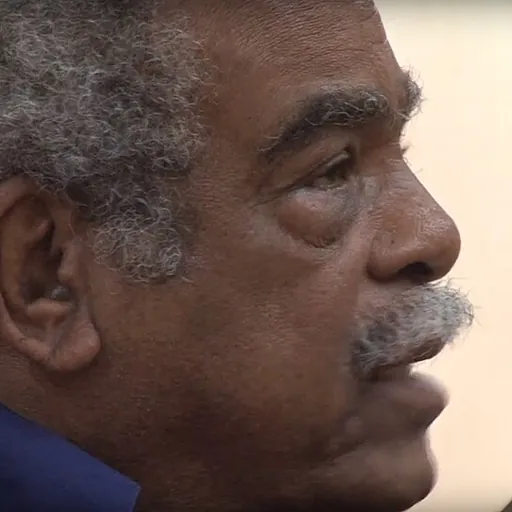
About Édouard Glissant
Lived 1928 – 2011 (aged 82). Édouard Glissant was a French writer, poet, novelist, university teacher, literary critic and philosopher.
Life Édouard Glissant was born in Sainte-Marie, Martinique, He learned traditional stories from sugar cane laborers when he accompanied his father during summer breaks from school.
He studied at the Lycée Schœlcher, named after the abolitionist Victor Schœlcher, after being awarded a scholarship in 1938.
Glissant left Martinique in 1946 for Paris, where he received his PhD, having studied ethnography at the Musée de l'Homme and history and philosophy at the Sorbonne. Due to this success, Glissant emerged as a significant literary contributor from the Caribbean.
He established, with Paul Niger, the separatist Front Antillo-Guyanais pour l'Autonomie party in 1959. This organization of writers contributed to Martinique Independence efforts through their literary and cultural activities. At this time in history, Algeria's war for Independence was taking place. Charles de Gaulle barred him from leaving France between 1961 and 1965, likely as a consequence of his contributions to Post-colonialism.
He returned to Martinique in 1965 following this barring and founded the Institut Martiniquais D'études in 1967, as well as Acoma, a social sciences publication. He devoted himself to writing novels, poetry, and plays during this stage of his life.
He wrote "Caribbean Discourse," a foundational essay for Poetics of Relation, in 1981 and subsequently was appointed Director and Editor-in-Chief of the UNESCO Courier.
Glissant divided his time among Martinique, Paris, and New York. From 1995 he was Distinguished Professor of French at the CUNY Graduate Center. Before his tenure at CUNY Graduate Center, he was a professor at Louisiana State University in the Department of French and Francophone Studies from 1988 to 1993.
In January 2006 Glissant was asked by Jacques Chirac to take on the presidency of a new cultural centre devoted to the history of the slave trade. This request followed the publication of a letter written to the French Minister of the Interior following riots in Paris where he and Patrick Chamoiseau publicly criticized a law passed in February 2005 requiring schools to teach the "positive role of the French presence overseas," particularly in North Africa where much postcolonial and anticolonial efforts had taken place.
Glissant died in Paris, France, on 3 February 2011, at the age of 82. Glissant published more than 20 books during his life.
Writing style Glissant as a writer employs a hybrid literary style. He is recognized for his ability to blend philosophy, analysis, poetry, and even dialogue. His creativity is complex and offers insight into how language operates in practice, in theory, and in history.
His style emerges and is not static with non linear and fragmented components.
Glissant's development of the notion of Antillanité seeks to root Caribbean identity firmly within "the Other America" and springs from a critique of identity in previous schools of writing, specifically the work of Aimé Césaire, which looked to Africa for its principal source of identification.
Glissant is notable for his attempt to trace parallels between the history and culture of the Creole Caribbean and those of Latin America and the plantation culture of the American South, most obviously in his study of William Faulkner.
Glissant was the pre-eminent critic of the Négritude school of Caribbean writing, composed of the generation of literary contributors prior to him. He is regarded as a father-figure for the subsequent Créolité group of writers that includes Patrick Chamoiseau and Raphaël Confiant.
Connections to notable Francophone figures The poet and politician Aimé Césaire was a teacher at his school during his attendance and served as a great inspiration to Glissant.
Césaire met Léon Damas of French Guyana at Lycée Schœlcher as students, who would later also become a poet and politician. In Paris, France, Césaire and Damas would join with Léopold Senghor, a poet and the future first president of Senegal, to formulate and promote the concept of negritude.
Another student at the school at that time of Glissant's attendance was Frantz Fanon, who became a significant psychiatrist and writer of post colonial theory.
Glissant was close to two French philosophers, Félix Guattari and Gilles Deleuze, who wrote major works like Anti-Oedipus as a team. Glissant and was influenced by their theory of the rhizome and Poetics of Relation expands upon the theory of the rhizome.
Seminal theories The right to opacity In his text Poetics of Relation, Glissant explores the concept of opacity, which is the lack of transparency, the untransability, and the unknowability. And for this reason, opacity has the radical potential for social movements to challenge and subvert systems of domination. Glissant demands the "right to opacity," indicating the oppressed—which have historically been constructed as the Other—can and should be allowed to be opaque, to not be completely understood, and to simply exist as different.
The colonizer perceived the colonized as fundamentally different and opposed, creating a sense of Otherness. This prevented the colonizer from truly understanding the colonized and required the colonized to conform to the colonizer's cognitive framework. Consequently, the colonized were dominated and subjected to the colonizer's demands for transparency and conformity. Glissant rejects this transparency and defends opacity and difference because other modes of understanding do exist.
That is, Glissant calls for understanding and accepting difference without measuring that difference to an "ideal scale" and comparing and making judgements, "without creating a hierarchy"—as Western thought has done.
The Right to Opacity has also been applied by scholars in Early Childhood Education and towards the development of Decolonial Ethics.
"The Open Boat" In Poetics of Relation, "The Open Boat" introduces Glissant's major theory. The Open Boat is a poem with intense imagery that enters the slave ship experience.
"The Open Boat" also discussed the phenomenon of "falling into the belly of the whale" which elicits many references and meanings. his image parallels the Biblical story of Jonah and the Whale, realizing the gravity of biblical references as the Bible was used as justification for slavery. More literally, Glissant related the boat to a whale as it "devoured your existence". As each word a poet chooses is specifically chosen to aid in furthering the meaning of the poem, the word "Falling" implies an unintentional and undesirable action. This leads to the experience of the slaves on the ship as they were confined to an overcrowded, filthy, and diseased existence among other slaves, all there against their will. All of Glissant's primary images in this poem elicit the feeling of endlessness, misfortune, and ambiguity, which were arguably the future existence of the slaves on ships to "unknown land".
Slave ships did not prioritize the preservation of cultural or individual history or roots, but rather only documented the exchange rates for the individuals on the ship, rendering slaves mere possessions and their histories part of the abyss. This poem also highlights an arguable communal feeling through a shared relationship to the abyss of personal identity. As the boat is the vessel that permits the transport of known to unknown, all share the loss of sense of self with one another. The poem also depicts the worthlessness of slaves as they were expelled from their "womb" when they no longer required "protection" or transport from within it. Upon losing exchange value, slaves were expelled overboard, into the abyss of the sea, into another unknown, far from their origins or known land.
This "relation" that Glissant discusses through his critical work conveys a "shared knowledge". Referring back to the purpose of slaves—means of monetary and property exchange—Glissant asserts that the primary exchange value is in the ability to transport knowledge from one space or person to another—to establish a connection between what is known and unknown.
Don’t just read it —
keep it.
Full-length biographies made to live with: read them, listen on the way to work, watch them tonight.
- E-book
- Audio
- Video
Instant download · yours to keep · every purchase keeps this site free
Important facts
People in Édouard Glissant's life
Named in this biography and alive at the same time






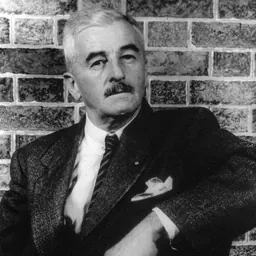
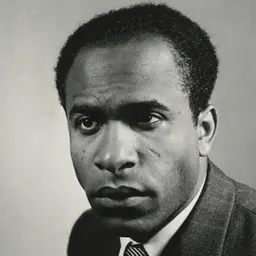
Related people
Same field, nearest in time


Contemporaries
People whose lives overlapped Édouard Glissant's

Frequently asked questions
Who was Édouard Glissant?
Martiniquais writer (1928–2011)
When was Édouard Glissant born?
Édouard Glissant was born on 21 September 1928 in Sainte-Marie.
When did Édouard Glissant die?
Édouard Glissant died on 3 February 2011 in 15th arrondissement of Paris.
What was Édouard Glissant's occupation?
Édouard Glissant was a writer, poet, novelist, university teacher, literary critic and philosopher.
What nationality was Édouard Glissant?
Édouard Glissant was French.
Sources & further reading
Cite this page
APA: Biography.guide. (2026). Édouard Glissant. https://biography.guide/edouard-glissant/
MLA: "Édouard Glissant." Biography.guide, https://biography.guide/edouard-glissant/.
Chicago: "Édouard Glissant." Biography.guide. https://biography.guide/edouard-glissant/.
Data last updated: 2026-09-21 · Spot an error? Report a correction.
Portrait: Wikimedia Commons · author & licence
Page generated 2026-09-27 04:59 UTC