
About Edo Maajka
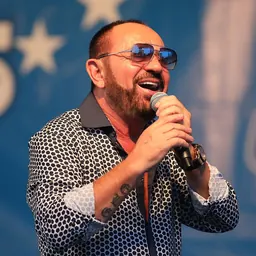
Born 1978. Edo Maajka is a Bosnian and Yugoslav rapper, singer, songwriter and record producer.
Edin Osmić (born 22 December 1978), better known by his stage name Edo Maajka, is a Bosnian rapper, record producer and songwriter. His popularity brought his group Disciplinska Komisija to the mainstream. He resides in Zagreb, Croatia. He has released seven studio albums since 2002.
Biography Early life Edin Osmić was born to Bosniak parents Azemina and Fehim, and raised in Brčko (at the time SR Bosnia and Herzegovina, SFR Yugoslavia) where he finished elementary school. In 1992, when the Bosnian War started, he left Bosnia and Herzegovina and went to Zagreb, the capital of Croatia, where he began attending high mechanical engineering school. After the war, he returned to Bosnia to study criminal law in Tuzla, but never graduated.
Career Debut album (2001–04) Osmić announced his debut album with the single Znaš me. He released his debut album, Slušaj mater, in the spring of 2002 under the Menart and Fmjam label. He released two more singles, Jesmo'l sami (Are we alone) at the end of 2002 and Prikaze (Spectres) at the beginning in 2003, which officially closed the album. He was featured by other artists, such as in "Teško je ful biti kul" by Hladno Pivo, "Rat" by Pioniri among others.
Second album (2004–06) In April 2004, he released his second album No Sikiriki. On day one, the album sold 5,000 copies. He toured until the end of the year to promote his second album. In 2005, Osmić toured the US and Canada, visiting cities including Toronto, St. Louis, New York, Atlanta and Detroit, first time a Bosnian hip hop star was touring North America.
Third album (2006–08) Recording of songs for the third studio album Stig'o Ćumur (Coal's Arrived) started in August 2005, and the album was released in March 2006. The first single was "To mora da je ljubav" (It Must Be Love) featuring Remi from Elemental), for which he shot the music video in Sarajevo. He started the promotion of his third album at the end of March, the day his album was released. The album peaked at number 1 on the Croatian Albums Chart.
In January 2007, Osmić 's single "Bomba" was featured in an episode of the TV series Sleeper Cell. In the summer of 2007, Maajka and his band decided to part, but remained good friends.
Fourth album (2008–12) His fourth album was released on 25 March 2008. The album's name was changed from Sjeti Se to Idemo Dalje. In December 2008 the album received the name Balkansko a naše. At the beginning of June he announced that he had created a new band called TRNOKOP and the band premiered at the Rokajfest.
At the end of 2008, "Balkansko a Nase" came at number 36 of the year's top albums.
In June 2010, he released his best off album Spomen ploča 2002-2009, but he redid the album with his newly formed band, where they would use band instruments as the music and softer vocals.
Osmić was also featured as a judge and performer in the first Red Bull MC Battle that was held in Sarajevo, Bosnia on 23 April 2010. The next year, he was the host for the Bosnian Red Bull MC Battle 2011.
Fifth album (2012–18) Osmić's fifth studio album, Štrajk mozga, was released in April 2012. The first single was Imaš li ti šta para, followed by the first music video and second single Panika, released on 26 December 2011. The third single was Džigera beat, followed by the fourth single and second music video "Facebook", released on 19 November 2012. The director Filip Filkovic Philatz, who directed both music videos, described the video being a sequel to "Panika" because it is set in the same universe, and is second part of the music video trilogy from the "Štrajk Mozga" album.
Artistry Influences and rapping technique Osmić has named several artists that have influenced him, including Rambo Amadeus, TBF, Safet Isović, Miladin Šobić, Azra, Zabranjeno Pušenje, Disciplina Kičme, Atomsko Sklonište, Majke, Rupa u Zidu among others.
His rapping technique has been described as having a perfect flow, also his varied subject matter, connecting with his audience, carrying a concept over a series of albums and was praised for his ability to write lyrics.
Alter ego Osmić has an alter ego or pseudonym that he names MC Berbo. He is described as a man who loves drugs, alcohol, fast and expensive cars, women and pop music.
Themes and lyrical content Osmić started his career with storytelling songs with the demo songs of "Minimalni rizik" (small risk) and the storytelling/love songs "Mahir i Alma". He is known for his brilliant storytelling ability.
Personal life Business ventures In September 2006, Osmić opened up a cafe bar called "No sikiriki", named after his second album. Along with beverages, the cafe also serves his favorite food, ćevapi.
Along with the cafe bar, he also plans to publish a weekly magazine which will only focus on positive things that are happening in everyday life and the music scene.
Legal issues Osmić released his first single and music video for his third album, named To mora da je ljubav, before his album came out, in which his producer Koolade used the song "Cissy Strut" from 1969 by The Meters. Some media outlets have criticized him for plagiarizing the music in the song. Osmić answered back by saying "Sampling is not stealing. In hip hop you sample music, you take someones beat and rap on that beat. My album was postponed 1 week just because of that reason, while we waited for the authorization to use that song. The fact is that sometimes this waiting for authorization can be as long as one year, we redid the beat a little, gave credit to the author and not on us. You can see that the credit goes to the author on the inside cover of the album. Hip hop is made up of sampling, that is normal. On this particular track, Koolade is not named as the beat maker, but the author is.
Sports Hall Incident Osmić held a concert in the Sports Hall (Dom sportova) in 2005. The sponsor for the concert was T-mobile Croatia. Osmić held a press conference before the concert where he criticized his sponsors for the firing of workers after they changed their "brand". Svet also tried to bring some of Osmić mistakes from the past to light, in which they stated that he was supposed to have concert with Mile Kitić, but they never revealed the source for that.
Refusal to air music video At the end of November 2005, a month after Osmić premiered his video for the single Mater Vam Jebem on MTV Adria, HTV and Nova TV refused to air that video spot based on the name of the song and some theorized because the song's lyrics were critical of the countries leaders and the media.
Discography
Studio albums Slušaj mater (2002) No sikiriki (2004) Stig'o ćumur (2006) Balkansko a naše (2008) Štrajk mozga (2012) Put u plus (2018) Moćno (2022)
Live albums I Like to Dance (with Jazz Orkestar HRT-a; 2026)
Compilation albums Spomen ploča 2002–2009 (2010) Best od Edo Maajka (2019)
Filmography
Documentaries Several documentaries were made on Osmić's life and career. Croatian Radiotelevision's documentary Edo Maajka - Sevdah o Rodama premiered 27 July 2007 at the Motovun Film Festival.
+ Film Year Title Role Notes 2003 Trajno Nastanjeni Stranac Himself 2007 Edo Maajka - Sevdah o Rodama Himself
Movies + Film Year Title Role Notes 2003 Bore Lee: Čuvaj se Sinjske Ruke Himself
Animated + Film Year Title Role Notes 2003 Brother Bear Tuke voice (in Bosnian) 2005 Chicken Little Mayor Turkey Lurkey voice (in Bosnian) 2006 Ice Age: The Meltdown Sid voice (in Bosnian/Croatian)2009Ice Age: Dawn of the Dinosaurs Sid voice (in Bosnian/Croatian) 2010 Animals United voice (in Bosnian) 2012 Ice Age: Continental Drift Sid voice (in Bosnian/Croatian) 2016 Ice Age: Collision Course Sid voice (in Bosnian/Croatian)
Awards Davorin/Indexi Awards
Porin Awards
Zlatna Koogla Awards
Crni Mačak Awards
YearAwardCategoryResult 2006 MTV Europe Music Awards Best Adriatic Act 2010 MTV Europe Music Awards Best Adriatic Act
Don’t just read it —
keep it.
Full-length biographies made to live with: read them, listen on the way to work, watch them tonight.
- E-book
- Audio
- Video
Instant download · yours to keep · every purchase keeps this site free
Important facts
People in Edo Maajka's life
Named in this biography and alive at the same time






Related people
Same field, nearest in time






Contemporaries
People whose lives overlapped Edo Maajka's




Frequently asked questions
Who is Edo Maajka?
Bosnian rapper
When was Edo Maajka born?
Edo Maajka was born on 22 December 1978 in Brčko.
What is Edo Maajka's occupation?
Edo Maajka is a rapper, singer, songwriter and record producer.
What nationality is Edo Maajka?
Edo Maajka is Bosnian and Yugoslav.
Sources & further reading
Cite this page
APA: Biography.guide. (2026). Edo Maajka. https://biography.guide/edo-maajka/
MLA: "Edo Maajka." Biography.guide, https://biography.guide/edo-maajka/.
Chicago: "Edo Maajka." Biography.guide. https://biography.guide/edo-maajka/.
Data last updated: 2026-09-20 · Spot an error? Report a correction.
Page generated 2026-09-27 05:17 UTC