
Edmund Reid
Head of the CID in the Metropolitan Police's H Division
About Edmund Reid
Lived 1846 – 1917 (aged 71). Edmund Reid was a British police officer, balloonist, criminal Investigation Department and metropolitan Police.
Detective Inspector Edmund John James Reid (21 March 1846 – 5 December 1917) was the head of the CID in the Metropolitan Police's H Division at the time of the Whitechapel murders of Jack the Ripper in 1888. He was also an early aeronaut. He was awarded a gold medal in 1883 from the Balloon Association of Great Britain to commemorate his record-breaking ascent in the balloon "Queen of the Meadow" from The Crystal Palace; he had already received the Association's bronze medal. and succeeding Frederick Abberline. In 1895 he transferred to L (Lambeth) Division.
Reid was "a Druid of Distinction and was awarded the Druids Gold Medal." In addition, he reached professional standards in acting, singing and sleight of hand. The Weekly Despatch described him as "one of the most remarkable men of the century".
Jack the Ripper
Reid was the officer in charge of the enquiries into the murders of Emma Elizabeth Smith in April 1888, and Martha Tabram in August 1888, before Inspector Frederick Abberline was sent from Scotland Yard to 'H' Division in Whitechapel to co-ordinate the hunt for the killer. The Times of 12 November 1888 reported:
"Since the murders in Berner Street, St. Georges, and Mitre Square, Aldgate, on September 30th, Detective Inspectors Reid, Moore and Nairn, and Sergeants Thick, Godley, M'Carthy and Pearce have been constantly engaged, under the direction of Inspector Abberline (Scotland Yard), in prosecuting inquiries, but, unfortunately, up to the present time without any practical result. As an instance of the magnitude of their labours, each officer has had, on average, during the last six weeks to make some 30 separate inquiries weekly, and these have had to be made in different portions of the metropolis and suburbs. Since the two above-mentioned murders no fewer than 1,400 letters relating to the tragedies have been received by the police, and although the greater portion of these gratuitous communications were found to be of a trivial and even ridiculous character, still each one was thoroughly investigated. On Saturday (10th November) many more letters were received, and these are now being inquired into."
Reid's own theory was that the Ripper murders were committed by a drunk who lived locally, and who had no recollection of his crime. Interviewed in 1912 for Lloyd's Weekly News, he said:
"The whole of the murders were done after the public-houses were closed; the victims were all of the same class, the lowest of the low, and living within a quarter of a mile of each other; all were murdered within half a mile area; all were killed in the same manner. That is all we know for certain. My opinion is that the perpetrator of the crimes was a man who was in the habit of using a certain public-house, and of remaining there until closing time. Leaving with the rest of the customers, with what soldiers call 'a touch of delirium triangle,' he would leave with one of the women. My belief is that he would in some dark corner attack her with the knife and cut her up. Having satisfied his maniacal blood-lust he would go away home, and the next day know nothing about it."
In 1903 he wrote two letters to The Morning Advertiser in which he stated that the Ripper was responsible for nine murders, that of Frances Coles being the last. He further stated that he did not believe that the Ripper was possessed of any surgical skill, holding the view that the wounds to the victims' bodies were merely slashes, inflicted even after the killer knew that the women were dead. He wrongly believed that 'at no time was any part of the body missing', and he also believed there was evidence that the Ripper's knife was blunt.
The sea flowed very close to his property, and in 1915 he was the last remaining resident of Eddington Gardens and of Hampton-on-Sea. He abandoned his house in 1916 due to sea erosion, moved to nearby Herne Bay, married again in 1917 to Lydia Rhoda Halling (1867–1938) and died aged 71 on 5 December of the same year of chronic interstitial nephritis and cerebral haemorrhage. He was buried in Herne Bay Cemetery in plot S62 on 8 December 1917.
With his wife Emily Jane (née Wilson) (1846 – 1900) he had a daughter Elizabeth (b. 1873) and a son, Harold Edmund J Reid (b. 1882).
Media portrayals During his lifetime Reid was the basis for ten popular "Detective Dier" novels written by his friend Charles Gibbon.
In the TV drama series Ripper Street, Reid is the lead character, played by Matthew Macfadyen. His family history is amended so that he and Emily only have one child, a daughter called Mathilda, who was lost and presumed deceased, some months before the series begins, in a river accident during the hunt for the Ripper. She is later found in series 3 and joins him in retiring to Hampton-On-Sea in the series 3 finale. However, the fictional Reid returns to Whitechapel following the emergence of another serial killer, and remains at the station at the beginning of the twentieth century.
Don’t just read it —
keep it.
Full-length biographies made to live with: read them, listen on the way to work, watch them tonight.
- E-book
- Audio
- Video
Instant download · yours to keep · every purchase keeps this site free
Important facts
People in Edmund Reid's life
Named in this biography and alive at the same time
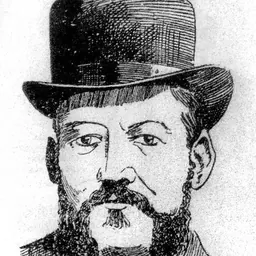




Related people
Same field, nearest in time



Contemporaries
People whose lives overlapped Edmund Reid's



Frequently asked questions
Who was Edmund Reid?
head of the CID in the Metropolitan Police's H Division
When was Edmund Reid born?
Edmund Reid was born on 21 March 1846 in Canterbury.
When did Edmund Reid die?
Edmund Reid died on 5 December 1917 in Herne Bay.
What was Edmund Reid's occupation?
Edmund Reid was a police officer, balloonist, criminal Investigation Department and metropolitan Police.
What nationality was Edmund Reid?
Edmund Reid was British.
Sources & further reading
Cite this page
APA: Biography.guide. (2026). Edmund Reid. https://biography.guide/edmund-reid/
MLA: "Edmund Reid." Biography.guide, https://biography.guide/edmund-reid/.
Chicago: "Edmund Reid." Biography.guide. https://biography.guide/edmund-reid/.
Data last updated: 2026-09-22 · Spot an error? Report a correction.
Page generated 2026-09-27 05:17 UTC