
About Edmund Meade-Waldo
Lived 1855 – 1934 (aged 79). Edmund Meade-Waldo was a British ornithologist and naturalist.
Edmund Gustavus Bloomfield Meade-Waldo (8 February 1855 – 24 February 1934) was an English ornithologist and conservationist. He is probably best known for his efforts to preserve the red kite in Wales.
Life Meade-Waldo was born at Hollybrook House, near Skibbereen, County Cork, the son of Edmund Waldo and his wife Harriette Ellen Becher, daughter of Henry Owens Becher of Aughadown. He was educated at Eton College. He matriculated at Magdalene College, Cambridge in 1875. In 1877 he was a lieutenant in the West Kent Militia.
He spent his life managing the family's country estate, Stonewall, in Kent.
Ornithology Meade-Waldo conducted fieldwork and collected birds in the Atlas Mountains of Morocco, the Canary Islands and Spain, the presumably-extinct Canary Islands oystercatcher Haematopus meadewaldoi being foremost among them. He was vice-president of the BOU in 1923 and was an active member of the Zoological Society of London, the Royal Society for the Protection of Birds, the Society for the Protection of the Fauna of the Empire and the Society for the Establishment of Nature Reserves. He was also Justice of the Peace for Kent.
Meade-Waldo's discovery of sandgrouse chick rearing behaviour in 1896 was for a long time discredited as fantasy. His acute observations noted male sandgrouse, by deliberately soaking their breast feathers in water, bringing water to its chicks at the nest. Sixty years later he was proved right.
He accompanied James Lindsay, 26th Earl of Crawford and the naturalist Michael John Nicoll on their third voyage on the RYS Valhalla; on 7 December 1905 at about 10:15 am the yacht, was cruising off the Florida coast when a "large fin, or frill, sticking out of the water," was spotted. This frill was six feet in length and projected nearly two feet out of the water. "A great neck rose out of the water in front of the frill," noted Meade-Waldo; its neck appeared to be about the thickness of a man's body. This creature moved its head and neck from side to side in a peculiar manner. This sea serpent incident became famous and caused much interest back home in Britain.
Don’t just read it —
keep it.
Full-length biographies made to live with: read them, listen on the way to work, watch them tonight.
- E-book
- Audio
- Video
Instant download · yours to keep · every purchase keeps this site free
Important facts
People in Edmund Meade-Waldo's life
Named in this biography and alive at the same time


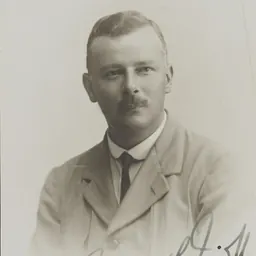
Related people
Same field, nearest in time
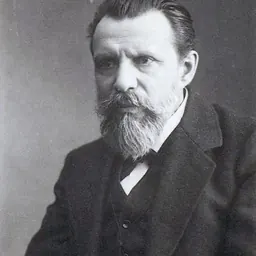



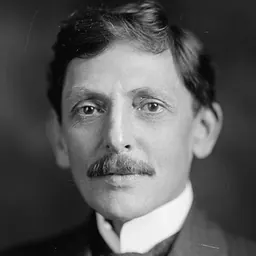
Contemporaries
People whose lives overlapped Edmund Meade-Waldo's





Frequently asked questions
Who was Edmund Meade-Waldo?
English ornithologist and conservationist (1855–1934)
When was Edmund Meade-Waldo born?
Edmund Meade-Waldo was born on 8 February 1855 in Hever Castle.
When did Edmund Meade-Waldo die?
Edmund Meade-Waldo died on 24 February 1934.
What was Edmund Meade-Waldo's occupation?
Edmund Meade-Waldo was an ornithologist and naturalist.
What nationality was Edmund Meade-Waldo?
Edmund Meade-Waldo was British.
Sources & further reading
· Wikipedia: Edmund Meade-Waldo
Cite this page
APA: Biography.guide. (2026). Edmund Meade-Waldo. https://biography.guide/edmund-meade-waldo/
MLA: "Edmund Meade-Waldo." Biography.guide, https://biography.guide/edmund-meade-waldo/.
Chicago: "Edmund Meade-Waldo." Biography.guide. https://biography.guide/edmund-meade-waldo/.
Data last updated: 2026-09-20 · Spot an error? Report a correction.
Page generated 2026-09-27 05:12 UTC