
About Edmund Harvey
Lived 1875 – 1955 (aged 80). Edmund Harvey was a British politician.
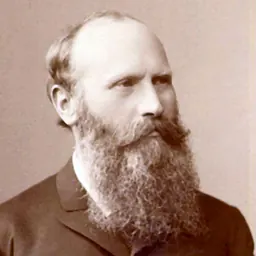
Thomas Edmund Harvey (4 January 1875 – 3 May 1955), generally known as Ted or Edmund Harvey, was an English museum curator, social reformer and politician. He sat in Parliament, first as a Liberal and later as an Independent Progressive. He was also a prolific writer on Christianity and the role and history of the Society of Friends.
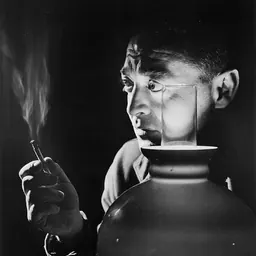
Early life Harvey was born in Leeds to a prominent Quaker family. He was the eldest son of William Harvey, a teacher and art collector, who made a substantial gift of paintings by Dutch and Flemish masters to the nation, as well as being a local politician, serving for 13 years on Leeds City Council. His brother was the writer William Fryer Harvey, best known for his short story The Beast with Five Fingers that was turned into a film of the same name, starring Peter Lorre.
Harvey was educated at Bootham School in York and attended Yorkshire College, Leeds and Christ Church, Oxford. He also studied at the University of Berlin and the Sorbonne in Paris, as well as at other institutions overseas. In 1900 he received his MA degree from Oxford University with First Class honours in Literae Humaniores. He later received an honorary Doctorate of Laws from Leeds University.
Career In 1900, Harvey enrolled as an assistant at the British Museum, where he worked until 1904. From 1906 to 1910 he was a member of the Central (Unemployed) Body for London, the organisation responsible for registering those unemployed men applying for unemployment relief and finding work for them.
From 1920 to 1921, he was Warden of Swarthmore Settlement in Leeds.
Politics
Harvey's politics were strongly linked to his religious and social beliefs. He was elected to the London County Council for Finsbury East as a Progressive and served 1904–1907, during which time he sat on the Education Committee. He was also an elected member of Stepney Borough Council 1909–1911.
While an MP, Harvey was a member of the Standing Committee on Boy Labour in the Post Office (1910–1917). He acted as unpaid Parliamentary Private Secretary to Ellis Ellis-Griffith KC, Under-Secretary of State at the Home Office, although he resigned the post on the outbreak of the First World War.
Pacifism and conscientious objection
As a Quaker, Harvey was placed in a difficult personal position by Britain's declaration of war in August 1914. Quakers traditionally took the view that all war is incompatible with the spirit and teachings of Christ. Harvey was a pacifist and profoundly wished to keep Britain out of the war and supported those elements in the government, particularly the Foreign Secretary, Sir Edward Grey, who were working to prevent a general war. Harvey remained one of the small band of Liberals, at that time still including Norman Angell and E D Morel, who had grave doubts about the war.
Throughout the First World War and until 1920 Harvey, in the Quaker tradition, engaged personally in relief work in the war zone in France, on behalf of the War Victims’ Relief Committee of the Society of Friends. He also served as a member of the Pelham Committee (formally, the Committee on Work of National Importance), the body charged in March 1916 with trying to find suitable civilian occupations for conscientious objectors prepared to undertake the work of national importance he had helped to be written into the Military Service Act. Dewsbury had been Sir Walter Runciman's seat up until 1918, when, as an opponent of the Coalition government of David Lloyd George, Runciman had been opposed by a Coalition Conservative who had the benefit of the government coupon. In a three-cornered contest Harvey nearly regained the seat for the Liberals in 1922, but lost to Labour candidate Ben Riley by 756 votes (3.3% of the total vote), the Conservative candidate Osbert Peake, later to be MP for Leeds North came third.
Harvey was, however, returned to Parliament for Dewsbury at the 1923 general election, when he defeated Riley in a straight fight to win by a majority of 2,256 votes. At the 1924 general election the situation was again reversed. This time Riley won the seat back, and in a three-cornered contest Harvey fell to the bottom of the poll.
Harvey continued to support the Liberal Party, being sometime Yorkshire representative on the National Liberal Federation but he did not stand for Parliament in the general elections of 1931 or 1935.
MP for the Combined English Universities
In 1937 Harvey was chosen as a candidate in a by-election for the Combined English Universities seat. He stood as an Independent Progressive candidate, saying that contests for the university seats ought to be fought on ideas and not on party political lines. Against him were Conservative and Independent rivals, but Harvey won with a majority of 1,644 votes. He retained his links with Liberalism, however – the party leader Sir Archie Sinclair, Ramsay Muir and the Liberal Party Organisation all sent messages of congratulation to Harvey when he won the by-election. He held the Combined English Universities seat until the 1945 general election, when he stood down from Parliament for the last time, aged 70.
During his time in Parliament as an Independent, and consistent with his representation of a university seat, Harvey championed the plight of foreign academics and scientists forced by various regimes to flee as refugees.
Other appointments Retaining his lifelong interest in social reform, Harvey was a Master of the charitable trust the Guild of St George 1934–51. Harking back to his museum work and because of his father's gift of paintings to the nation, Harvey also served as the Chairman of the National Loan Collection Trust, the body set up to co-ordinate the lending of pictures to municipal and other provincial art galleries.
Personal life In 1911 he married Alice Irene Thompson, the daughter of the eminent physicist Professor Silvanus P. Thompson FRS.
Harvey died at his home, Rydal House, Grosvenor Road, Leeds on 3 May 1955 aged 80 years.
Legacy Harvey's correspondence with conscientious objectors from 1916 to 1920; Pelham Committee papers, and other correspondence are available in the Friends Library in London. Some of Harvey's family correspondence can also be seen at Leeds University Library in the collection of papers relating to the Harvey family of Leeds.
Publications
Poor Raoul and Other Fables – J M Dent & Co, London, 1905 The Rise of the Quakers – in Nonconformity, Volume 5, 1905 A London Boy’s Saturday – St George Press, Bournville, 1906 A Wayfarer’s Faith; aspects of the common basis of religious life – Wells, Gardner & Co, London, 1913 The Long Pilgrimage: Human Progress in the Light of the Christian Hope – Robert Davis, Harrogate, 1921 Stolen Aureoles: Legends for the First Time now Collected Together – Basil Blackwell, Oxford, 1922 Silence and Worship: A Study in Quaker Experience – Swarthmore Press, London, 1923 The Heart of Quakerism – Friends’ Book Centre, London, 1925 Along the Road of Prayer – Friends’ Book Centre, London, 1929 The Lost Sacrament – Friends’ Book Centre, London, 1930 Goodness and God – Friends’ Book Centre, London, 1931 St Aelred of Rievaulx – H R Allenson, London,1932 Authority and Freedom in the Experience of Quakers – Friends’ Home Service Committee, London, 1935 The Divine Message – Woodbrooke Extension Committee, Birmingham, 1938 The Christian Citizen and the State – Friends’ Book Centre, London, 1939 The Christian Church and the Prisoner in English Experience – Epworth Press, London, 1941 Songs in the Night – M T Stevens, Malvern, 1942 Workaday Saints – Bannisdale Press, London, 1949 Thomas Shillitoe, 1754–1836: Some hitherto unpublished particulars – Friends’ Historical Society, London, 1950
Don’t just read it —
keep it.
Full-length biographies made to live with: read them, listen on the way to work, watch them tonight.
- E-book
- Audio
- Video
Instant download · yours to keep · every purchase keeps this site free
Important facts
People in Edmund Harvey's life
Named in this biography and alive at the same time




Related people
Same field, nearest in time





Contemporaries
People whose lives overlapped Edmund Harvey's


Frequently asked questions
Who was Edmund Harvey?
British politician (1875-1955)
When was Edmund Harvey born?
Edmund Harvey was born on 4 January 1875 in Leeds.
When did Edmund Harvey die?
Edmund Harvey died on 3 May 1955 in Leeds.
What was Edmund Harvey's occupation?
Edmund Harvey was a politician.
What nationality was Edmund Harvey?
Edmund Harvey was British.
Sources & further reading
· DBpedia: Edmund Harvey (social reformer)
Cite this page
APA: Biography.guide. (2026). Edmund Harvey. https://biography.guide/edmund-harvey-politician/
MLA: "Edmund Harvey." Biography.guide, https://biography.guide/edmund-harvey-politician/.
Chicago: "Edmund Harvey." Biography.guide. https://biography.guide/edmund-harvey-politician/.
Data last updated: 2026-09-20 · Spot an error? Report a correction.
Page generated 2026-09-27 05:32 UTC