
About Edmund G. Ross
Lived 1826 – 1907 (aged 80). Edmund G. Ross was an American politician.
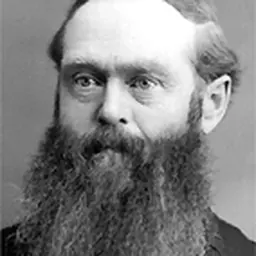
Edmund Gibson Ross (December 7, 1826 – May 8, 1907) was an American politician who represented Kansas after the American Civil War and was later the governor of New Mexico Territory. At the 1868 impeachment trial of Andrew Johnson his vote against convicting President Johnson of "high crimes and misdemeanors" allowed Johnson to stay in office by the margin of one vote. As the seventh of seven Republican U.S. Senators to break with his party, he proved to be the person whose decision would result in conviction or acquittal. When he chose the latter, the vote of 35–19 in favor of Johnson's conviction failed to reach the required two-thirds vote. Ross lost his bid for re-election two years later.
Early life Ross was born in Ashland, Ohio, on December 7, 1826, the third of fourteen children born to Sylvester Ross Sr. and Cynthia (Rice) Ross. He was educated locally and at age 11 was apprenticed as a printer at the Huron, Ohio, Commercial Advertiser. A Democrat who opposed slavery, in 1852, he moved to Milwaukee, Wisconsin, where he worked on first the Milwaukee Free Democrat and then the Milwaukee Daily Sentinel. Later in life, Ewing wrote Ross that he felt Ross was "preeminent for courage" among men—not only for his physical courage in battle but also for opposing Johnson's conviction. "In making [that] decision, you knew perfectly well that it could consign you to private life and the vehement denunciation of almost all your party friends." However, there is significant evidence that suggests Ross was bribed, although a subsequent House of Representatives investigation found no proof.
Edmund G. Ross is one of eight U.S. Senators featured in Profiles in Courage, the 1956 Pulitzer Prize-winning history co-written by then-Senator John F. Kennedy in commemoration of past acts of political courage in Congress.
Later career Upon retirement from the Senate, Ross went back into the newspaper business briefly, launching a publication in Coffeyville, Kansas. He left the Republican Party after 1872 and was affiliated with the Democrats. Time caused Kansans to look on Ross more favorably with respect to his role in the Johnson impeachment. In 1907, General Hugh Cameron of Lawrence visited Ross in New Mexico and brought testimonials from many citizens of Kansas.
Family In 1848, Ross married Fannie Lathrop (1827–1899) in Sandusky, Ohio. Their children included Lillian, Arthur, Pitt, Flynt, Edmundie, Kay and Fannie.
Footnotes
Don’t just read it —
keep it.
Full-length biographies made to live with: read them, listen on the way to work, watch them tonight.
- E-book
- Audio
- Video
Instant download · yours to keep · every purchase keeps this site free
Important facts
People in Edmund G. Ross's life
Named in this biography and alive at the same time


Related people
Same field, nearest in time






Contemporaries
People whose lives overlapped Edmund G. Ross's





Frequently asked questions
Who was Edmund G. Ross?
American politician (1826–1907)
When was Edmund G. Ross born?
Edmund G. Ross was born on 7 December 1826 in Ashland.
When did Edmund G. Ross die?
Edmund G. Ross died on 8 May 1907 in Albuquerque.
What was Edmund G. Ross's occupation?
Edmund G. Ross was a politician.
What nationality was Edmund G. Ross?
Edmund G. Ross was American.
Sources & further reading
Cite this page
APA: Biography.guide. (2026). Edmund G. Ross. https://biography.guide/edmund-g-ross/
MLA: "Edmund G. Ross." Biography.guide, https://biography.guide/edmund-g-ross/.
Chicago: "Edmund G. Ross." Biography.guide. https://biography.guide/edmund-g-ross/.
Data last updated: 2026-09-20 · Spot an error? Report a correction.
Page generated 2026-09-27 05:22 UTC