
About Edith Guerrier
Lived 1870 – 1958 (aged 87–88). Edith Guerrier was an American librarian.
Edith Guerrier (1870–1958) was a pioneer in the field of library science. Guerrier is best known for developing progressive library programs in the 1890s, including a reading program and a pottery studio for girls of Boston's North End, an urban immigrant center during the Progressive Era.
Biography
Early life Guerrier was born in 1870 in New Bedford, Massachusetts. Her father, George Guerrier, was an English immigrant who served in the American Civil War as a Second Lieutenant of Colored Infantry. Edith's mother, Emma Guerrier (Ricketson) died when Guerrier was a young child. Guerrier spent a great deal of her childhood separated from her father and his side of the family due to his difficulty finding steady work. She lived at times with her late mother's siblings, Anna and Walton Ricketson and her elderly Uncle Fox on her father's side. Guerrier later said of the Ricketson side of the family, a group of "well-to-do abolitionists, naturalists, and transcendentalists," that it was much like "com[ing] back to my own people." It was originally meant to train "widows and the wives of incapacitated husbands" in vocational aspects, but by the 1890s when Guerrier joined the nursery, its programming was evolving to reflect principles of the Settlement House movement. Guerrier had a love for storytelling, plays, and folktales, which the Saturday Evening Girls soon incorporated into their meetings. While there, she was in charge of collecting, organizing and distributing information to many public libraries throughout the country, and she started the Food Administration Library Information Service.
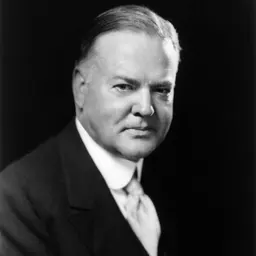
In the fall of 1917, Guerrier took a trip around the country to hand out bulletins for Herbert Hoover's Food Administration. The trip started in D.C. and sent Guerrier to cities such as Columbus, Ohio; Denver, Colorado; Los Angeles, California and Missoula, Montana.
Before she left for Washington D.C. to return to Boston, Guerrier took on yet another challenge. She believed the libraries of the time did a great deal of work that was underappreciated, and she thought they lacked sufficient government funding. She soon began to work on a new set of bulletins, named the National Library Service. Guerrier wanted to send out these bulletins to all of the libraries to which the bulletins for the Food Administration had been sent, which totaled to more than eight thousand libraries.
Over the course of the following year, Guerrier and her fellow librarian professionals spent a great deal of time trying to get a bill passed by Congress. They believed that there should be a national service that kept librarians up to date with all new material published by the government. Together with a helpful Congressman from California, the women drafted a bill. Unfortunately, after a great deal of time and hard work, the bill was not passed.
Over the course of those years, Guerrier spent time compiling a book titled The Federal Executive Departments as Sources of Information for Libraries. This book was a compilation of letters written by Guerrier herself and those of which she co-authored with powerful men of that time. Included are letters from Secretary of War Newton Diehl Baker and Assistant Secretary of the Navy Franklin D. Roosevelt, who then made changes to the letters as they saw fit. The book was prefaced by President Woodrow Wilson. Upon the completion of her book in 1919, Guerrier returned to work at the Boston Public Library as the "Supervisor of Circulation," because her old position had long ago been filled. With time, Guerrier became the supervisor of the branch libraries in Boston.
Retirement Edith Guerrier and Brown spent the following years living and working in Boston. In 1932, at the age of 60, Edith Guerrier's partner of almost 40 years, Edith Brown died. Eight years later, in 1940, Guerrier was reluctantly forced into retirement. During her retirement, she remained active, volunteering as a librarian of the Massachusetts Committee on Public Safety. Also during this time, she penned another book, titled We Pledged Allegiance, a Librarian's Intimate Story of the United States Food Administration. In 1958, Edith Guerrier died at the age of eighty-eight.
Footnotes
Don’t just read it —
keep it.
Full-length biographies made to live with: read them, listen on the way to work, watch them tonight.
- E-book
- Audio
- Video
Instant download · yours to keep · every purchase keeps this site free
Important facts
People in Edith Guerrier's life
Named in this biography and alive at the same time

Related people
Same field, nearest in time


Contemporaries
People whose lives overlapped Edith Guerrier's


Frequently asked questions
Who was Edith Guerrier?
American librarian
When was Edith Guerrier born?
Edith Guerrier was born in 1870 in New Bedford.
When did Edith Guerrier die?
Edith Guerrier died in 1958.
What was Edith Guerrier's occupation?
Edith Guerrier was a librarian.
What nationality was Edith Guerrier?
Edith Guerrier was American.
Sources & further reading
Cite this page
APA: Biography.guide. (2026). Edith Guerrier. https://biography.guide/edith-guerrier/
MLA: "Edith Guerrier." Biography.guide, https://biography.guide/edith-guerrier/.
Chicago: "Edith Guerrier." Biography.guide. https://biography.guide/edith-guerrier/.
Data last updated: 2026-09-26 · Spot an error? Report a correction.
Page generated 2026-09-27 05:13 UTC