
About Edgard Varèse
Lived 1883 – 1965 (aged 81). Edgard Varèse was a French composer, musicologist and conductor.
Edgard Victor Achille Charles Varèse (; also spelled Edgar; December 22, 1883 – November 6, 1965) was a French and American avant-garde composer who spent the greater part of his career in the United States. Varèse's music emphasizes timbre and rhythm; he coined the term "organized sound" in reference to his own musical aesthetic. Varèse's conception of music reflected his vision of "sound as living matter" and of "musical space as open rather than bounded". He conceived the elements of his music in terms of "sound-masses", likening their organization to the natural phenomenon of crystallization. Varèse thought that "to stubbornly conditioned ears, anything new in music has always been called noise", and he posed the question, "what is music but organized noises?"
Although his complete surviving works only last about three hours, he has been recognized as an influence by several major composers of the late 20th century. Varèse saw potential in using electronic media for sound production, and his use of new instruments and electronic resources led to his being known as the "Father of Electronic Music". Writer Henry Miller described him as "The stratospheric Colossus of Sound".
Varèse actively promoted performances of works by other 20th-century composers and founded the International Composers' Guild in 1921 and the Pan-American Association of Composers in 1926.
Life and career Early life Edgard Victor Achille Charles Varèse was born in Paris; when he was a few weeks old, he was sent to be raised by his maternal great-uncle and other relations in the village of Le Villars in the Burgundy region of France. There he developed a very strong attachment to his maternal grandfather, Claude Cortot (also grandfather to the pianist Alfred Cortot, a first cousin of Varèse ). His affection for his grandfather outshone anything he felt for his own parents.
After being reclaimed by his parents in the late 1880s, in 1893 young Edgard was forced to relocate with them to Turin, Italy, in part, to live amongst his paternal relatives, since his father was of Italian descent. It was there that he had his first real musical lessons, with the director of the Turin Conservatory, Giovanni Bolzoni. In 1895, he composed his first opera, Martin Pas, which has since been lost. Now a teenager, Varèse, influenced by his father, an engineer, enrolled at the Polytechnic of Turin and started studying engineering, as his father disapproved of his interest in music and demanded an absolute dedication to engineering studies. This conflict grew greater and greater, especially after the death of his mother in 1900, until 1903 when Varèse left home for Paris.
In 1904, he commenced his studies at the Schola Cantorum (founded by pupils of César Franck), where his teachers included Albert Roussel. Afterwards, he went to study composition with Charles-Marie Widor at the Paris Conservatoire. In this period, he composed some ambitious orchestral works, but these were only performed by Varèse in piano transcriptions. One such work was his Rhapsodie romane, from about 1905, which was inspired by the Romanesque architecture of the Church of St. Philibert in Tournus. In 1907, he moved to Berlin and married the actress Suzanne Bing, with whom he had a daughter. They divorced in 1913.
During these years, Varèse became acquainted with Erik Satie and Richard Strauss, as well as with Claude Debussy and Ferruccio Busoni, who particularly influenced him at the time. He also gained the friendship and support of Romain Rolland and Hugo von Hofmannsthal, whose Œdipus und die Sphinx he began setting as an opera that was never completed. On January 5, 1911, the first performance of his symphonic poem Bourgogne was held in Berlin.
After being invalided out of the French Army during World War I, he moved to the United States in December 1915.
Early years in the United States In 1918, Varèse made his debut in America conducting the Grande messe des morts by Berlioz.
He spent the first few years in the United States, where he was a Romany Marie's café regular, in Greenwich Village, meeting important contributors to American music, promoting his vision of new electronic instruments, conducting orchestras, and founding the short-lived New Symphony Orchestra. In New York, he met Leon Theremin and other composers exploring the boundaries of electronic music.
It was also about this time that Varèse began work on his first composition in the United States, Amériques, which was finished in 1921 but would remain unperformed until 1926, when it was premiered by the Philadelphia Orchestra, conducted by Leopold Stokowski (who had already performed Hyperprism in 1924 and would premiere Arcana in 1927). Virtually all the works he had written in Europe were either lost or destroyed in a Berlin warehouse fire, so in the U.S. he was starting again from scratch. The only surviving work from his early period appears to be the song Un grand sommeil noir, a setting of Paul Verlaine. (He still retained Bourgogne, but destroyed the score in a fit of depression many years later.)
At the completion of Amériques, Varèse, along with Carlos Salzedo, founded the International Composers' Guild, dedicated to the performances of new compositions of both American and European composers. The ICG's manifesto in July 1921 included the statement, "he present day composers refuse to die. They have realised the necessity of banding together and fighting for the right of each individual to secure a fair and free presentation of his work." In 1922, Varèse visited Berlin where he founded a similar German organisation with Busoni.
Varèse contributed a poem to the Dadaist magazine 391 after an evening of drinking with Francis Picabia on the Brooklyn Bridge. The same magazine claimed that he was orchestrating a "Cold Faucet Dance". Later that year, he met Louise Norton, who edited another Dadaist magazine, Rogue, with her then-husband. She was to become Louise Varèse and a celebrated translator of French poetry whose versions of the work of Arthur Rimbaud for James Laughlin's New Directions Publishing were particularly influential.
Varèse composed many of his pieces for orchestral instruments and voices for performance under the auspices of the ICG during its six-year existence. Specifically, during the first half of the 1920s, he composed Offrandes, Hyperprism, Octandre, and Intégrales.
Varèse took American citizenship in October 1927. After arriving in the US, Varèse commonly used the form "Edgar" for his first name but largely reverted to "Edgard" from the 1940s.
In 1931, he was the best man at the wedding of Nicolas Slonimsky in Paris. In 1933, while still in Paris, he wrote to the Guggenheim Foundation and Bell Labs in an attempt to receive a grant to develop an electronic music studio. His next composition, Ecuatorial, was completed in 1934, and contained parts for two fingerboard "theremin cellos" designed by Leon Theremin, along with winds, percussion, and a bass singer. Anticipating the successful receipt of one of his grants, Varèse eagerly returned to the US. Slonimsky conducted the premiere of Ecuatorial in New York on April 15, 1934, to a mixed reception.
Back in the United States Varèse soon left New York City for Santa Fe, New Mexico, San Francisco, and Los Angeles. In 1936, he wrote his solo flute piece, Density 21.5. He also promoted the theremin in his Western travels, and demonstrated one at a lecture at the University of New Mexico in Albuquerque on November 12, 1936. (The university has an RCA theremin in its archives which may be the same instrument.) By the time Varèse returned to New York in late 1938, Leon Theremin had returned to Russia; this devastated Varèse, who had hoped to work with him on a refinement of his instrument.
He was approached by music producer Jack Skurnick resulting in EMS Recordings #401. The record was the first release on LP of Integrales, Density 21.5, Ionisation and Octandre and featured René Le Roy, flute, the Juilliard Percussion Orchestra and the New York Wind Ensemble conducted by Frederic Waldman. Ionisation had also been the first work by Varèse to be recorded in the 1930s, conducted by Nicolas Slonimsky and issued on 78 rpm Columbia 4095M. Likewise, Octandre was recorded and issued on 78 rpm discs in the later 1930s, complete (New Music Quarterly Recordings 1411) and as an excerpt (3rd movement, Columbia DB1791 in Volume V of their History of Music). This new version was premiered in 1961. (Ecuatorial has been performed again with fingerboard theremins in Buffalo, New York, in 2002 and at the Holland Festival, Amsterdam, in 2009.)
Background in science While living with his father, an engineer, Varèse was pushed to further his scientific understanding at the Institute Technique, a high school in Italy that specialized in teaching mathematics and science. Here, Varèse became interested in the works of Leonardo da Vinci. It was through Varèse's love of science that he began to study sound, as he later recalled:
Varèse began his music studies with Vincent d'Indy at the Schola Cantorum de Paris from 1903 to 1905.
Students and influence Students Varèse taught many prominent composers, including Chou Wen-chung, Lucia Dlugoszewski, André Jolivet, Colin McPhee, James Tenney, and William Grant Still.
Influence on classical music Composers influenced by Varèse include Milton Babbitt, Harrison Birtwistle, Pierre Boulez, John Cage, Morton Feldman, Brian Ferneyhough, Roberto Gerhard, Olivier Messiaen, Luigi Nono, John Palmer, Krzysztof Penderecki, Silvestre Revueltas, Wolfgang Rihm, Leon Schidlowsky, Alfred Schnittke, William Grant Still, Karlheinz Stockhausen, Iannis Xenakis, George Crumb, and Frank Zappa.
Conductor Robert Craft recorded two LP's of Varèse's music in 1958 and 1960 with percussion, brass, and wind sections from the Columbia Symphony Orchestra for Columbia Records (Columbia LP catalog Nos.MS6146 and MS6362). These recordings brought Varèse wide attention among musicians and musical aficionados beyond his immediate sphere.
Influence on popular music Varèse's emphasis on timbre, rhythm, and new technologies inspired generations of popular musicians. This group includes Robert Lamm and Terry Kath from the band Chicago, as well as saxophonist and composer Charlie Parker and composer John Zorn.
Charlie Parker is said to have asked Varèse to take him on as a student. According to writer James Kaplan, he begged Varèse: “Take me as you would a baby and teach me music. [...] I only write in one voice. I want to have structure. I want to write orchestral scores.”
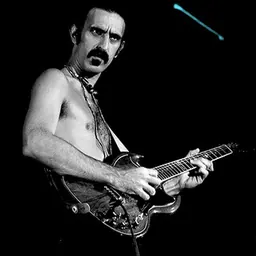
One of Varèse's most devoted fans was the American guitarist and composer Frank Zappa, who, upon hearing a copy of The Complete Works of Edgard Varèse, Vol. 1 (EMS Recordings, 1950) became obsessed with the composer's music. Zappa wrote an article titled Edgard Varèse: The Idol of My Youth, for Stereo Review magazine in June 1971. At the age of 15 Zappa talked to Varèse by phone and received a personal letter, but the two were not able to meet in person. Zappa framed this letter and kept it in his studio for the rest of his life. Zappa's final project was The Rage and the Fury, a recording of the works of Varèse. This album has remained in the Zappa private collection.
Henry Threadgill details Varèse's influence in his 2023 autobiography.
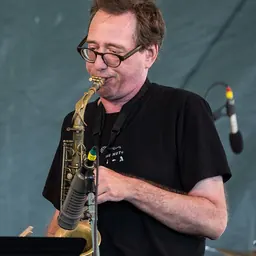
Tributes The record label Varèse Sarabande Records is named after him. Keyboard player Robert Lamm of the jazz-rock band Chicago wrote the track "A Hit By Varèse" for the album Chicago V (1972). American saxophonist and composer John Zorn was inspired by Varèse for his 2006 album Moonchild: Songs Without Words, the first installation of a series of 6. Alan Clayson included an arrangement of "Un grand sommeil noir" on his album One Dover Soul (2012)
Musical philosophy and composition Predictions On several occasions, Varèse speculated on the specific ways in which technology would change music in the future. In 1936, he predicted musical machines that would be able to perform music as soon as a composer inputs his score. These machines would be able to play "any number of frequencies," and therefore the score of the future would need to be "seismographic" in order to illustrate their full potential. In 1939, he expanded on this concept, declaring that with this machine "anyone will be able to press a button to release music exactly as the composer wrote it—exactly like opening up a book." Varèse would not realize these predictions until his tape experiments in the 1950s and 1960s.
Idée fixe Some of Edgard Varèse's works, particularly Arcana make use of the idée fixe, a fixed theme, repeated certain times in a work. The idée fixe was most famously used by Hector Berlioz in his Symphonie fantastique; it is generally not transposed, differentiating it from the leitmotiv, used by Richard Wagner.
Works
Un grand sommeil noir, song to a text by Paul Verlaine for voice and piano (1906) Amériques for large orchestra (1918–1921; revised 1927) Offrandes for soprano and chamber orchestra (poems by Vicente Huidobro and José Juan Tablada) (1921) Hyperprism for winds and percussion (1922–1923) Octandre for seven wind instruments and double bass (1923) Intégrales for wind and percussion (1924–1925) Arcana for large orchestra (1925–1927) Ionisation for 13 percussion players (1929–1931) Ecuatorial for bass voice (or unison male chorus), brass, organ, percussion and theremins (revised for ondes-martenots in 1961) (text by Francisco Ximénez) (1932–1934) Density 21.5 for solo flute (1936) Tuning Up for orchestra (sketched 1946; completed by Chou Wen-chung, 1998) Étude pour espace for soprano solo, chorus, 2 pianos and percussion (1947; orchestrated and arranged by Chou Wen-chung for wind instruments and percussion for spatialized live performance, 2009) (texts by Kenneth Patchen, José Juan Tablada and St. John of the Cross) Dance for Burgess for chamber ensemble (1949) Déserts for winds, percussion and electronic tape (1950–1954) La procession de verges for electronic tape (soundtrack for Around and About Joan Miró, directed by Thomas Bouchard) (1955) Poème électronique for electronic tape (1957–1958) Nocturnal for soprano, male chorus and orchestra, text adapted from House of Incest by Anaïs Nin (1961), revised and completed posthumously by Chou Wen-chung (1968)
Don’t just read it —
keep it.
Full-length biographies made to live with: read them, listen on the way to work, watch them tonight.
- E-book
- Audio
- Video
Instant download · yours to keep · every purchase keeps this site free
Important facts
People in Edgard Varèse's life
Named in this biography and alive at the same time



Related people
Same field, nearest in time


Contemporaries
People whose lives overlapped Edgard Varèse's

Frequently asked questions
Who was Edgard Varèse?
French composer (1883-1965)
When was Edgard Varèse born?
Edgard Varèse was born on 22 December 1883 in Paris.
When did Edgard Varèse die?
Edgard Varèse died on 6 November 1965 in New York City.
What was Edgard Varèse's occupation?
Edgard Varèse was a composer, musicologist and conductor.
What nationality was Edgard Varèse?
Edgard Varèse was French.
Sources & further reading
Cite this page
APA: Biography.guide. (2026). Edgard Varèse. https://biography.guide/edgard-varese/
MLA: "Edgard Varèse." Biography.guide, https://biography.guide/edgard-varese/.
Chicago: "Edgard Varèse." Biography.guide. https://biography.guide/edgard-varese/.
Data last updated: 2026-09-20 · Spot an error? Report a correction.
Page generated 2026-09-27 05:31 UTC