
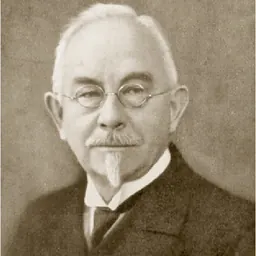
Edgar Percival
Australian pilot and aircraft designer
About Edgar Percival
Lived 1897 – 1984 (aged 86). Edgar Percival was a British military flight engineer, engineer and aircraft pilot.
Early years Percival was born in 1898 at Albury, New South Wales, the son of Blanche Hilda Leontina Percival, née Wikner and William Percival, a butter manufacturer. Edgar Percival's maternal great uncle was the Swedish philosopher Pontus Wikner.
As a child Percival assisted at his family's farm, on the flats of the Hawkesbury River at Richmond, New South Wales. He later enrolled at Sydney Technical College, before undertaking a short course in aeronautical engineering at Sydney University.
First World War In December 1915, Percival volunteered for overseas service with the Australian Imperial Force, as a private with the 7th Light Horse Regiment. Following this incident there was an inquest and the coroner found Percival not responsible and found fault with the adults in the crowd. In 23 January 1923 he experienced another setback when he crashed in Coolangatta following a failed take off on a planned flight to Brisbane while carrying two passengers but, despite the plane being significantly damaged, the passengers and pilot were uninjured. The accident was caused when trying to avoid travelling close to two children who were playing on the beach.
In Australia Percival began to take a further interest in aircraft design; he built the winning entry in the 1924 Australian Aero Club competition to design a light aircraft. In 1926, flying an aircraft that he had helped design, he competed in a Federal Government challenge for both design and piloting skills, winning £940 in prize money. ), Percival then arranged for series production to be contracted out to George Parnall & Sons, of Yate, Gloucestershire, an arrangement that lasted two years. Percival Aircraft was officially formed in 1933. In 1934, after 24 Gulls had been produced at Parnalls, Percival set up his own factory at London Gravesend Airport, Kent.
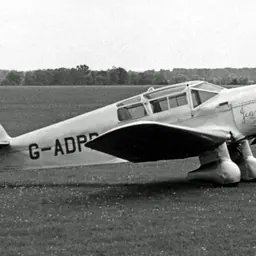
Edgar Percival's aircraft were renowned for their graceful lines and outstanding performance. As a noted test pilot, Percival continued to fly his own creations; in 1935, he flew a Gull from England to Morocco and back to England, winning the Oswald Watt Gold Medal. He was the first pilot to fly from Britain to Africa and back in one day. He left Gravesend at 1.30am and returned to Croydon at 6.20pm. "Day trips in the future will be as commonplace as trips to Margate" he said in a broadcast at nine o'clock. Other famous aviators were associated with Percival aircraft; in 1933 Charles Kingsford Smith flew a Gull Four named Miss Southern Cross from England to Australia in the record breaking time of 7 days, 4 hours and 44 minutes. The New Zealand aviator Jean Batten also used the Percival Gull to fly from England to Australia in October 1936. A pure racing member of the Gull series, the Percival Mew Gull, was flown by other illustrious pilots including Alex Henshaw and Tom Campbell Black to set many speed and distance records in the 1930s.
In late 1936 Percival transferred production to larger facilities at the newly built Luton Corporation Airport in Bedfordshire. A two-bay hangar was constructed to accommodate the workshops and the design offices were set up in the original Georgian farmhouse situated nearby. Production at Luton was then primarily focused on the Vega Gull. A small twin-engined machine, the Q6, was also produced in limited quantities, using a pair of de Havilland Gipsy Six Series II engines driving variable-pitch propellers. Again, the same basic method of construction was employed and the finished result was an aesthetically pleasing and aerodynamically clean feederliner which represented the final new design produced by the company prior to Edgar Percival selling his interests in the company.
In 1938, with war imminent, Percival developed a military communications and R/T operator training version of the Vega Gull named the Proctor. This was powered by a 205 hp Gipsy Queen II engine. During the Second World War, a great deal of Proctor production was sub-contracted out and the designs of other firms, including the Airspeed Oxford and de Havilland Mosquito were, in turn, produced by Percival Aircraft at Luton.
In March 1940, Percival resigned from the company, his dual roles being taken up by P.D. Acland (formerly Aviation Manager of Vickers Ltd.) who was appointed Managing Director and Arthur Bage who became the Chief Designer. During the war years, Percival served in the Royal Air Force Volunteer Reserve.
Later years Percival Aircraft was bought in September 1944 by Hunting & Son Ltd; Edgar Percival sold his interest in his company and moved to the United States to continue work on engine technology. From 1954, his old company began trading under the name Hunting Percival Aircraft Ltd; "Percival" was not dropped from the company name until 1957.
Percival became a naturalized US citizen in 1948.
He went to New Zealand in 1951, where he was involved with pioneering aerial application efforts.
In 1954, Percival formed a new company, Edgar Percival Aircraft Limited, at Stapleford Aerodrome, England. The company's first design, the Edgar Percival E.P.9 was a utility aircraft well suited to agricultural use. A total of 21 were constructed before Percival sold his company in 1960 to Samlesbury Engineering; the new company formed Lancashire Aircraft Company to continue aircraft construction of the E.P.9.
At the time of his death in 1984, Percival was working on aviation projects in the UK and New Zealand.
Don’t just read it —
keep it.
Full-length biographies made to live with: read them, listen on the way to work, watch them tonight.
- E-book
- Audio
- Video
Instant download · yours to keep · every purchase keeps this site free
Important facts
People in Edgar Percival's life
Named in this biography and alive at the same time



Related people
Same field, nearest in time

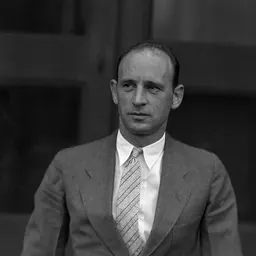
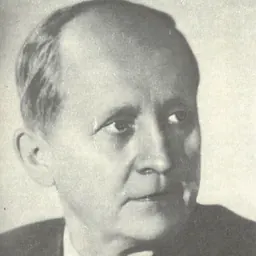



Contemporaries
People whose lives overlapped Edgar Percival's

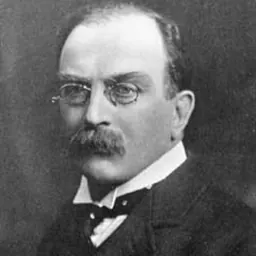
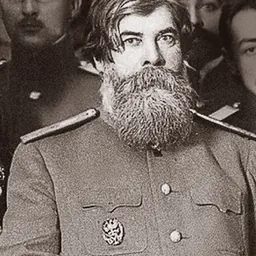

Frequently asked questions
Who was Edgar Percival?
Australian pilot and aircraft designer (1897–1984)
When was Edgar Percival born?
Edgar Percival was born on 23 February 1897 in Albury.
When did Edgar Percival die?
Edgar Percival died on 21 January 1984 in London.
What was Edgar Percival's occupation?
Edgar Percival was a military flight engineer, engineer and aircraft pilot.
What nationality was Edgar Percival?
Edgar Percival was British.
Sources & further reading
Cite this page
APA: Biography.guide. (2026). Edgar Percival. https://biography.guide/edgar-percival/
MLA: "Edgar Percival." Biography.guide, https://biography.guide/edgar-percival/.
Chicago: "Edgar Percival." Biography.guide. https://biography.guide/edgar-percival/.
Data last updated: 2026-09-22 · Spot an error? Report a correction.
Page generated 2026-09-27 05:15 UTC