About Jean Batten
Lived 1909 – 1982 (aged 73). Jean Batten was a New Zealand aircraft pilot and engineer.
Jane Gardner Batten (15 September 1909 – 22 November 1982), commonly known as Jean Batten, was a New Zealand aviator who made several record-breaking flights – including the first solo flight from England to New Zealand in 1936.
She made two unsuccessful attempts to fly from England to Australia solo before achieving the feat in May 1934, taking just under 15 days to fly the distance in a Gipsy Moth biplane. The flight set the record for a woman's solo flight between the two countries. After a publicity tour around Australia and New Zealand, she flew the Gipsy Moth back to England, setting the solo women's record for the return flight from Australia to England. She also became the first woman to fly solo from England to Australia and back again. In November 1935, she set the absolute record of 61 hours, 15 minutes, for flying from England to Brazil. During this flight, in a Percival Gull Six monoplane, she completed the fastest crossing of the South Atlantic Ocean and was the first woman to make the England–South America flight. The pinnacle of her flying achievements came in October 1936, when she flew her Gull from England to New Zealand, covering the distance in a little over 11 days, an absolute record for 44 years. The following year she made her last major flight, flying from Australia to England to set a new solo record.
During the Second World War, Batten unsuccessfully applied to join the Air Transport Auxiliary. Instead, she joined the short-lived Anglo-French Ambulance Corps and worked in the munitions industry. After the war, Batten lived a reclusive and nomadic life with her mother, Ellen Batten, in Europe and the Caribbean. Ellen, a strong personality who dominated her daughter, died at Tenerife in 1967, and soon afterwards Batten returned to public life with several appearances related to aviation and her records. Her death on the Spanish island of Mallorca in November 1982 from complications of a dog bite went unnoticed until discovered by a journalist in September 1987.
Early life Jane Gardner Batten was born on 15 September 1909 in Rotorua, New Zealand, to Frederick Batten, a dentist, and his wife Ellen . She was the only daughter of the couple, who were both first-generation New Zealanders of English descent. She had two older brothers and a third who had died soon after birth. Although named for her grandmother, she soon became known as Jean. Being the youngest child as well as sickly, her mother, who had a domineering personality, doted on her. When she was four, the Batten family moved to Auckland.
Commencing her education at a private school, Batten was switched to a state school in 1917. As her father had enlisted in the New Zealand Expeditionary Force (NZEF) to fight in the First World War, the family was on a reduced income. Batten's mother encouraged her in activities considered to be masculine at the time, such as taking her to Kohimarama to observe the flying boats of the flight school there. According to Batten's unpublished memoirs, these visits inspired her to pursue flying. After the war, Fred Batten was discharged from the NZEF and resumed his career as a dentist, moving his family from Devonport, where they had been renting, to Epsom. Her parents' relationship, already brittle due to Fred's extramarital relationships and Ellen's aloofness and reluctance to step back from running the household following her husband's return from the war, ended when the couple separated in 1920. This apparently affected Jean badly, who later vowed she would never get married. In later years Jean would deny her parents' breakup and maintain the marriage was a happy one.
Following the separation of her parents, Batten lived with her mother in Howick; Fred Batten, who lived with his sons near his dental practice on Queen Street, covered some living expenses. In 1922, Jean was sent to Ladies' College, a girls' boarding college in Remuera at her father's expense. Although she later described her time at the school as a happy one, she had few friends and many of her fellow students found her to be aloof. She finished her education in late 1924, refusing to go back the following year for her fifth form year. Instead, she studied music and ballet with an intention of pursuing a career in one of these disciplines. She soon became an assistant teacher at the ballet school where she trained, playing the piano during classes.
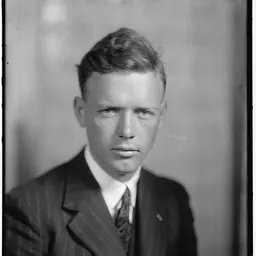
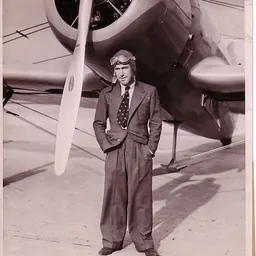
In May 1927, Batten read of Charles Lindbergh's exploit in flying non-stop across the Atlantic. This stirred her childhood interest in aviation, which was further agitated in 1928 when the Australian pilot Charles Kingsford Smith flew from Australia to New Zealand in his Southern Cross Fokker F.VII aircraft. Batten's father took her to a reception for Kingsford Smith in Auckland. On meeting him, she declared her intention to learn to fly, which Kingsford Smith considered to be a joke. She was humiliated and supposedly vowed to her mother afterwards that she would indeed fly. She followed this up in 1929 by taking a flight with Kingsford Smith while on a holiday in Sydney. On her return to Auckland, she informed her father of her intention to become a pilot, giving up plans to be a pianist or dancer. He did not approve, believing it an inappropriate career choice for a woman and refused to pay for flying lessons.
Flight training Batten, encouraged by her mother, decided to go to England to learn to fly. As a pretext, she told her father that she was going to attend the Royal College of Music, although she later claimed he knew of her real intentions. Batten had a piano which she sold to fund the voyage to England for herself and her mother. In an interview given a few years later to a newspaper, Ellen Batten claimed she had property that was sold to supplement her daughter's funds. Her father provided an allowance to help support her in her supposed musical studies. Batten and her mother left New Zealand in early 1930, travelling to England aboard the RMS Otranto.
On arrival in London in the spring of 1930, the duo found a room on James Street in the city's West End. Although her brother, John Batten, lived in London, working as a film actor with a key role in Under the Greenwood Tree, they saw little of him in case he discovered their true purpose in England and wrote to Batten's father. She joined the London Aeroplane Club (LAC), which was based at the Stag Lane Aerodrome in the northwest of London. In her unpublished memoirs, Batten wrote that she quickly took to flying and had a "natural aptitude for it". However, other students remembered her as a slow learner. In fact, an early solo flight ended in a crash landing, an incident she never referred to in her later writings. She was also remembered for boasting about planning a solo flight to New Zealand. When, in May, Amy Johnson, who also trained at the LAC, completed the first solo flight for a female pilot from England to Australia in 19 days, Batten sought not only to emulate Johnson but beat her record.
Batten earned her pilot's A licence on 5 December 1930. It had been a relatively protracted process; although only three hours of solo flying were required to qualify for the A licence, Batten could only accumulate the flying time in small amounts. Limited funds prevented extensive flying time and she only flew short flights two or three times a week. It was at this time that her father discovered the true purpose of the trip to England and, angered by the deception, ceased paying her allowance. Despite this, Batten was still determined to beat Johnson's England to Australia record but short of funds, in January 1931 she left with her mother for New Zealand. She hoped that family there would help fund her venture.
On the voyage to New Zealand, Batten met a fellow New Zealander, Flying Officer Fred Truman who was serving with the Royal Air Force (RAF) in British India and going home on leave. The two struck up a friendship. Back in New Zealand, Batten reestablished a relationship with her father, whose anger at being deceived had eased by this time. He began to support her in her flying endeavours, paying for her to take lessons in navigation. Batten resumed flight training, joining the Auckland Aero Club, based at Māngere, and soon secured her New Zealand A pilot's licence. Her friendship with Truman had grown and he fostered hopes of a relationship. He also flew with Batten at the Auckland Aero Club but this soon ended when he had to rejoin his squadron.
Record attempts from England to Australia
Batten still harboured ambitions of an attempt to break the solo England-Australia flight and sought a sponsor to provide the necessary funding. By mid-1931, she decided to seek a B licence, which was required to become a commercial pilot, in the belief that it would add to her credibility with potential sponsors. In July she returned to England aboard the SMS Rotorua and resumed her flight training at the LAC. This was paid for with a £500 loan from Truman, although this was never acknowledged by Batten, who later wrote in her autobiography that her mother, still in New Zealand, provided the necessary funds. Truman left the RAF in 1932 and was soon in London as well, tutoring Batten in navigation while he also worked towards gaining a B licence. Batten gained hers in December 1932 and then disentangled herself from Truman without ever paying back the £500 he lent her.
In addition to her flight training, Batten learnt how to maintain aircraft and their engines. This was helpful for while on a delivery flight for a Gipsy Moth biplane, she experienced engine trouble and had to land the aeroplane at Sandhurst Military Academy. She was able to facilitate a repair and continue the flight. During her time at the LAC, she met Victor Dorée, who came from a wealthy family. Dorée borrowed £400 from his mother to buy Batten a Gipsy Moth, with which she intended to beat Johnson's record for flying from England to Australia solo. The agreement, as later recalled by Batten in her autobiography, entitled Dorée to half of any profits to be made from the endeavour. Batten modified the Gipsy Moth, acquired from the King's Flight and previously flown by the then Prince of Wales, by fitting extra fuel tanks to increase its range to . Visas and landing rights in 14 countries were secured, she made arrangements for refueling, and obtained a plethora of information on landmarks along her route.
First attempt
On 9 April 1933, Batten commenced her flight to Australia, a trip of , flying from Lympne Aerodrome. The flight was planned to end by landing at Darwin in Australia. Her departure was widely reported and her mother, present for the occasion, gave an interview that appeared to give the impression of a united and well-off family. Batten was not the only pilot attempting to break the record for the trip to Australia at the time; she took off 24 hours after an Italian, Leonida Robbiano, started his endeavour from Lympne.
The first leg was to Rome and was the first non-stop solo effort to be made by a woman from England to Italy. Batten noted that this flight "caused considerable comment". Over the next few days she made stops at Naples, Athens, Aleppo, and Baghdad. At Bushehr, in Iran, she encountered Robbiano who had run out of fuel.#tag:ref|Robbiano was killed a few days later when his aircraft crashed in the Bay of Bengal. and another considered the transcript of the log of her flight to be the most interesting part of the book.
While in Sydney, she met Beverly Shepherd, a 23-year-old who was training to become a commercial pilot and a relationship promptly developed. According to Batten, this was much to the displeasure of Ellen, who regarded her daughter as being committed to Walter, even though she had previously publicly denied the existence of the couple's engagement. By March 1935, the engagement was off. Batten had written to Walter to end the relationship but it was reported in the media prior to him receiving her letter. This left him bitter at the news. She later wrote that on arriving in Australia to complete her record flight, she realised that she wanted to prioritise her aviation career for a few years and saw marriage as compromising her ambitions.
Return to England By April 1935, Batten was preparing to fly her Gipsy Moth back to England. Although it was not publicly declared, she hoped to set a new record for flying time between Australia and England. In her autobiography, she stated that the purpose of her return was to be in London for the Silver Jubilee of George V. Shepherd accompanied her in his own de Havilland Puss Moth part of the way to Darwin, from where she was to leave Australia. She commenced the first leg on 12 April, heading for Kupang in Timor. About halfway through the flight across the Timor Sea, her engine stopped; she had to glide for some time, nearly ditching in the sea, before successfully restarting it. The engine continued to play up for the remainder of the trip. On arriving at Kupang, she cleaned some of the components of the fuel system as she and a Dutch mechanic suspected dust was to blame for the problem. Despite this, she continued to experience similar intermittent engine problems for the remainder of her journey to England.
Batten largely followed the reverse of the route flown on her outward trip to Australia. She avoided the worst of the Intertropical Convergence Zone but was slowed by headwinds flying west across West Asia. She had further engine trouble over Italy and by the time she reached Marseille, there was only a slim chance of beating her record, and even then it would only be by a few minutes. However, she suffered a puncture and more engine problems. She arrived at Croydon, in England, having taken 17 days, 16 hours, to make the journey from Australia to England. She was still the first woman to fly solo from England to Australia and back again. Although only a few people were at Croydon for her arrival, her return to England was widely reported. When interviewed, she claimed that she had no help or financial backing, and credited her persistence for the successful endeavour. This disregarded the support provided by Castrol. In recognition of her record flight, the Women's International Association of Aeronautics, in the United States, awarded her its Challenge Trophy for 1934.
England to Brazil Batten had turned her mind to a record flight from England to South America even before she had left Australia in April. Few pilots had attempted record flights over the South Atlantic; the record at the time was 16 hours, 30 minutes, held by the Spaniard Juan Ignacio Pombo, and no female had yet done it solo. The record for the quickest flight from England to Brazil was held by Jim Mollison, who achieved it in three days, ten hours, and Batten decided to attempt to break this record as well. However, the route was already in use by Zeppelin airships and the French airline Aeropostale also regularly crossed the South Atlantic for its mail service. At least one aviation journal thought Batten's record attempt, once it became public knowledge, had little value.
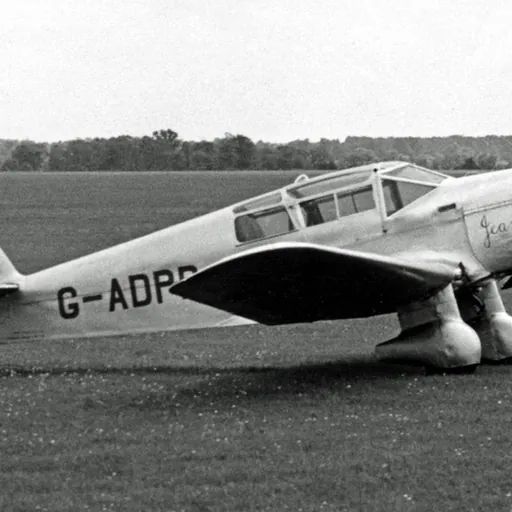
To replace the Gipsy Moth, Batten purchased a Percival Gull Six monoplane. Much faster than her old aeroplane, it had a six-cylinder 200 horsepower de Havilland Gipsy Six engine, electrically operated fuel pumps and starter motor, an enclosed cabin that seated three people and was capable of flying per hour. She arranged for the Gull to be fitted with auxiliary fuel tanks, giving it a range of , and a discreet toilet tube. She took delivery of the aircraft, finished in silver with the registration G-ADPR, on 15 September, her birthday. According to Batten, it had cost £1,750, "practically every penny" she had. Mackersey doubts the accuracy of this statement, pointing out Batten had received fees from newspapers and film companies, as well as money earned from the Australian flight and the sale of her Gipsy Moth.
Batten planned to start from Lympne Aerodrome, flying to Casablanca, go onto Dakar, in West Africa, via Villa Cisneros in the Spanish Sahara, and then flying across the South Atlantic to land at Port Natal in Brazil. When she left on 11 November 1935, it was to news that Kingsford Smith had disappeared off the coast of Burma during an attempt to make the quickest England-Australia flight. Making Casablanca without incident she left the next day for a military airfield at Thies. This was a late change to her itinerary due to the aerodrome at Dakar being under repair. However, on arrival she found that her fuel was still at Dakar. It was dispatched and arrived at midnight whereupon she immediately organised the refuelling of her Gull.
After a short nap, and despite a pessimistic weather forecast, Batten left Thies at 4:45am, 13 November. Because of the short airfield, and the amount of fuel being carried, she opted to lighten the load of her aircraft. Among other items, she left behind her tool kit, signal pistol, spare engine parts, emergency water and life raft. She soon ran into the South Atlantic convergence zone and the weather encountered at this stage meant that she effectively flew blind for some time. A local magnetic disturbance affected her compass, and she had to resort to her turn indicator to keep her bearing. Despite these difficulties, she still encountered her target landmark, Cap San Roque, once she reached the Brazilian coastline after 12 and a half hours of flying. She landed at Port Natal thirteen hours, 15 minutes, after her departure from Thies; this lowered the record for a solo crossing of the South Atlantic by three hours. It took her two days, thirteen hours and 15 minutes to fly from England to Brazil, breaking Mollison's record by nearly 24 hours. She also had achieved the overall fastest flight time for crossing the Atlantic, beating by 22 minutes the record set by a four-engined Air France aeroplane.
The next day, 14 November, Batten set out for Rio de Janeiro, a flight of around 10 hours. On the way, the Gull suffered a fuel leak and she landed on a beach about from her destination. She was able to find shelter in a nearby village. According to Batten, she telegraphed for assistance but there was considerable consternation when she did not arrive at Rio at her scheduled time and, in the absence of knowledge of her whereabouts, search and rescue aircraft were dispatched in the morning. After a few hours, her Gull, and Batten herself, were located. The Brazilian Air Force provided fuel and repaired her propeller, damaged when landing, and she continued onto Rio, landing at Campos dos Alfonsos.
To acknowledge her success, the Brazilian President, Dr. Vargas, presented her with the Order of the Southern Cross; according to Batten, she was the first British woman, other than Royalty, to be so honoured. She was gifted money by the local British Chamber of Commerce and made an honorary officer in the Brazilian Air Force, which also presented her a trophy, "The Spirit of Aviation". She then flew onto Argentina and Uruguay and while in Buenos Aires, she received an offer from Charles Lindbergh to make a lecture tour of the United States. She declined, opting instead to return to England. According to Peggy Kelman, an Australian aviator of the 1930s interviewed by Mackersey, Batten had written to her mother for permission to take the tour but this was not forthcoming and she was ordered to go back to England. She arrived at Southampton on 23 December aboard the RMS Asturias, the Gull in its hold. In her autobiography, Batten makes no mention of Lindberg's offer, noting that she wanted to be in London for Christmas.
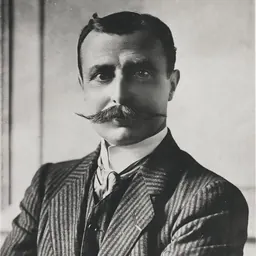
Interlude After spending Christmas Day with her mother in Hatfield, Batten went to Southampton to fly her Gull back to Hatfield aerodrome. During the flight, she crashed her aeroplane. In an interview given to a reporter of the Daily Express, she blamed an engine failure that forced her to glide to a crash landing on South Downs, in West Sussex. She suffered a cut to her head and a concussion, while the Gull's wings were twisted and its undercarriage was torn away. The Gull was taken to Gravesend to be repaired. During this time, and claiming her aeroplane was "being overhauled", she went to Paris to receive a gold medal presented by the French Academy of Sports and met Louis Blériot, who had made the first aeroplane flight across the English Channel in 1909. The French Government shortly announced its intention to award her the Legion of Honour (Légion d'honneur) with the rank of Knight (Chevalier).
She received further honours: these included the Britannia Trophy, awarded by the Royal Aero Club for the most meritorious flight of 1935 to be made by a British subject, the Challenge Trophy, which she was awarded for the second time by the Women's International Association of Aeronautics, and the Harmon Trophy, jointly awarded to Batten and Amelia Earhart. The Daily Express also named her as one of its five "Women of 1935".
Once her Gull was repaired, Batten took her mother on a flying holiday to Spain and Morocco. When back in England, she often attended public engagements and functions but otherwise was largely reclusive. In June, Batten was created Commander of the Order of the British Empire (CBE) in the King's Birthday Honours, for "general services to aviation". The New Zealand Government had agitated for Batten to be made a Dame but this was not entertained by officials in London, who were reluctant to reward risky record flight attempts. She was invested with the CBE by King Edward VIII in a ceremony at Buckingham Palace on 14 July.
England to New Zealand By this time, Batten's preparations for another world record flight, from England to New Zealand, were underway. She also aimed to break the men's record for the England-Australia flight, which stood at six days, 21 hours, and was held by Jimmy Broadbent. Batten and her mother had completed an walking trip across the South Downs for fitness while the Gull was being prepared. She spent time in London obtaining the necessary permissions to fly over the countries along her route. The latest maps were purchased and facilities were arranged for her stops on the way to New Zealand.
In the presence of a large media turnout, Batten departed Lympne Aerodrome on the morning of 5 October 1936. With stops at Marseille, Brindisi, Cyprus, Syria, and Basra, she arrived at Karachi after two and a half days of flying. She had deliberately kept her rest time to a minimum, and the operational ceiling of the Gull allowed her to fly at a height that avoided the worst of the turbulence. Batten then flew onto Akyab, in Burma, a distance of with a stop for fuel at Allahabad. Making an early start the next day, 9 October, she departed at 1:00am for Alor Star, in British Malaya. She encountered bad weather during the flight and was unable to land at Alor Star. Instead, she had to go on to Penang, a further away. She had a fright when she realised the driving rain was stripping the fabric and dope (a lacquer used to weatherproof aircraft fabric) from the leading edges of her wings; this required repair at Penang. She flew onto Singapore while it was still light, and the repair work to her wings was performed at the RAF station there. By this time, her total flight time was four days, 17 hours. She left for Rambang, on Lombok, that night and then onto Kupang in Timor. Here she discovered that the tailwheel of the Gull, part of the landing gear, had a puncture. It took several hours to effect a repair, and by then it was too late to leave for Darwin. She was phlegmatic about the delay for it allowed her to have much-needed sleep. She left Kupang at dawn, 11 October, and arrived at Darwin after four hours of flying, where a large crowd had gathered to greet her. She had problems landing; the throttle stuck open on one attempt. On the second, one of the main wheel brakes failed, causing the Gull to perform a ground loop before coming to a halt. The total trip time from England to Australia was five days, 21 hours, which set a new absolute record for a solo flight for this route. Batten's achievement was front-page news around the world.
Delay in Australia Batten was conscious that she needed to push on to Auckland in New Zealand, still some away. From Darwin, she flew onto Longreach in Queensland, where she spent the night. Despite many locals turning out to meet her, she declined to greet them and also refused media interviews. She flew onto Sydney the next day, being greeted by a fleet of aircraft over the city's harbour that would escort her into the Mascot airfield. Here she was delayed for two days; the weather over the Tasman was not favourable for a crossing and in addition, there was also public opposition to making the flight in a single-engined aircraft, as the Tasman was noted for difficult weather and the majority of the previous crossings had been achieved in multi-engine aircraft. Batten suspected sexism played a role, noting that "...Australia like New Zealand is still very much 'a man's country'". She also had difficulties with officialdom. The Australian Civil Aviation Department would not allow her to leave on account that the amount of fuel that the Gull would need to carry to make the flight over the Tasman would make its overall weight exceed the limit on its certificate of airworthiness. This was overcome when she was able to produce a special endorsement provided by the British authorities that allowed the Gull to takeoff with an extra of weight beyond what was stipulated on its certificate of airworthiness.
The delay due to the poor weather over the Tasman meant that she was able to make herself available to the media. She earned £600 for a radio interview and secured exclusive deals with a consortium of newspapers and film companies. Media mogul Frank Packer offered her £5,000 to stay in Australia and do a lecture tour rather than fly to New Zealand. She declined, preferring the "honour of completing the first solo flight from England to New Zealand and linking the two countries in direct flight for the first time in history". While waiting for the Tasman to clear, she also spent time, albeit limited, with Beverly Shepherd, who was now an airline captain.
Trans-Tasman crossing
On 16 October, Batten departed for New Zealand at 4:35am, local time. She left from the Royal Australian Air Force's airbase at Richmond, the longer runway giving her more space to get her heavily loaded Gull in the air. The weather forecast was still not ideal; rather than flying direct to Auckland, where she was to land at Mangere Aerodrome, she decided to aim for New Plymouth, a slightly shorter distance over the sea, and then fly north to Māngere. Before she left, at 4:30am in front of a large press contingent, she specifically instructed that if she came down in the Tasman, no one was to be sent to look for her. She did not want anyone's life to be put at risk.
The flight to New Plymouth, about from Richmond, took nine and a half hours, a record for the Trans-Tasman crossing. Due to rain clouds and squalls, she flew below most of the way so she could observe her drift. She did a flypast for a crowd gathered at New Plymouth airfield and then flew north to Māngere as planned. She landed just after 5:00pm in front of a crowd of around 6,000 people. She had set a record of eleven days, 45 minutes for a direct flight from England to New Zealand; this would stand for 44 years before it was broken. She also set a record of ten and a half hours for the crossing from Sydney to Auckland. In her autobiography, she described the cheers from the crowd at Māngere as the "greatest moment in my life", sentiments she expressed in her speech to the crowd. Her father was among those who greeted her, although he was given short-shrift as Batten focussed on the adulation from the crowd and the official reception party.
Batten's feat was widely reported around the world, with media comparing her to Amy Johnson and Amelia Earhart. The Times in London called the endeavour "an act of deliberate courage". Telegrams flooded in; according to Batten, there were 1,700 cables received from overseas. The Government provided her with four secretaries to help her respond to all of them. At a civic reception held in Auckland a few days later, the city's mayor announced the naming of "Jean Batten Place" in her honour.
Publicity tour Batten embarked on a publicity tour, eager to make money. She wanted to recover the expenses incurred on her England-New Zealand flight and have some profit to fund further flying, despite the effort likely "overdrawing on [her] reserve energy". This began on the day of her arrival at Māngere when she collected a portion of the fees charged for vehicle parking at the aerodrome. Despite being fatigued, the same evening she gave the first lecture of her tour at an Auckland cinema. Her Gull was later displayed at a shop in Auckland, where people paid to see it. She began to charge a shilling for her autograph and signed several hundred books. A public subscription raised over £2,000 for her.
She soon found her tour was compromised by the exclusive contracts she had entered into with the media while in Sydney; two minders controlled the public and rival media's access to her. This impacted public reporting of her tour and attendance suffered. In addition, behind the scenes, Batten exhibited self-centred behaviour which alienated many who witnessed it. While in Auckland, she also had a confrontation with Fred Truman, who had loaned her £500 back in 1931. Batten had steadfastly ignored his pleas to repay the debt. In the end, he approached Batten's father regarding the amount owed. Fred Batten, embarrassed at discovering Batten was so indebted, facilitated a meeting between his daughter and Truman, at which she handed over a cheque for £250 and swiftly departed. The balance was never repaid.
By the time Batten arrived in Christchurch, she was depressed at the poor attendance of her lecture tour and physically exhausted. She took a rest on medical advice. The remainder of the tour was cancelled, and she later described the decision as a result of being "too tired to carry on". Most of November was spent in the South Island, on the West Coast and at Franz Josef Glacier, at the expense of the Government. By the end of the month, her morale had been boosted with news of more honours. For the second successive year, she was awarded the Royal Aero Club's Britannia Trophy for the most meritorious performance in aviation by a British subject. She was awarded the Harmon Trophy again, this time outright, for her 1936 flights. Finally, she received the Segrave Trophy, awarded for the "most outstanding demonstration during the year of the possibilities of transport on land, water or air". She later wrote that this "was a very great honour".
At the end of November, Batten travelled to Sydney where she was going to meet her mother who had left England after hearing of her daughter's breakdown. While in Sydney awaiting the arrival of Ellen Batten, she reunited with Beverly Shepherd. The two spent several days together. In her unpublished memoirs, she wrote that Shepherd struggled with being with someone as famous as her. Once Ellen arrived, she and Batten returned to New Zealand where they would remain for three months. For part of the time, they were joined by Fred Batten, presenting an image of a united family, as her parents' separation was not public knowledge. Christmas was spent in her birthplace of Rotorua, where she was honoured by local Māori, as she had been after her 1934 journey. She was given a chief's kahu huruhuru (feather cloak) and conferred with the title Hine-o-te-Rangi – "Daughter of the Skies".
In February 1937, Batten, accompanied by her mother, travelled to Sydney to join Shepherd. Publicly, she gave the impression of wanting to continue flying despite friends apparently trying to persuade her to settle down, writing "the fire of adventure that burned within me was not yet quenched" but privately, she expressed a keen desire to marry Shepherd, who was flying from Brisbane to meet her in Sydney. The evening of her arrival on 19 February, she discovered he was missing; the passenger airliner on which he was co-pilot had failed to arrive. Batten was involved in the search for the missing aircraft, even after it was officially called off after five days. The public at large remained unaware of her keen interest in Shepherd; she maintained that her interest was simply as a close friend of one of the missing pilots, describing him as "a great friend of mine". The wreck of the aircraft was discovered in the MacPherson Ranges by the bushman Bernard O'Reilly on 28 February, with two survivors. It had crashed during a storm and burst into flames. Shepherd was among the dead.
In her unpublished memoirs, Batten admitted to profound grief at the loss of Shepherd. She withdrew from society and with her mother, moved to a flat near Sydney's beaches. The two lived in Australia for the next eight months and for much of this time, Batten was undecided about her future plans. Then, in September, she learnt that Broadbent was going to attempt to break her record for the England-Australia flight; he then held the record of six days, nine hours for the Australia-England flight. Batten shortly announced her intention to break Broadbent's record.
Australia to England
Batten planned to use her Percival Gull for the attempt and arranged for its engine to be overhauled. For her personal fitness, she embarked on a programme of swimming, skipping and running. Her mother in the meantime departed Australia so that she could be in England to greet Batten when she arrived. To cover her expenses, Batten sought sponsorship from Frank Packer; his interest was lukewarm, advising her that with regular air services to Australia, the days of pioneering flights were over. In the end, he agreed to an exclusive deal whereby she would prepare a 200-word report at the end of each day. Newspapers were describing the event as a duel between Batten and Broadbent. Batten noted that it was "infinitely more difficult to fly from Australia to England than in the opposite direction" because headwinds "retard progress on the route in England". Journalists questioned the value of the attempt, one noting that with the advancement of commercial aviation, "the day of the adventure flier draws to a close".
After a delay because of weather, Batten's record attempt commenced from Darwin on 19 October 1937, with a flight to Rambang on Lombok Island, where she refueled, and flew onto Batavia to finish her first day. It had been nearly of flying. Rising early, she commenced the next leg, to Alor Star, while it was still dark. According to her autobiography, she encountered thunderstorms within an hour of her departure and much of her flight was spent flying on instruments. After a brief stop at Alor Star, she carried on to Rangoon, arriving there just 36 hours after commencing the record attempt from Darwin. She had already flown . The next day, she flew to Karachi, with a stop for fuel at Allahabad. She had flown part of the leg at just to minimise the effect of the prevailing headwind. The heat was such that the soles of her shoes became stuck to the rudder pedals. On her arrival, she was advised that she was the first solo pilot to make the flight from Rangoon to Karachi in a single day. After a four-hour rest, she resumed her flight, proceeding to Basra, then Damascus and onto Athens. As she crossed the Mediterranean, a major storm was encountered and, according to her autobiography, she also experienced the St. Elmo's Fire phenomenon about the hub of her propeller.
The next leg was scheduled to be to Rome but low cloud cover over the city forced her to land at Naples instead, where she spent the night. Exhausted, on landing she had to be bodily lifted from the cockpit of the Gull and given stimulants. The weather prognosis for the next day, 24 October, was not favourable, particularly over the Mediterranean. Regardless, encouraged by many cables of support received overnight, she departed that morning for Marseilles. She skirted some storm systems to land at Marseilles and then carried onto England, where she landed at Lympne Aerodrome in the mid-afternoon. A small enthusiastic crowd was present to cheer her on arrival.
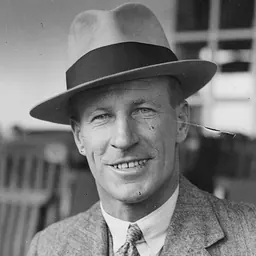
Batten had completed the flight in 5 days, 19 hours and 15 minutes. As well as lowering Broadbent's record by just over half a day, she also became the first person to hold the solo record for both the outward and inward flights. Broadbent's attempt on her England to Australia record had ended in Iraq, where he ran out of fuel. She also was within four hours of the all-time record for the fastest flight time from Australia to England, this being held by Owen Cathcart Jones and Ken Waller who had flown the trip in the multi-engined de Havilland DH.88 Comet in 1934.
After 20 minutes clearing customs at Lympne Aerodrome, Batten took off again for Croydon, at the time London's international airport. A large crowd of 10,000 was present to greet her, Ellen Batten among them. Broadbent had sent a cable of congratulations which was also awaiting her. Batten was moved by the reception at Croydon, noting that it felt "more like a homecoming than just the final landing of a record flight". Her exploit was front page news the next day; one major newspaper headlined its first page as "The Girl Who Has Beaten All The Men".
It was Batten's last long-distance flight as a pilot.
A primary school founded in 1970 in Māngere is named after her; Batten, in her will, left it money for use as competition prizes. A street in her birthplace of Rotorua is also named for her. A bronze sculpture of Batten is located in the main terminal of Rotorua Regional Airport, and memorial panels are installed in the building. A small park in the middle of the city is named after her, and the Jean Batten Memorial is located there. At , Jean Batten Peak in the Ailsa Mountains of Fiordland was named for her in 1939; she had visited the nearby Walter Peak Station, close to Lake Wakatipu.
In September 2009, a street in the area of Palma where Batten died was renamed Carrer de Jean Batten (Jean Batten Street).
Major flights 8 May to 23 May 1934 – England–Australia (solo women's record) in 14 days 22 hours 30 minutes, breaking Amy Johnson's record by over four days. 8 April to 29 April 1935 – Australia–England (solo women's record) in 17 days 16 hours 15 minutes. First woman ever to make a return flight. 11 November to 13 November 1935 – England–Brazil: in 61 hours 15 minutes, setting a world record for any type of aeroplane. Also fastest crossing South Atlantic Ocean, 13 hours 15 minutes, and first woman to make an England–South America flight. 5 October to 16 October 1936 – England–New Zealand in 11 days 45 minutes, including two days 12 hours in Sydney. World record for any type. 19 October to 24 October 1937 – Australia–England in 5 days 18 hours 15 minutes, giving her solo records simultaneously in both directions. Her last long-distance flight.
Don’t just read it —
keep it.
Full-length biographies made to live with: read them, listen on the way to work, watch them tonight.
- E-book
- Audio
- Video
Instant download · yours to keep · every purchase keeps this site free
Important facts
People in Jean Batten's life
Named in this biography and alive at the same time

Related people
Same field, nearest in time



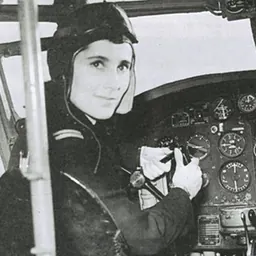
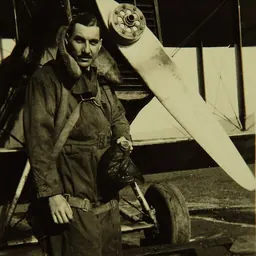
Contemporaries
People whose lives overlapped Jean Batten's



Frequently asked questions
Who was Jean Batten?
New Zealand aviator (1909-1982)
When was Jean Batten born?
Jean Batten was born on 15 September 1909 in Rotorua.
When did Jean Batten die?
Jean Batten died on 22 November 1982 in Palma.
What was Jean Batten's occupation?
Jean Batten was an aircraft pilot and engineer.
What nationality was Jean Batten?
Jean Batten was New Zealand.
Sources & further reading
Cite this page
APA: Biography.guide. (2026). Jean Batten. https://biography.guide/jean-batten/
MLA: "Jean Batten." Biography.guide, https://biography.guide/jean-batten/.
Chicago: "Jean Batten." Biography.guide. https://biography.guide/jean-batten/.
Data last updated: 2026-09-23 · Spot an error? Report a correction.
Portrait: Wikimedia Commons · author & licence
Page generated 2026-09-27 05:07 UTC