
About Edgar Erskine Hume
Lived 1889 – 1952 (aged 62). Edgar Erskine Hume was an American military officer.
Edgar Erskine Hume CBE FRSE MD (26 December 1889 – 24 January 1952) was an American physician, Major General in the U.S. Army medical corps, writer and amateur ornithologist. At the time of his retirement from the Army he was the most decorated medical officer in American history.
Early life Edgar Erskine Hume was born at the Capital Hotel in Frankfort, Kentucky on 26 December 1889, the only son of Dr. Enoch Edgar Hume and his wife, Mary Ellen South. He had a sister called Eleanor Marion, born at "Roselawn" the home of their maternal grandparents. He received his preliminary education at the Frankfort High School and the Franklin Institute and entered college in 1904.
Hume studied medicine at Centre College in Kentucky, being the youngest member of the class, graduating BA in 1908 and MA in 1909. While at Centre College he was a member of the Kappa Alpha Order fraternity.
After the armistice, in February 1919, Lt. Colonel Hume was appointed Chief Medical Officer for State of Slovenes, Croats and Serbs, to have charge of the anti-typhus campaign in the State of Slovenes, Croats and Serbs, leading a team of eighteen physicians of the Medical Corps of the Army, working alongside Serbian Surgeon General Colonel Sondermeir. In June he was made American Red Cross Commissioner for State of Slovenes, Croats and Serbs, he was the only active duty medical officer involved, he then became in charge of all American Red Cross activities in that part of the Balkans and with the Allied Army of Occupation in Hungary. He was next on temporary duty with the American Forces in Germany and for two months as assistant to the Surgeon in the Post Hospital at Antwerp.
In August 1920, after a year and a half in the Balkans, Lt. Colonel Hume was ordered home to America where in November 1920 he was assigned to duty as assistant to the commanding officer of the Corps Area Laboratory at Fort Banks, Massachusetts, and later as Commanding Officer until June 1922. On his own time he attended classes at Harvard and M.I.T., receiving a certificate in public health ( changed later to Master of Public Health) from M.I.T. and a diploma in tropical medicine from Harvard.
In 1924 he was assigned to the Army Medical Library in Washington DC, to replace Fielding Hudson Garrison first as Assistant Librarian, for two years he worked in the institution assisting Albert Allemann. Concurrently he attended Johns Hopkins and received the degree of doctor of public health. In 1926 Hume served at Fort Benning until 1930, then instructed in the New Hampshire and Massachusetts National Guard.
In 1932 the position of librarian at the Army Medical Library became available and Hume occupied it until October 1936. While a librarian he wrote an essay for the Military Surgeon which won the Wellcome Prize for 1933. During this period he grew to fame as an amateur ornithologist and was elected a Fellow of the Royal Society of Edinburgh in 1933. His proposers were Dr William Joseph Maloney, Joseph Wedderburn and fellow-Americans Robert Foster Kennedy and Richard Lightburn Sutton. Curiously he was an Ordinary Fellow rather than Honorary, which required his physical presence in Edinburgh for his induction. At the end of his term as Librarian, Hume was assigned to study at the Medical Field Service School at Carlisle Barracks before becoming Commanding Officer of the Winter General Hospital in Topeka, Kansas. Colonel Hume left the hospital to attend the School of Military Government in Charlottesville.
In 1943, during the Second World War, he was assigned to General Eisenhower's North African staff for the invasion of Sicily. Following the invasion he was Chief of Public Health for Sicily from July 1943 to August 1943 when he was promoted to Chief of the Allied Military Government for Gen. Mark Clark's 5th Army's Italian sector. Hume accepted the surrender of Naples in September 1943. Following Germany's surrender, in May 1945, he became Chief of the Military Government for the whole US zone of Austria. He returned to Washington two years later in June 1947.
For the next two years, he served as Chief of the Reorientation Branch within the Civil Affairs Division of the Department of the Army in Washington, D.C. He was awarded the Gorgas Award by the Medical Reserve Corps Association of New York in 1948.
In June 1949 he was appointed Chief Surgeon of the Far East command under General MacArthur; thereafter he was director-general of medical services of the United Nations Command in Korea; and surgeon on the staff of the Supreme Commander for Allied Powers. In July 1950 he became Director-General of Medical Services in Korea a position he held from MacArthur's headquarters in Tokyo until the end of the Allied occupation.
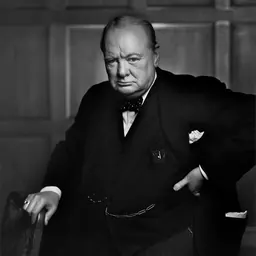
Retirement and death Hume came back to the U.S. and retired on 31 December 1951 with the rank of Major General. Three weeks later, on 20 January 1952, as President General of the Society of the Cincinnati, he presented the hereditary membership insignia of the Society to British Prime Minister Winston Churchill. (Newsreel of Winston Churchill and Major General Hume )
On 24 January 1952, Hume had an aneurysm of the aorta and died the same day at the Walter Reed Army Medical Center. General Hume is buried in Arlington National Cemetery.
Personal life In July 1918, prior to going on active duty in the First World War, he married Mary Swigert Hendrick of Frankfort who came from a distinguished line of Kentucky pioneer ancestry. She joined him while he was still on duty in Serbia and shared many of his travels. They had a son Edgar Erskine Hume Jr.
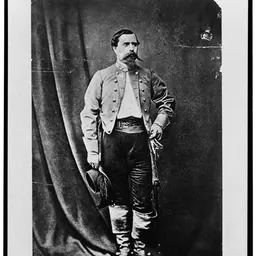
Publications The list of Edgar E Hume's publications reached over four hundred titles. He wrote histories, biographies, science and sociology but also critical and philosophical essays. Max von Pettenkofer. His Theory of the Etiology of Cholera, Typhoid Fever & Other Intestinal Diseases, a Review of His Arguments and Evidence (1927) Lafayette and the Society of Cincinnati (1934) Peter Johnston, Junior: Virginia Soldier and Jurist (1935) Colonel Heros von Borcke, a Famous Prussian Volunteer in the Confederate States Army: Southern Sketches, No. Two, First Series (1935) Lafayette in Kentucky (1937) Papers of the Society of the Cincinnati in the State of Virginia 1783–1824 (1938) Medical Work Of The Knights Hospitallers Of Saint John Of Jerusalem (1940) Colonel Theodore O'Hara, Author Of The Bivouac Of The Dead, Southern Sketches No. 6 (1941) The golden jubilee of the Association of military surgeons of the United States, A history of its first half-century 1891–1941 (1941) Ornithologists of the United States Army Medical Corps, Thirty-six biographies (1942) Victories of Army Medicine: Scientific Accomplishments of the Medical Department of the United States Army (1943) Allied Military Government of Rome Under the Fifth Army (1944)
Awards and decorations At the battle of Vittorio Veneto, he was wounded and received his first medal for heroism. He was wounded twice in Italy during World War II and twice in Korea. By the time he reached the end of his career, he was the most decorated medical officer in the Army.
United States
Foreign Major General Edgar E Hume was decorated by 37 countries in Europe and Latin America. Commander of the Order of the British Empire French Legion of Honour (Grand Officer) British General Service Medal Knight Officer of the Sacred and Military Order of Saint Maurice and Saint Lazarus (Italy) War Cross for Military Valor (Italy) Silver Messina Earthquake Medal 1908 (Italy) Serbian Order of Saint Sava (Grand Officer) Serbian Order of the White Eagle (Commander) Cross of the Serbian Red Cross Serbian Merit Silver Medal War Medal (Serbia) Russian Order of Saint Anne Montenegrin Order of Danilo (Commander) Montenegrin Gold Medal for Merit Order of the Crown of Romania (Officer) 1st class Second Grade Vytis Cross (Lithuania) War Cross (Greece) War Cross (Czechoslovakia) Order of Saint Agatha (San Marino)
Promotions
Source: U.S. Army Register, 1948.
Affiliations President General of the Society of the Cincinnati President of the Association of Military Surgeons Fellow of the American Academy of Arts and Sciences Fellow of the American College of Surgeons Fellow of the Royal Geographical Society of Great Britain Member of the Dante Society of Italy
Don’t just read it —
keep it.
Full-length biographies made to live with: read them, listen on the way to work, watch them tonight.
- E-book
- Audio
- Video
Instant download · yours to keep · every purchase keeps this site free
Important facts
People in Edgar Erskine Hume's life
Named in this biography and alive at the same time




Related people
Same field, nearest in time



Contemporaries
People whose lives overlapped Edgar Erskine Hume's


Frequently asked questions
Who was Edgar Erskine Hume?
American general and physician
When was Edgar Erskine Hume born?
Edgar Erskine Hume was born on 26 December 1889.
When did Edgar Erskine Hume die?
Edgar Erskine Hume died on 24 January 1952 in Walter Reed Army Medical Center.
What was Edgar Erskine Hume's occupation?
Edgar Erskine Hume was a military officer.
What nationality was Edgar Erskine Hume?
Edgar Erskine Hume was American.
Sources & further reading
· Wikipedia: Edgar Erskine Hume
Cite this page
APA: Biography.guide. (2026). Edgar Erskine Hume. https://biography.guide/edgar-erskine-hume/
MLA: "Edgar Erskine Hume." Biography.guide, https://biography.guide/edgar-erskine-hume/.
Chicago: "Edgar Erskine Hume." Biography.guide. https://biography.guide/edgar-erskine-hume/.
Data last updated: 2026-09-25 · Spot an error? Report a correction.
Page generated 2026-09-27 05:11 UTC