
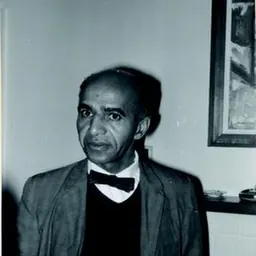
Eddie Obeng
British academic, organizational theorist, educator and author
About Eddie Obeng
Born 1959. Eddie Obeng is a British and Ghanaian business theorist.
Edward David Asihene Obeng (born 1959) is a British organisational theorist, educator, and author, who serves as a professor at Henley Business School and Hult International Business School's Ashridge Executive Education. Obeng founded Pentacle (The Virtual Business School) and serves as its executive director. Obeng has been described variously as "a leading revolutionary" and "an agent provocateur" by the Financial Times, and by Abbey National as their "secret weapon".
Early life and education Obeng was born in Ghana to the scientist Letitia Obeng. When his mother moved to Kenya, Obeng was sent to England, to complete his education, at Cranleigh School. He progressed to University College London and the Cass Business School.
Career Obeng's business career started as an engineer at Royal Dutch Shell before he became the youngest Executive Director of a European Business School when he moved to Ashridge Business School in 1987.
In 1994, he established Pentacle (The Virtual Business School) to teach this philosophy and ensure that there was a "continuous link between learning and implementation".
Educational research Obeng's research interest began in the field of Project Management, where he developed the concept of 'New World Management', also referred to as 'World After Midnight', as a response to the rapidly accelerating pace of change. He is inspired by Eliyahu M. Goldratt. and is perhaps best summarised by Eric Hoffer's reflection that "In a time of drastic change it is the learners who inherit the future. The learned usually find themselves equipped to live in a world that no longer exists".
Virtual education Obeng pioneered the use of bespoke business simulation games to help stimulate and embed learning. In 1995, together with Keith Still, pioneer in crowd dynamics, he created the now obsolete virtual reality game 'Columbus'. Programming required high powered SGI Indigo computers, although the simulation ran at 25 fps on a standard PC running Windows 95. In 2010, he launched 'The Cube' (later rebranded to QUBE). Obeng's innovation with QUBE was to focus on learning and application by integrating all the business models, frameworks, and tools into the virtual reality enabled environment.
Teaching approach Obeng is notable for demystifying traditional business school teaching by removing unnecessary theory and focusing on practical tools that can be applied in the real world in "a continuous link between learning and implementation". The approach has been published in the Gower Handbook of Management.
Obeng's teaching approach is divided into five stages that are based around David A. Kolb's experiential learning styles. Engage, to build trust with the client and understand their needs Diagnose, to establish the key ‘levers’ the management team need to seize to make an opportunity work and/or to find the root cause/ barriers to turn-around. Design, to work out how to re-align the management team's active or perhaps frenetic daily-life to ‘insert’ the learning required to transform it. Implement, to deliver the learning and support its application around both hard (process) and soft (people) issues. Embed, to remove the barriers to the new learning taking hold.
Learning content Obeng's learning material is divided into five subject areas that are intended to reflect the broad challenges experienced by managers and executives in the New World: How do I invent the future? How do I deliver the future? How do I deliver today? How do I lead organised talent? How do I ensure results? Inventing the Future; uses proprietary tools such as the SPARQS model and the RABBIT process help to develop new ideas and ensure that they are turned into successful innovation. Delivering the Future; makes use of the four project types developed by Pentacle to better manage complex projects. These are "Painting by Numbers, a "Quest", a "Film" and a "Foggy Project" each requiring a different management approach in order to ensure success. Delivering Today; uses a number of tools such as the "Money Making Machine" to help to prioritise activity. Leading Organised Talent; uses the principles of behavioural leadership to support managers to create and manage effective teams. Ensuring Results makes use of assessed learning styles to make sure that implemented actions are sustained.
Awards and recognitions In 2011, Obeng won the Sir Monty Finniston Award for lifetime achievement by The Association for Project Management for his contributions to the study and practice of Project Management.
Publications Obeng is author of the following books:
All Change! The Project Leader's Secret Handbook (1995) Financial Times Pearson Publishing Putting Strategy to Work (1996) Financial Times Pearson Publishing Making Re-Engineering Happen (with Stuart Crainer), (1994) Financial Times Pearson Publishing New Rules for the New World (1997) Wiley Publishing Soundbytes (1999) London Business Press Never Re-organise Again (2001) London Business Press Perfect Projects (2002) London Business Press Money Making Machine (2002) London Business Press The Complete Leader (with Christophe Gillet) (2008) London Business Press.
He has also made significant contributions to: The Financial Times Handbook of Management and The Gower Handbook of Training and Development and has a regular column in Project Management Today.
Don’t just read it —
keep it.
Full-length biographies made to live with: read them, listen on the way to work, watch them tonight.
- E-book
- Audio
- Video
Instant download · yours to keep · every purchase keeps this site free
Important facts
People in Eddie Obeng's life
Named in this biography and alive at the same time




Related people
Same field, nearest in time


Contemporaries
People whose lives overlapped Eddie Obeng's



Frequently asked questions
Who is Eddie Obeng?
British academic, organizational theorist, educator and author
When was Eddie Obeng born?
Eddie Obeng was born in 1959 in Ghana.
What is Eddie Obeng's occupation?
Eddie Obeng is a business theorist.
What nationality is Eddie Obeng?
Eddie Obeng is British and Ghanaian.
Sources & further reading
Cite this page
APA: Biography.guide. (2026). Eddie Obeng. https://biography.guide/eddie-obeng/
MLA: "Eddie Obeng." Biography.guide, https://biography.guide/eddie-obeng/.
Chicago: "Eddie Obeng." Biography.guide. https://biography.guide/eddie-obeng/.
Data last updated: 2026-09-23 · Spot an error? Report a correction.
Portrait: Wikimedia Commons · author & licence
Page generated 2026-09-27 05:07 UTC