
About Eddie Miles
Born 1940. Eddie Miles is an American basketball player.
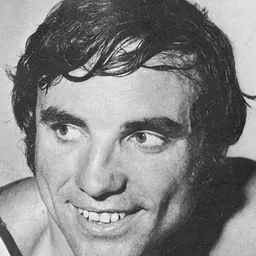
Edward Miles Jr. (born July 5, 1940) is a retired American basketball player. His shooting ability was such that he was known as "The Man With the Golden Arm". He played in the National Basketball Association (NBA) for nine seasons, with the Detroit Pistons, Baltimore Bullets, and New York Knicks. He was the fourth overall pick in the 1963 NBA draft. Miles was selected to play in the 1966 NBA All-Star Game and led the West team in scoring. He played in 605 regular season games during his NBA career, averaging 13.4 points per game.
As a collegiate basketball player, Miles was on the Seattle University Chieftans (now Redhawks) varsity team from 1960 to 1963. He led Seattle in scoring all three seasons, and was a three-time first-team All-Pacific Coast selection. As a senior, Miles was named a second-team All-American by the Newspaper Enterprise Association and third-team All-American by the Associated Press and United Press International. He has been inducted into the Seattle University Athletics Hall of Fame, and Seattle University has retired his No. 20.
Early life Miles was born on July 5, 1940, in North Little Rock, Arkansas. He was a graduate of Scipio A. Jones High School, in North Little Rock. He averaged 18, 25, 30 and 32 points per game, respectively, in his four years as a varsity high school player, and he led Jones to four state championships. In 1959, he led the team to the finals of the national black high school tournament.
Miles was a two-time All-American in high school, four-time All-State selection, and was recruited by 50 colleges. He chose to attend Seattle University because of his admiration for its alumnus Elgin Baylor (1958), and because Baylor had called Miles to recruit him to Seattle.
As a sophomore (1960–61), Miles led the team with a 20.9 points per game average, while also averaging 5.9 rebounds per game. Seattle had an 18–8 record under coach Vincent Cazzetta and was selected to play in the 1961 NCAA University Division basketball tournament. They lost to Arizona State in the first round of the West Regional tournament, 72–70, on a last second shot. Miles had 24 points in that game. United Press International (UPI) selected Miles first-team All-Pacific Coast.
As a junior (1961–62), Miles averaged a team-leading 22.3 points per game, along with 5.3 rebounds per game. His Seattle teammates that year and his senior year included future NBA player and teammate John Tresvant. Seattle was 18–9 that season, and was invited to play in the 1962 NCAA University Division basketball tournament. They again lost a close game in the first round of the West Regional tournament, 69–65, to Oregon State. Miles had 26 points and six rebounds in that game. United Press International named Miles first-team All-Pacific Coast again.
Miles ranked seventh nationally in scoring during his senior year (1962–63), with a 25.8 points per game average. In addition to leading Seattle in scoring for a third consecutive season, Miles also averaged 6.5 rebounds per game. As a senior, the Newspaper Enterprise Association (NEA) named Miles a second-team All-American. The Associated Press (AP) named Miles All-Coast and a third-team All-American. United Press International also named him a third-team All-American, and first-team All-Pacific Coast for the third consecutive season.
Seattle had its best record during Miles' tenure, 21–6, in 1962–63.
Miles led Seattle in scoring all three years and remains Seattle's third all-time leading scorer with a 23.1 points per game average; Baylor being number one at 31.1 points per game. Miles is second all-time for Seattle in total career points (1,823), and is fourth all-time in free thrown percentage (.757) (through 2025–26). Miles holds Seattle's career record with 1,538 field goal attempts.
Detroit Pistons As a Pistons' rookie, Miles only played 13.5 minutes a game and averaged 5.4 points per game. His skill set was a poor match for coach Charley Wolff's offensive scheme. Miles play and numbers improved significantly when Wolff was fired in November 1964 after 11 games, and 24-year old Pistons' forward Dave DeBusschere was named head coach; the youngest in NBA history. Miles averaged 13.7 points and over 27 minutes per game by the end of the 1964–65 season.
Miles's best NBA seasons came in Detroit from 1965 to 1968, when he respectively averaged 19.6, 17.6 and 18.5 points per game. Although his scoring average fell to 13.3 points per game in the 1968–69 season, he never averaged less than 13.3 points per game for the Pistons after his rookie season.
Miles played in 44 games for the Pistons during the 1969–70 season, averaging 28.3 minutes, 13.5 points, 3.9 rebounds, and 1.9 assists per game, before being traded to the Baltimore Bullets. After not having any serious injuries in college or during his first seven years in the NBA,
In 479 regular season games with the Pistons over seven seasons, Miles averaged 27.9 minutes, 14.9 points, 3.4 rebounds, and 2.2 assists per game. Miles twisted his left knee during his first game with the Bullets, and played in only three games for the Bullets during the regular season. He was placed in a cast less than two weeks after joining the team, in hopes that he could rehabilitate the leg injury in time to play in the 1970 playoffs.
Miles played in 63 games for the Bullets during the 1970–71 season as a reserve guard and forward, averaging 24.5 minutes, 9.9 points, 2.7 rebounds, and 1.7 assists per game. Miles suffered a torn Achilles tendon in a late February 1971 game that required immediate surgery and ended his season. The Bullets defeated the New York Knicks 4–3 to win the 1971 Eastern Conference Finals, but Miles did not play in that series because of his injury. He was waived by the Bullets in late September 1971, before the start of the 1971–72 season. It was reported in late March 1972, over one year after his surgery, that Miles still had a noticeable limp when he was used in games. Miles played in nine playoff games for the Knicks in 1972, only averaging about two minutes per game. The Knicks waived Miles in mid-September 1972.
Miles played in 605 regular season games, averaging 13.4 points per game in his NBA career.
Coaching Since retiring as a player, Miles has served as a coach at the college and high school levels, and has worked as a private basketball trainer. In June 1978, Miles was hired as an assistant coach at Seattle University, where he worked during Seattle's last two seasons as an NCAA Division I school (1978 to 1980). He was later an assistant coach to his son at Tyee High School in Washington.
Personal life Miles worked as a government accountant and as a financial services agent. Seattle University has also retired Miles' No. 20 jersey. Miles was inducted into the Arkansas Sports Hall of Fame in 1989. He received the Seattle University Alumni Award in 2020.
NBA career statistics
Regular season
Playoffs
Don’t just read it —
keep it.
Full-length biographies made to live with: read them, listen on the way to work, watch them tonight.
- E-book
- Audio
- Video
Instant download · yours to keep · every purchase keeps this site free
Important facts
People in Eddie Miles's life
Named in this biography and alive at the same time



Related people
Same field, nearest in time




Contemporaries
People whose lives overlapped Eddie Miles's



Frequently asked questions
Who is Eddie Miles?
American basketball player (born 1940)
When was Eddie Miles born?
Eddie Miles was born on 5 July 1940 in North Little Rock.
What is Eddie Miles's occupation?
Eddie Miles is a basketball player.
What nationality is Eddie Miles?
Eddie Miles is American.
Sources & further reading
Cite this page
APA: Biography.guide. (2026). Eddie Miles. https://biography.guide/eddie-miles/
MLA: "Eddie Miles." Biography.guide, https://biography.guide/eddie-miles/.
Chicago: "Eddie Miles." Biography.guide. https://biography.guide/eddie-miles/.
Data last updated: 2026-09-25 · Spot an error? Report a correction.
Page generated 2026-09-27 05:12 UTC