
About Ed Clark
Lived 1926 – 2019 (aged 93). Ed Clark was an American painter.
Edward "Ed" Clark (May 6, 1926 – October 18, 2019) was an abstract expressionist painter known for his broad, powerful brushstrokes, radiant colors and large-scale canvases. An African American, his major contributions to modernist painting remained unrecognized until relatively late in his seven-decade career, during which he pioneered the use of shaped canvases and a commercially available push broom to create striking works of art.
Early life and education
Ed Clark was born May 6, 1926, in the Storyville section of New Orleans, Louisiana, to Edward and Merion (Hutchinson) Clark. When he was seven years old, the family moved from Baton Rouge, Louisiana, to Chicago. His father, a habitual gambler, was an unreliable provider. The family, including a younger sister, Shirley, was supported mostly by the mother and relatives. The devoutly religious Merion Clark sent her young son to Roman Catholic grade schools, where the nuns found the boy had a talent for drawing and encouraged him in creating classroom religious art.
In 1944, during World War II, 17-year-old Ed Clark dropped out of high school and joined the U.S. Army Air Forces, serving eventually with an all-black unit in newly recaptured Guam.
Paris
The French art mecca enthralled the 26-year-old Clark. "They were all alive, man! Picasso, Braque. … Everybody was there! … Matisse was alive. … And they were like gods then!” he recalled in a 2011 oral history interview, published in 2014.
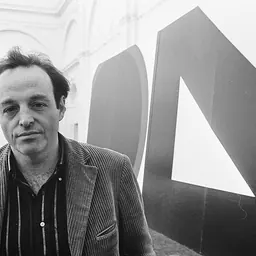
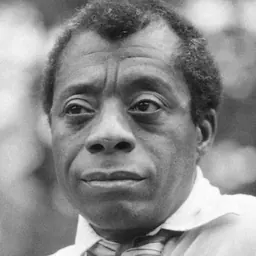
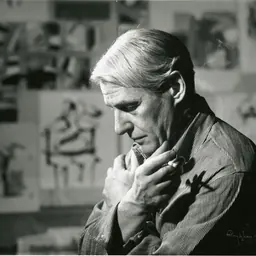
The young Chicagoan joined a Parisian circle of expatriate black American artists escaping U.S. racism, including writer James Baldwin and painter Beauford Delaney, and also grew friendly with such white artists as Joan Mitchell, Sam Francis and Al Held.
New York
Encouraged by George Sugarman, an artist friend who had left Paris for his native New York, Clark returned to the United States in 1956. A year later he co-founded with Sugarman and other artists the cooperative Brata Gallery in Manhattan's East Village. “I couldn’t get into a commercial gallery where a white person was running it," Clark recalled in the oral history. "A lot of the spaces I was showing in … I rented out the spaces!" Though abstract, the compositions could sometimes suggest ethereal landscapes, even human forms.
In 1957, Clark even broke the bounds of the canvas, extending a piece of painted surface beyond the rectangular frame. Then, in a bold innovation in the late 1960s, he began experimenting with oval-shaped canvases, which he explained better matched the human field of vision.
Over several decades, the artist traveled widely, visiting destinations such as Nigeria, New Mexico, Cuba, China, and Paris. These travels influenced the artist's exploration of light and color in his work.
In 2014, upon viewing an exhibit of Clark's work at the Tilton Gallery, New York critic Barry Schwabsky wrote in The Nation, "He is, simply, one of the best living painters." He continued, "Paint as a literal, physical presence and as a trace of the artist's mental and physical activity becomes inseparable from the evocation of the glory of light." Reviewing a Museum of Modern Art show in 2017, New York Times critic Roberta Smith wrote that in a gallery that also included paintings by Willem de Kooning, Elizabeth Murray, Alma Thomas and others, she was most taken by "an effortless, thrilling abstraction full of floating light," an untitled work by Clark.
Of one of the final shows of Clark’s lifetime, at New York’s Mnuchin Gallery in 2018, writer-curator Antwaun Sargent concluded: “Over nearly seven decades of experimenting with the color and energy of paint by sweeping it powerfully across canvas, Clark has extended the very possibilities of the medium and significantly shaped the history of abstraction."
In 2021, Clark's work was featured in Polyphonic: Celebrating PAMM's Fund for African American Art, a group show at Pérez Art Museum Miami highlighting artists in the museum collection acquired through the PAMM Fund for African American Art, an initiative created in 2013.
Personal life
Clark’s four marriages – to Muriel Nelson, Lola Owens, Hedy Durham and Liping An – ended in divorce. He and Durham had a daughter, Melanca Clark, his only child.
Museums and collections
Ed Clark's paintings are included in the permanent collections of The Art Institute of Chicago; the Detroit Institute of Arts; the Studio Museum in Harlem, New York; the Metropolitan Museum of Art, New York; the Museum of Modern Art, New York; the Smithsonian National Museum of African American History and Culture, Washington, D.C.; the California Afro-American Museum, Los Angeles; the Kresge Art Museum at Michigan State University, East Lansing, Michigan; the James E. Lewis Museum of Art at Morgan State University, Baltimore; the Museum of Modern Art in Salvador, Bahia, Brazil; the Centro de Arte Moderno in Guadalajara, Mexico; The John and Mable Ringling Museum of Art, Sarasota, Florida; the Albright-Knox Art Gallery, Buffalo, New York; the Brooklyn Museum, Brooklyn, New York; the Dallas Museum of Art; the Hammer Museum, Los Angeles; the Newark Museum, Newark, New Jersey; the Pérez Art Museum Miami, Florida, acquired through the PAMM Fund for African American Art; the Saint Louis Art Museum; the Whitney Museum of American Art, New York, among others.
Don’t just read it —
keep it.
Full-length biographies made to live with: read them, listen on the way to work, watch them tonight.
- E-book
- Audio
- Video
Instant download · yours to keep · every purchase keeps this site free
Important facts
People in Ed Clark's life
Named in this biography and alive at the same time





Related people
Same field, nearest in time


Contemporaries
People whose lives overlapped Ed Clark's

Frequently asked questions
Who was Ed Clark?
Arican-American painter (1926–2019)
When was Ed Clark born?
Ed Clark was born on 6 May 1926 in Storyville.
When did Ed Clark die?
Ed Clark died on 18 October 2019 in Detroit.
What was Ed Clark's occupation?
Ed Clark was a painter.
What nationality was Ed Clark?
Ed Clark was American.
Sources & further reading
Cite this page
APA: Biography.guide. (2026). Ed Clark. https://biography.guide/ed-clark/
MLA: "Ed Clark." Biography.guide, https://biography.guide/ed-clark/.
Chicago: "Ed Clark." Biography.guide. https://biography.guide/ed-clark/.
Data last updated: 2026-09-20 · Spot an error? Report a correction.
Page generated 2026-09-27 05:30 UTC