
Ebenezer Teichelmann
New Zealand surgeon, photographer, explorer
About Ebenezer Teichelmann
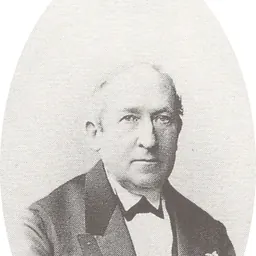
Lived 1859 – 1938 (aged 79). Ebenezer Teichelmann was a New Zealand and Australian photographer, mountaineer, surgeon and conservationist.
Ebenezer Teichelmann (23 March 1859 – 20 December 1938), known as 'the little Doctor' to his friends, was an Australian-born surgeon, mountaineer, explorer, conservationist and photographer in New Zealand. He was a survivor of the sinking of the SS Marquette in 1915. He achieved 26 first ascents of mountains and seven first ascents, or crossings, of passes, cols, or saddles, and is credited with reviving climbing in New Zealand when the sport was almost dead. A keen photographer, he used a full-plate glass camera, which was hauled up many mountains. His photographs were used in books and advertisements, and helped to achieve conservation status for West Coast reserves.
Early life and education Teichelmann was born on 23 March 1859 near Callington, South Australia, the ninth child of fifteen born to German Lutheran missionary Christian Teichelmann and his Scottish wife Margaret, Nicholson. The Teichelmanns could only afford secondary education for one child, Ebenezer. The family worked a farm, also called Ebenezer, at Morphett Vale, outside Adelaide, finding the funds available to a missionary to be insufficient to support them.
Return to Adelaide In 1892, the Teichelmanns travelled to Melbourne, with Teichelmann working as the ship's doctor on the Yarrawonga. On his return Teichelmann took up the post of health officer at Port Adelaide. Teichelmann worked for five years in Adelaide, during which he was a Surgeon Lieutenant and then Surgeon Captain for the South Australian military, and was locum tenens for Professor Edward Stirling, professor of physiology at Adelaide University, while he was on leave in England. When Teichelmann was offered a position as Senior Surgeon he declined, explaining later "I did not care to go back on my brother professionals. My one chance in Adelaide was gone and I decided to go away." He was ably assisted for many years both in his private practice and at the hospital by nurse Bess Hudson.
Teichelmann's responsibilities required him to travel at all hours of the day or night in what was a remote and rugged area, often with little more than a track to follow, and where few rivers were bridged. Accidents were commonplace, with mining, land clearing and tree felling being common activities in the area. The year Teichelmann arrived, he treated several people for smoke inhalation and burns after fire destroyed eight buildings on Revell Street, including the Golden Age Hotel, and the Hokitika Guardian and Evening Star newspaper offices and archives. The following year a fall of sand and soil buried miners in Craig's Freehold in South Hokitika, killing three men. On one occasion Teichelmann and Nurse Hudson manned a railway jigger for at night to reach a patient in Ruatapu. He planned to spend seven or eight months observing doctors in major hospitals in Europe, before a holiday in the Swiss Alps. The township farewelled him on 22 March 1912, in a gathering at the Hotel Westland, with speeches and a rendition of La Marseillaise, and presented him with a gold watch and chain. Teichelmann travelled to Europe, spending time in Birmingham, Edinburgh, Vienna, Dresden, Leipzig and Paris, as well as period climbing in Zermatt, and attending the sixth International Gynecological and Obstetric Congress in Berlin. On his return to New Zealand in January 1913 he described the advances in motor transport in London, such that horses were rarely to be seen, and several visits to Hendon aerodrome, where he was impressed with England's progress in aviation, but also mentioned that prevalent strikes made things generally unsatisfactory.
War service With a German father and a Scottish mother, Teichelmann was in an unenviable position when war was declared on 4 August 1914. He was a Surgeon Major in the New Zealand Medical Corps with the 13th Canterbury Regiment since 1907, and he expected to serve but was not initially called up, possibly because of his German name or his age.
In 1918, the influenza epidemic came to Hokitika. News from Europe prepared people in New Zealand for what to expect. The first cases in Hokitika were reported on 13 November, and were followed the next day by a public meeting calling for volunteers to assist with dealing with the effects. Inhalation chambers were set up in the library and a drill shed, and on 15 November, when Westland Hospital was already crowded with patients, Teichelmann opened a further twenty beds at the Victoria School. Further beds were placed in St Mary's Club Rooms on 19 November, by which time 13 people had already died. A medical student sent from Dunedin to assist Teichelmann became ill himself, as did many of the nursing staff, four of whom died. In less than three weeks, influenza killed 27 people in Hokitika. Newton had arrived on the West Coast in 1901, with a letter of introduction to Teichelmann from Bishop Julius, to take up the position of Vicar of Ross and South Westland. He was a keen mountaineer, having climbed in the Lake District and spent five seasons in the European Alps.
In 1903, Teichelmann was elected member of the London Alpine Society. He was elected President of the New Zealand Alpine Club in 1936, and was awarded Life Membership in 1937. Teichelmann later gave her permission to use several of his photographs in her 1915 autobiography The Conquest of Mount Cook and other climbs.
At the 1926 New Zealand and South Seas International Exhibition, negotiations for a combined display about Westland and the West Coast at the Dunedin exhibition had fallen through. Teichelmann had a collection of glass lantern slides that he was able to use to lecture about the Westland scenery, and left them behind for Tourist Department officials to show, with newspapers appreciating him as an unofficial ambassador for the region.
Conservation Teichelmann's photographs had heightened public awareness of the scenery in Westland, and were instrumental in achieving scenic reserve status for Lake Kaniere in 1911 (where Teichelmann had a holiday cottage at Hans Bay), Punakaiki, Arthur's Pass, and the four Glacial Scenic Reserves of the Westland Tai Poutini National Park. Death and legacy Teichelmann's residence and surgery at 20 Hamilton Street, Hokitika. The upper storey was added in the 1930s, and since 1995 it has been "Teichelmann's Bed and Breakfast" When Newton returned to Hokitika to stay with Teichelmann in 1934, he found him suffering from "an obscure trouble in the jaw", but otherwise he appeared to have aged little and was as interested in alpine matters as he had always been.
Around 1920 Teichelmann moved to a new house on the corner of Hampden and Jollie Streets, but continued to consult at his Hamilton Street rooms.
Mount Teichelmann, Teichelmann Peak, Teichelmann Rock, Teichelmann Creek, Teichelmann's Corner, Teichelmann's Track, and Ebenezer Peak are all named after Teichelmann.
A biography of Teichelmann was published in 2007. The foreword was written by Sir Edmund Hillary, who said"As a young climber I came to respect the climbs and exploration done by Dr. Ebenezer Teichelmann, mainly from the West Coast of New Zealand, up those long and difficult valleys such as the Cook River Valley, and his many first ascent were remarkable in that day and age of hobnail boots and long handled ice axes. His third ascent of Mt. Cook in 1905 was a wonderful achievement." Publications
Don’t just read it —
keep it.
Full-length biographies made to live with: read them, listen on the way to work, watch them tonight.
- E-book
- Audio
- Video
Instant download · yours to keep · every purchase keeps this site free
Important facts
People in Ebenezer Teichelmann's life
Named in this biography and alive at the same time



Related people
Same field, nearest in time



Contemporaries
People whose lives overlapped Ebenezer Teichelmann's


Frequently asked questions
Who was Ebenezer Teichelmann?
New Zealand surgeon, photographer, explorer (1859–1938)
When was Ebenezer Teichelmann born?
Ebenezer Teichelmann was born on 23 March 1859 in South Australia, Callington.
When did Ebenezer Teichelmann die?
Ebenezer Teichelmann died on 20 December 1938 in Westland Hospital.
What was Ebenezer Teichelmann's occupation?
Ebenezer Teichelmann was a photographer, mountaineer, surgeon and conservationist.
What nationality was Ebenezer Teichelmann?
Ebenezer Teichelmann was New Zealand and Australian.
Sources & further reading
· Wikipedia: Ebenezer Teichelmann
· DBpedia: Ebenezer Teichelmann
Cite this page
APA: Biography.guide. (2026). Ebenezer Teichelmann. https://biography.guide/ebenezer-teichelmann/
MLA: "Ebenezer Teichelmann." Biography.guide, https://biography.guide/ebenezer-teichelmann/.
Chicago: "Ebenezer Teichelmann." Biography.guide. https://biography.guide/ebenezer-teichelmann/.
Data last updated: 2026-09-22 · Spot an error? Report a correction.
Page generated 2026-09-27 05:21 UTC