
About Ebenezer J. Ormsbee
Lived 1834 – 1924 (aged 89). Ebenezer J. Ormsbee was an American lawyer and politician.
Ebenezer J. Ormsbee (June 8, 1834 – April 3, 1924) was an American attorney and politician from Vermont. A Republican, he served as lieutenant governor from 1884 to 1886, and governor from 1886 to 1888.
A native of Shoreham, Vermont, Ormsbee attended academies in Brandon and South Woodstock, then studied law at a Brandon legal firm. After attaining admission to the bar, he enlisted in the Union Army for the American Civil War. Ormsbee served with the 1st Vermont Infantry in 1861, then joined the 12th Vermont Infantry as commander of its Company G. After leaving the army in 1863, he practiced law in Brandon.
A Republican, Ormsbee served as Rutland County State's Attorney from 1871 to 1873. He represented Brandon in the Vermont House of Representatives from 1872 to 1874 and Rutland County in the Vermont Senate from 1878 to 1880. In 1884, he was elected lieutenant governor, and he served until 1886. He was the successful Republican nominee for governor in 1886 and served until 1888. During his governorship, he oversaw the initial efforts of the newly organized state railroad commission and board of health.
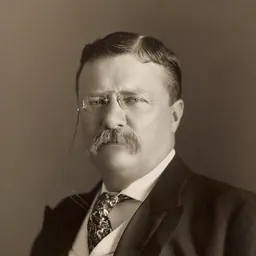
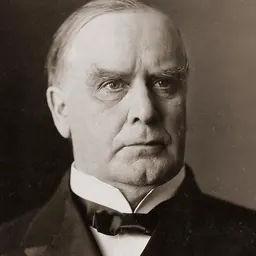
After leaving office, Ormsbee practiced law in Brandon and served on two federal commissions, one to negotiate a compromise with the Paiutes in Nevada to relinquish part of their Pyramid Lake Indian Reservation, and one to negotiate competing land claims in Samoa with commissioners from Germany and Great Britain. He remained active in politics, including supporting the presidential campaigns of William McKinley and Theodore Roosevelt. He practiced law until a stroke at age 80 caused him to retire, and he was the longtime president of the Brandon National Bank. Ormsbee died in Brandon on April 3, 1924. He was buried at Pine Hill Cemetery in Brandon.
Early life Ebenezer Jolls Ormsbee was born in Shoreham, Vermont on June 8, 1834, the son of John Mason and Polly (Willson) Ormsbee. He worked on the family farm and attended the local schools of Shoreham, then attended academies in Brandon and South Woodstock. During his senate term, Ormsbee was chairman of the committee on the state asylum and a member of the committee on state and federal relations. He served a trustee of the Vermont Reform School from 1880 to 1884.
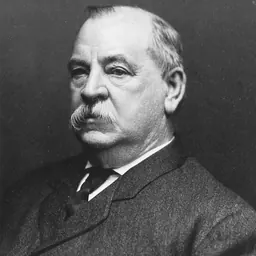
In 1887, President Grover Cleveland proposed to return to the former Confederate states battle flags that had been captured by Union troops during the Civil War. The Grand Army of the Republic led the opposition to Cleveland's plan, and the G.A.R's Vermont Department passed resolutions condemning Cleveland's proposal. Ormsbee forwarded the resolutions to Cleveland, declaring they had "my unqualified and warmest approval" and "you may rest assured that they contain the sentiments of Vermont on this subject." In September 1901, he was president of the Reunion Society of Vermont Officers and presided over the organization's annual banquet, at which Vice President Theodore Roosevelt was the featured speaker. Roosevelt became president a week later, and in late August and early September 1902 returned to Vermont to spend several days campaigning for Republican candidates in that year's elections; Ormsbee presided over welcoming ceremonies during Roosevelt's September 1 stop in Brandon. Ormsbee also presided over the July 1913 dedication of a monument to Stephen A. Douglas, a native of Brandon.
Retirement and death He was a Freemason, and a longtime comrade of Grand Army of the Republic Post No. 18, which was named for his brother Charles James Ormsbee; C. J. Ormsbee was killed in action while serving with the 5th Vermont Infantry during the May 1864 Battle of the Wilderness. Several universities presented Ormsbee with honorary degrees, including a Master of Arts from Middlebury College in 1874, a Master of Arts from Dartmouth College in 1884, and an LL.D. from Norwich University in 1893. He died in Brandon on April 3, 1924. Ormsbee was buried at Pine Hill Cemetery in Brandon.
Family In 1862, Orsmbee married Jennie L. Briggs, the daughter of his law partner Ebenezer N. Briggs. She died in 1866, and in 1867 he married Frances Davenport of Wadhams Mills, New York.
Don’t just read it —
keep it.
Full-length biographies made to live with: read them, listen on the way to work, watch them tonight.
- E-book
- Audio
- Video
Instant download · yours to keep · every purchase keeps this site free
Important facts
People in Ebenezer J. Ormsbee's life
Named in this biography and alive at the same time



Related people
Same field, nearest in time


Contemporaries
People whose lives overlapped Ebenezer J. Ormsbee's



Frequently asked questions
Who was Ebenezer J. Ormsbee?
American politician (1834-1924)
When was Ebenezer J. Ormsbee born?
Ebenezer J. Ormsbee was born on 8 June 1834 in Shoreham.
When did Ebenezer J. Ormsbee die?
Ebenezer J. Ormsbee died on 3 April 1924 in Brandon.
What was Ebenezer J. Ormsbee's occupation?
Ebenezer J. Ormsbee was a lawyer and politician.
What nationality was Ebenezer J. Ormsbee?
Ebenezer J. Ormsbee was American.
Sources & further reading
· Wikipedia: Ebenezer J. Ormsbee
· DBpedia: Ebenezer J. Ormsbee
Cite this page
APA: Biography.guide. (2026). Ebenezer J. Ormsbee. https://biography.guide/ebenezer-j-ormsbee/
MLA: "Ebenezer J. Ormsbee." Biography.guide, https://biography.guide/ebenezer-j-ormsbee/.
Chicago: "Ebenezer J. Ormsbee." Biography.guide. https://biography.guide/ebenezer-j-ormsbee/.
Data last updated: 2026-09-20 · Spot an error? Report a correction.
Page generated 2026-09-27 05:21 UTC