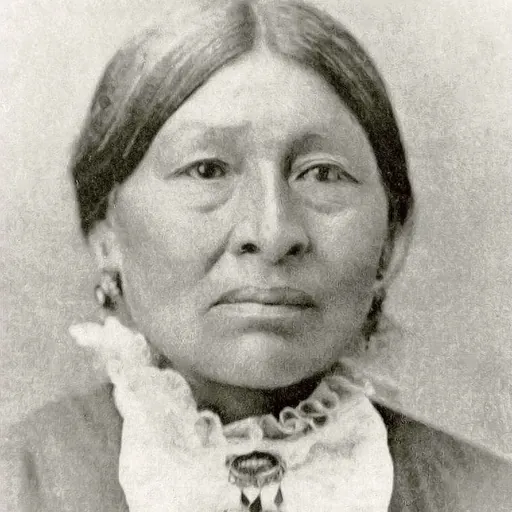
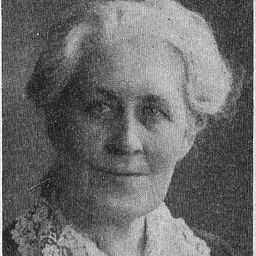
Eagle Woman
American peace activist (born 1820, near Big Bend of the Missouri River [in what is now South Dakota], U.S.—died December 18, 1888, Miles City, Montana)
About Eagle Woman
Lived 1820 – 1888 (aged 67–68). Eagle Woman was an American peace activist and interpreter.
Eagle Woman That All Look At ( a prestigious general agent in the top position in the Upper Missouri region, It has been claimed that such marriages were mutually beneficial: for Native women, marrying a trader elevated their status (though it is not stated if their status was elevated with the tribe, with the Europeans, or both) with the added benefits of access to goods, while for traders, the marriage improved their trade relations with the Native tribes.
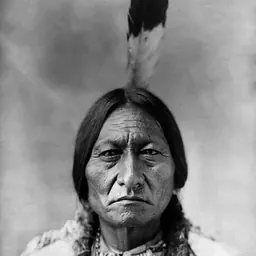
Eagle Woman "frequently spoke out against cruelty of any kind, whether committed by whites or by Indians," The family traveled down river toward their ancestral home for William's burial, eventually contracting to deliver 10 miners to Fort Randall on their way. The Galpins negotiated the release of some of the Santee's captives upon reaching Fort LaFramboise, and a party was dispatched to ransom the two women and four children. The Galpins and De Smet traveled with a party of other Sioux to Sitting Bull's camp. She later recounted that she had to persuade Sitting Bull's people not to kill De Smet, after his delegation's arrival was met with a band of hostile warriors. Though the camp leader did not accept De Smet's request, he sent several other leaders who would go on to sign the Second Treaty of Fort Laramie in 1868. This treaty established the Great Sioux Reservation, and thus Eagle Woman's family moved with the tribes to their newly established boundaries, setting up their new trading post at Grand River. For their efforts in facilitating the successful negotiations, Galpin was appointed to the post of agency interpreter, at a salary of $150 monthly.
She continued her activism for peace by defusing conflicts in person and alone, and by refusing to trade in firearms or ammunition. Within a matter of months, the association of political power in Washington, who had conspired against Eagle Woman in favor of Grant and associates, began to collapse, and the campaign against Eagle Woman was abandoned.
Black Hills Gold Rush The Black Hills Gold Rush began in 1874 as word spread of the discovery of gold in lands owned by the Sioux, including the Black Hills, according to the terms of the Treaty of Fort Laramie six years prior. This quickly lead to violations of the treaty on the part of thousands of miners immigrating to the area, and subsequent increases in violent conflicts. However, Gray Her assent was recorded at the Standing Rock Agency, November 30, 1882, "Matilda Galpin, her x mark. Seal" as the only woman to sign among the chiefs and headmen of the Sioux, making her the first woman to sign a treaty with the United States. Though none of her sons had made it to adulthood, she died surrounded by her daughters.
Eagle Woman was buried next to Galpin at the Fort Yates cemetery.
Alma continued her generosity to white and Native people alike in the area, and Alma's own funeral was attended by over a thousand people.
Legacy Eagle Woman was inducted into the South Dakota Hall of Fame as a Champion of Excellence in 2010, for her "attempts at peaceful compromise" between "Native American Indian and white societies".
The Bismarck Tribune called her the most noted Indian woman of all the western Indian nations,' next to Sakakawea."
In 2016, the location of her former grave site was one of several disputed as part of the Dakota Access Pipeline protests.
Don’t just read it —
keep it.
Full-length biographies made to live with: read them, listen on the way to work, watch them tonight.
- E-book
- Audio
- Video
Instant download · yours to keep · every purchase keeps this site free
Important facts
People in Eagle Woman's life
Named in this biography and alive at the same time
Related people
Same field, nearest in time



Contemporaries
People whose lives overlapped Eagle Woman's





Frequently asked questions
Who was Eagle Woman?
American peace activist (born 1820, near Big Bend of the Missouri River [in what is now South Dakota], U.S.—died December 18, 1888, Miles City, Montana)
When was Eagle Woman born?
Eagle Woman was born in 1820 in South Dakota.
When did Eagle Woman die?
Eagle Woman died on 18 December 1888.
What was Eagle Woman's occupation?
Eagle Woman was a peace activist and interpreter.
What nationality was Eagle Woman?
Eagle Woman was American.
Sources & further reading
Cite this page
APA: Biography.guide. (2026). Eagle Woman. https://biography.guide/eagle-woman/
MLA: "Eagle Woman." Biography.guide, https://biography.guide/eagle-woman/.
Chicago: "Eagle Woman." Biography.guide. https://biography.guide/eagle-woman/.
Data last updated: 2026-09-22 · Spot an error? Report a correction.
Portrait: Wikimedia Commons · author & licence
Page generated 2026-09-27 05:04 UTC