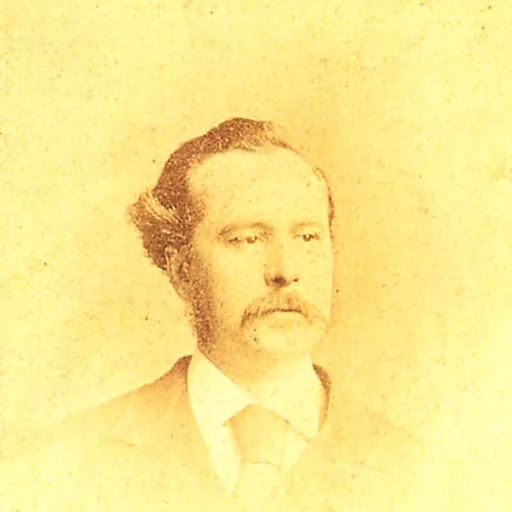
About E. W. Pugin
Lived 1834 – 1875 (aged 41). E. W. Pugin was a British architect.
Memorial bust to Edward Pugin, in front of Granville House (formerly the Granville Hotel, Ramsgate). “In memory of Edward Welby Pugin, the gifted and accomplished son of Augustus Welby Pugin, one of England's greatest architects: born 11th March, 1834, died 5th June, 1875. This bust is erected by Edmund Francis Davis. 1879.”
Edward Welby Pugin (11 March 1834 – 5 June 1875) was an English architect, the eldest son of architect Augustus Welby Northmore Pugin and Louisa Barton. His father was an architect in the Gothic Revival style, and after his early death in 1852 Edward continued his practice. At the time of his own early death in 1875, Pugin had designed and completed more than one hundred Catholic churches. His brothers Cuthbert and Peter continued the practice as Pugin & Pugin.
Career From c.1856 he developed a style independent of his father's, in which expansive spatial planning was combined with great detail. He designed churches and cathedrals primarily in the British Isles. However, commissions for his work were also received from countries throughout Western Europe, Scandinavia, and North America.
As his business grew, Pugin formed partnerships which turned out to be short-lived: with James Murray in Liverpool (1857 to 1860), with George Ashlin in Dublin (1860 to 1869), and with Joseph Hansom (1862 to 1863). He was bankrupted in 1873 by the failure of a business he was involved in, the Granville Hotel and spa at Ramsgate, Kent. 1865: St Mary, Euxton, Lancashire 1865: St Catherine, Kingsdown, Kent 1865–1866: Mayfield Boys' Orphanage (later Mayfield College, from 2007 converted to residential apartments as Mayfield Grange), Mayfield, Sussex 1865–1867: St Joseph, York Road, Birkdale, Southport, Lancashire 1866: Euxton Hall Chapel, Euxton, near Chorley, Lancashire 1866: St Francis Monastery, Gorton, Manchester 1866: Our Blessed Lady and St. Joseph, Leadgate, Durham 1866: Chancel and transepts to Mount St Mary's Church, Leeds 1866–1868: Meanwood Towers, Meanwood, Leeds 1866–1867: St Mary's Church, Barrow-in-Furness, Lancashire 1866–1867: St Michael and All Angels, Mortuary Chapel and Knill Memorial, Brockley Cemetery, London, destroyed by bombing in 1944 1866–1867: Church of St Thomas of Canterbury and the English Martyrs, Preston, Lancashire (extended 1887–88) 1866–1867: The Chapel of the Immaculate Conception, Ratcliffe College, Ratcliffe on the Wreake, Leicestershire; converted for school use in 1962 on the completion of a new, larger chapel 1867: St Paul's Church, Dover, Kent 1867–1868: St Mary, Fleetwood, Lancashire 1867–1868: All Saints' Church in Urmston, Greater Manchester 1867–1871: Our Lady and St Paulinus, Dewsbury, West Yorkshire 1868: St Begh, Coach Road, Whitehaven, Cumberland 1869–1872: Our Lady of the Sacred Heart, Cleator, Cumberland 1869: St Michael's Orphanage for Girls, aka St Joseph's College, Mark Cross, East Sussex 1869: Granville Hotel, Ramsgate, Kent 1871: Stanbrook Abbey, Powick, Worcestershire 1872: Grosvenor Victorian Turkish Baths (with house and shop), 119 Buckingham Palace Road, London 1873: St Mary's Church, Brierley Hill 1873–1875: Carlton Towers, Yorkshire, for Lord Beaumont 1875 (Edward Welby Pugin dies) 1875: St Anne Rommer, Highfield Road, Rockferry, Birkenhead, Wirral, Cheshire 1873–1876: English Martyrs Church, 30 Prescot Street, London E1 1876: Our Lady Star of the Sea, Workington 1877: Sacred Heart Church, Kilburn, London 1877: St Mary's Church, Warrington, Cheshire
Works in Scotland 1854 St Mary's Star of the Sea Church, Leith, Edinburgh 1856 St Stephen, Blairgowrie 1862: Church of St Mary, Haddington, East Lothian 1874: Church of St Mary and St Finnan, Glenfinnan
Works in Wales 1857 Wrexham Cathedral: Cathedral of our Lady of Sorrows
Works on the Isle of Man 1865 St Patrick, Peel
Works in Belgium (province of West Flanders) 1856 Basilica of Our Lady in Dadizele, finished by Jean-Baptiste Bethune 1856 Castle of Loppem, in collaboration with James Murray and George Ashlin, finished by Jean-Baptiste Bethune 1861 country estate near Bruges for bishop Joannes Baptista Malou, demolished
Works with James Murray (1856–c. 1859)
Rugby Town Hall and Markets
The old Town Hall stood on the High Street. It was built in 1857, with an extension in 1919. The upper floor became a cinema (Vint's Palace) around 1913. A fire destroyed most of the building in 1921 and it was rebuilt as Woolworths, which opened in 1923 and closed in 2009.
Works in association with George Ashlin (1859-1869)
Saints Peter and Paul's Church, Cork, (1859) Convent of Mercy, Clonakilty, County Cork (1867) Convent and Orphanage, William Street North, Dublin (1867) SS Augustine and John, Thomas Street, Dublin (1860) Regarded as Dublin's finest Victorian church, SS Augustine and John (John's Lane Church) in the Liberties area was designed by E. W. Pugin and executed by his partner George Ashlin for the Augustinian Fathers. It was built between 1862 and 1895. It has the tallest spire in Dublin (231 ft), and occupies a prominent position on high ground overlooking the Liffey Valley. It has a striking polychromatic appearance, being built in granite with red sandstone dressings.
The eminent Gothic revivalist Ruskin is said to have praised it, describing it as a "poem in stone".
Statues of the apostles in the niches of the spire are by James Pearse, father of Padraig and Willie, who were executed after the 1916 Easter Rising.
There is stained glass from the Harry Clarke studios. Presentation Convent, Fethard, County Tipperary (1862) Harrington Street Catholic Church, Dublin (1867); online Donnybrook Catholic Church, Dublin (1863) Monkstown Catholic Church, County Dublin (1865) Arles Catholic Church, Stradbally, County Laois (1965) Ferrybank Catholic Church, Waterford (1867) Kilanerin Catholic Church, Wexford (1865) Lady's Island Catholic Church, County Wexford (1863)
Don’t just read it —
keep it.
Full-length biographies made to live with: read them, listen on the way to work, watch them tonight.
- E-book
- Audio
- Video
Instant download · yours to keep · every purchase keeps this site free
Important facts
People in E. W. Pugin's life
Named in this biography and alive at the same time



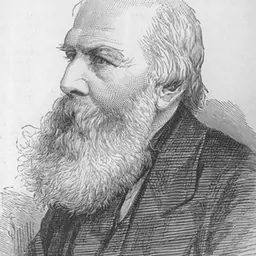
Related people
Same field, nearest in time
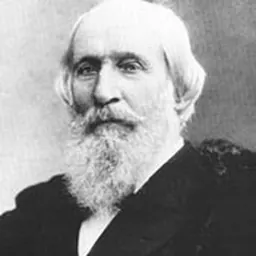
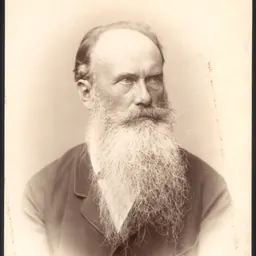


Contemporaries
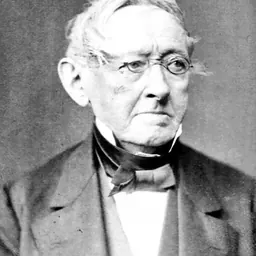
People whose lives overlapped E. W. Pugin's




Frequently asked questions
Who was E. W. Pugin?
British architect (1834–1875)
When was E. W. Pugin born?
E. W. Pugin was born on 11 March 1834 in Ramsgate.
When did E. W. Pugin die?
E. W. Pugin died on 5 June 1875 in London.
What was E. W. Pugin's occupation?
E. W. Pugin was an architect.
What nationality was E. W. Pugin?
E. W. Pugin was British.
Sources & further reading
Cite this page
APA: Biography.guide. (2026). E. W. Pugin. https://biography.guide/e-w-pugin/
MLA: "E. W. Pugin." Biography.guide, https://biography.guide/e-w-pugin/.
Chicago: "E. W. Pugin." Biography.guide. https://biography.guide/e-w-pugin/.
Data last updated: 2026-09-22 · Spot an error? Report a correction.
Portrait: Wikimedia Commons · author & licence
Page generated 2026-09-27 05:01 UTC