
About E. R. Squibb
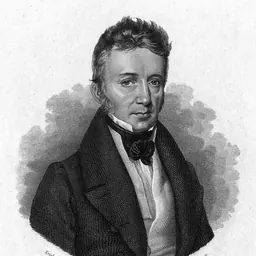
Lived 1819 – 1900 (aged 81). E. R. Squibb was an American physician, pharmacologist and inventor.
Edward Robinson Squibb (July 4, 1819 – October 25, 1900) He was the son of James Robinson Squibb (1796–1852) and Catherine Harrison (née Bonsal) Squibb (1798–1833), both Quakers. His father also suffered a stroke and remained invalid throughout his life. This profession, did not sit well with his Quaker family as well as his local Meeting, which disowned him for violating his pledge of pacifism.
As a Navy physician, Squibb became disenchanted with the poor quality of medicines used on American military vessels and, as a result, in 1854 he invented an improved method of distilling ether, an anesthetic. He gave away his distillation method, rather than patent it for profit.
Squibb Company In 1858, he left the military and started his own pharmaceutics manufacturing business in Brooklyn. His laboratory burned down three times, and in one of these instances an ether explosion left Squibb badly burned. Despite his severe injury, Squibb reopened his laboratory a year later and by 1883, he was manufacturing over 300 products being sold globally.
In 1892, Squibb created a partnership with his two sons, Dr. Edward H. Squibb and Charles F. Squibb, a firm known for generations afterwards as E. R. Squibb and Sons. Squibb was known as a vigorous advocate of quality control and high purity standards within the fledgling pharmaceutical industry of his time, at one point self-publishing an alternative to the U.S. Pharmacopeia (Squibb's Ephemeris of Materia Medica) after failing to convince the American Medical Association to incorporate higher purity standards. Mentions of the Materia Medica, Squibb products, and Edward Squibb's opinion on the utility and best method of preparation for various medicines are found in many medical papers of the late 1800s. Squibb Corporation served as a major supplier of medical goods to the Union Army during the American Civil War, providing portable medical kits containing morphine, surgical anesthetics, and quinine for the treatment of malaria (which was endemic to the eastern United States at that time).
Squibb was elected to the American Philosophical Society in 1897.
Personal life Plaque of E. R. Squibb at Squibb Park, Brooklyn, New York City Squibb was married to Caroline F. Lownds Cook (1833–1905) of Philadelphia.
Dr. Edward Hamilton Squibb (1853–1929), who married Jane Graves Sampson (1855–1915) Charles Fellows Squibb (1858–1942), who married Margaret Rapelje Dodge (1859–1930) Mary King Squibb (1865–1950), who married Dr. John Cummings "J.C." Munro (1858–1910). George Hanson Squibb (1867–1869), who died as a very small child.
Squibb died on October 25, 1900, at his home, 152 Columbia Heights in Brooklyn, New York, from a ruptured blood vessel.
Don’t just read it —
keep it.
Full-length biographies made to live with: read them, listen on the way to work, watch them tonight.
- E-book
- Audio
- Video
Instant download · yours to keep · every purchase keeps this site free
Important facts
People in E. R. Squibb's life
Named in this biography and alive at the same time




Related people
Same field, nearest in time


Contemporaries
People whose lives overlapped E. R. Squibb's



Frequently asked questions
Who was E. R. Squibb?
American physician and manufacturer (1819-1900)
When was E. R. Squibb born?
E. R. Squibb was born on 4 July 1819 in New York City.
When did E. R. Squibb die?
E. R. Squibb died on 25 October 1900 in Brooklyn.
What was E. R. Squibb's occupation?
E. R. Squibb was a physician, pharmacologist and inventor.
What nationality was E. R. Squibb?
E. R. Squibb was American.
Sources & further reading
Cite this page
APA: Biography.guide. (2026). E. R. Squibb. https://biography.guide/e-r-squibb/
MLA: "E. R. Squibb." Biography.guide, https://biography.guide/e-r-squibb/.
Chicago: "E. R. Squibb." Biography.guide. https://biography.guide/e-r-squibb/.
Data last updated: 2026-09-22 · Spot an error? Report a correction.
Page generated 2026-09-27 05:34 UTC