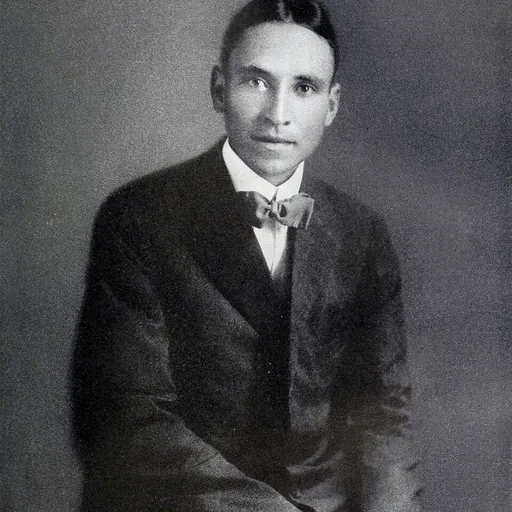
About E. Newton Harvey
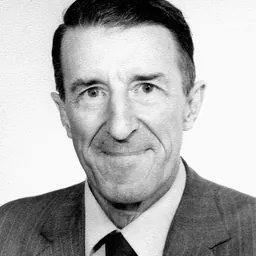
Lived 1887 – 1959 (aged 71). E. Newton Harvey was an American zoologist and physiologist, known for Bioluminescence.
Edmund Newton Harvey (November 25, 1887 – July 21, 1959) was an American zoologist. He was acknowledged as one of the leading authorities on bioluminescence. He won the Rumford Prize in 1947 and was a member of the National Academy of Sciences, the American Philosophical Society, and the American Academy of Arts and Sciences in 1929.
Early life Harvey was born on November 25, 1887, in Germantown, Pennsylvania. He was the only son and fourth child of a minister in Philadelphia who died when Harvey was six years old. His interest in natural history was exhibited at an early age and he liked collecting things and spending as much time as possible in the countryside. He was educated at Germantown Academy followed by the University of Pennsylvania where his interest in science excluded most of the social activities enjoyed by his contemporaries. He then moved to New York where he started his doctoral research under the evolutionary biologist Thomas Hunt Morgan at Columbia University.
Career In 1913 Harvey went on an expedition to the South Pacific with Alfred G. Mayer, a retired professor from the University of Pennsylvania. It was probably on this trip that he became interested in bioluminescence, and later that year he wrote a paper "On the chemical nature of the luminous material of the firefly". In 1916 he married a marine biologist, Ethel Nicholson Browne, and during their honeymoon in Japan he became fascinated by the bioluminescent ostracod Vargula hilgendorfii. This could be dried and would emit blue light when remoistened. He had large quantities of it shipped back to the United States where he devoted the next thirty years to studying the phenomenon of bioluminescence, and the chemical reactions involved in the process, in the ostracod and various other bioluminescent organisms.
Personal life Harvey's wife, Ethel Browne Harvey, worked on sea urchins in the same laboratories as Harvey in Princeton and Woods Hole. They had two sons, Edmund (born 1916) and Richard (born 1922), who received doctorates in chemistry and medicine respectively. Harvey died of heart failure at Woods Hole on July 21, 1959, at age 71. He is commemorated in the names of a species of bioluminescent bacterium (Vibrio harveyi), a luminous crustacean (Enewton harveyi), a species of firefly (Photinus harveyi) and a species of centipede (Pselloides harveyi).
Don’t just read it —
keep it.
Full-length biographies made to live with: read them, listen on the way to work, watch them tonight.
- E-book
- Audio
- Video
Instant download · yours to keep · every purchase keeps this site free
Important facts
People in E. Newton Harvey's life
Named in this biography and alive at the same time
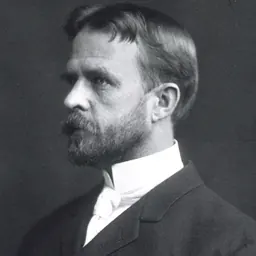


Related people
Same field, nearest in time


Contemporaries
People whose lives overlapped E. Newton Harvey's




Frequently asked questions
Who was E. Newton Harvey?
American zoologist
When was E. Newton Harvey born?
E. Newton Harvey was born on 25 November 1887 in Philadelphia.
When did E. Newton Harvey die?
E. Newton Harvey died on 21 July 1959 in Woods Hole.
What was E. Newton Harvey's occupation?
E. Newton Harvey was a zoologist and physiologist.
What was E. Newton Harvey known for?
E. Newton Harvey was known for Bioluminescence.
What nationality was E. Newton Harvey?
E. Newton Harvey was American.
Sources & further reading
Cite this page
APA: Biography.guide. (2026). E. Newton Harvey. https://biography.guide/e-newton-harvey/
MLA: "E. Newton Harvey." Biography.guide, https://biography.guide/e-newton-harvey/.
Chicago: "E. Newton Harvey." Biography.guide. https://biography.guide/e-newton-harvey/.
Data last updated: 2026-09-21 · Spot an error? Report a correction.
Portrait: Wikimedia Commons · author & licence
Page generated 2026-09-27 04:59 UTC