
About E. L. Doctorow
Lived 1931 – 2015 (aged 84). E. L. Doctorow was an American novelist, writer, screenwriter, university teacher, playwright and essayist.
Edgar Lawrence Doctorow (January 6, 1931 – July 21, 2015) was an American novelist, editor, and professor, known for his historical fiction. He wrote twelve novels, three volumes of short fiction and a stage drama, including the award-winning novels Ragtime (1975), Billy Bathgate (1989), and The March (2005). These, like many of his other works, placed fictional characters in recognizable historical contexts, with known historical figures, and often used different narrative styles. His stories were recognized for their originality and versatility, and Doctorow was praised for his audacity and imagination.
Several of Doctorow's novels and short stories were adapted into films, including Welcome to Hard Times (1967) starring Henry Fonda, Daniel (1983) starring Timothy Hutton, Billy Bathgate (1991) starring Dustin Hoffman, Jolene (2008) starring Jessica Chastain, and Wakefield (2016) starring Bryan Cranston. The most popular adaptations were for the film Ragtime (1981) and its eponymous Broadway musical (1998), which won four Tony Awards.
Doctorow was the recipient of numerous author awards, including the National Book Critics Circle Award which he was awarded three times (for Ragtime, Billy Bathgate, and The March). Doctorow was shortlisted for the 2009 Man Booker International Prize.
Early life Doctorow was born January 6, 1931, in the Bronx, the son of Rose (Levine) and David Richard Doctorow, second-generation Americans of Russian Jewish descent who named him after Edgar Allan Poe. His father ran a small music shop. He attended city public grade schools and the Bronx High School of Science where, surrounded by mathematically gifted children, he fled to the office of the school literary magazine, Dynamo, which published his first literary effort. He then enrolled in a journalism class to increase his opportunities to write.
Doctorow attended Kenyon College in Ohio, where he studied with John Crowe Ransom, acted in college theater productions and majored in philosophy. While at Kenyon College, Doctorow joined the Middle Kenyon Association, and befriended Richard H. Collin. After graduating with honors in 1952, he completed a year of graduate work in English drama at Columbia University before being drafted into the U.S. Army during the Korean War. In 1954 and 1955, he served as a corporal in the Signal Corps in West Germany.
Back in New York after military service, Doctorow worked as a reader for a motion picture company. Reading so many Westerns inspired his first novel, Welcome to Hard Times. Begun as a parody of western fiction, it evolved into a reclamation of the genre. It was published to positive reviews in 1960, with Wirt Williams of The New York Times describing it as "taut and dramatic, exciting and successfully symbolic."
When asked how he decided to become a writer, he said, "I was a child who read everything I could get my hands on. Eventually, I asked of a story not only what was to happen next, but how is this done? How am I made to live from words on a page? And so I became a writer."
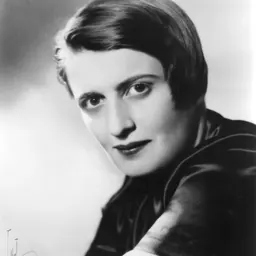
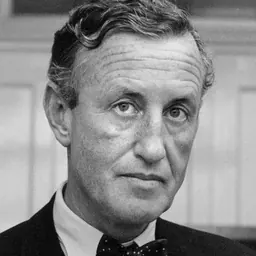
Career To support his family, Doctorow spent nine years as a book editor, first at New American Library working with Ian Fleming and Ayn Rand among others.
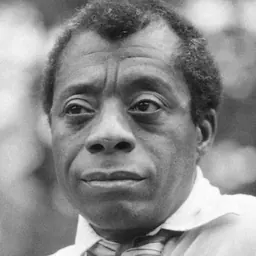
From 1964 to 1969, Doctorow worked under the New American Library as the editor in chief of The Dial Press, a publishing branch of the company. He published notable writers such as James Baldwin, Norman Mailer, Ernest J. Gaines, and William Kennedy, before leaving the company in 1971 to write The Book of Daniel.
During this time he published his second novel Big As Life (1966), which Doctorow denied permissions to republish in the future.
In 1969, Doctorow left publishing to pursue a writing career. He accepted a position as Visiting Writer at the University of California, Irvine, where he completed The Book of Daniel (1971), a freely fictionalized consideration of the trial and execution of Julius and Ethel Rosenberg for giving nuclear secrets to the Soviet Union during the Cold War. It was widely acclaimed, called a "masterpiece" by The Guardian, and said by The New York Times to launch the author into "the first rank of American writers" according to Christopher Lehmann-Haupt.
Doctorow's next book, written in his home in New Rochelle, New York, was Ragtime (1975), later named one of the 100 best novels of the 20th century by the Modern Library editorial board. His subsequent work includes the award-winning novels World's Fair (1985), Billy Bathgate (1989), and The March (2005), as well as several volumes of essays and short fiction.
Novelist Jay Parini is impressed by Doctorow's skill at writing fictionalized history in a unique style, "a kind of detached but arresting presentation of history that mingled real characters with fictional ones in ways that became his signature manner". In Ragtime, for example, he arranges the story to include Sigmund Freud and Carl Jung sharing a ride at Coney Island, or a setting with Henry Ford and J. P. Morgan. Although he was called a political novelist, Doctorow rejected this label because he did not believe that the language of politics fit into the complexity of fiction Instead, Doctorow was more a historical novelist. With that being said, Doctorow upheld a strong opinion about labels being a distraction and the "paradox of his career."
Personal life and death In 1954, Doctorow married fellow Columbia University student Helen Esther Setzer while serving in the U.S. Army in West Germany. The couple had three children.
Doctorow also taught at Sarah Lawrence College, the Yale School of Drama, the University of Utah, the University of California, Irvine, and Princeton University. He was the Loretta and Lewis Glucksman Professor of English and American Letters at New York University. In 2001, he donated his papers to the Fales Library of New York University. In the opinion of the library's director, Marvin Taylor, Doctorow was "one of the most important American novelists of the 20th century".
In the later years of his life, Doctorow focused on spreading his experience of academia through notable college lectures, sharing how to construct literature through the lens of historical context. In 2011, he spoke at St. Francis University about his experience with failure and authenticity in his work, both of which influenced how his stories were told. In 2012, Doctorow spoke at City University of New York, communicating the effectiveness of non-linear narratives when crafting historic works.
Doctorow died of lung cancer on July 21, 2015, aged 84, in Manhattan. He is interred in Woodlawn Cemetery in the Bronx.
Doctorow was a member of the Writers and Artists for Peace in the Middle East, a pro-Israel group. In 1984, he signed a letter protesting German arms sales to Saudi Arabia.
Awards and honors
1975: National Book Critics Circle Award for Ragtime 1986: National Book Award for World's Fair 1988: Golden Plate Award of the American Academy of Achievement 1989: Edith Wharton Citation of Merit for Fiction 1989 MacDowell Colony Fellowship 1990: National Book Critics Circle Award for Billy Bathgate 1990: PEN/Faulkner Award for Billy Bathgate 1990: William Dean Howells Medal for Billy Bathgate 1998: National Humanities Medal from the National Endowment for the Humanities 1998: Peggy V. Helmerich Distinguished Author Award from the Tulsa Library Trust 1999 awarded the F. Scott Fitzgerald Award for Achievement in American Literature award, which is given annually to recognize outstanding achievement in American literature. As part of the F. Scott Fitzgerald Literary Festival, the day-long festival takes place in Rockville, Maryland, the city where Fitzgerald, his wife, and his daughter are buried. 2002: First recipient of the Kenyon Review Award for Literary Achievement 2005: National Book Critics Circle Award for The March 2006: PEN/Faulkner Award for The March 2007: Membership to the American Philosophical Society 2008: St. Louis Literary Award from the Saint Louis University Library Associates 2012: Inducted into the New York State Writers Hall of Fame 2012: PEN/Saul Bellow Award for Achievement in American Fiction 2013: Medal for Distinguished Contribution to American Letters from the National Book Foundation 2013: American Academy of Arts and Letters Gold Medal for Fiction 2014: Library of Congress Prize for American Fiction
Works Novels
1960: Welcome to Hard Times – adapted as the 1967 film Welcome to Hard Times 1966: Big As Life 1989: Billy Bathgate – adapted as the 1991 film Billy Bathgate 1994: The Waterworks 2000: City of God 2005: The March 2009: Homer & Langley 2014: Andrew's Brain
Short story collections
1984: Lives of the Poets: Six Stories and a Novella 2004: Sweet Land Stories – The New York Times Notable Book 2011: All the Time in the World: New And Selected Stories 2015: Cuentos Completos (Complete Short Stories) – with a "preface" by Eduardo Lago. (Spanish)
Nonfiction
1993: Jack London, Hemingway and the Constitution: Selected Essays, 1977–1992 (published in the UK as Poets and Presidents) 2004: Reporting the Universe. Harvard University Press - text of The William E. Massey Sr. Lecture in American Studies that Doctorow delivered in 2003 2006: Creationists: Selected Essays, 1993–2006 2015: Citizen Doctorow: Notes on Art & Politics (The Nation Essays 1978–2015) — appeared posthumously
Other
1978: Drinks Before Dinner: A Play 1982: American Anthem (photographic essay) 2003: Three Screenplays (Baltimore, MD: Johns Hopkins University Press) 2004: How Then Can He Mourn?, essay criticizing George W. Bush for his pre-emptive war on Iraq. 2012: "Unexceptionalism: A Primer" (op-ed), The New York Times, April 28, 2012
Short fiction +TitlePublicationCollected in"Liner Notes: The Songs of Billy Bathgate"New American Review 2 (1968)All the Time in the World"The Foreign Legation"Vanity Fair (April 1984)Lives of the Poets"Willi"The Atlantic (May 1984)"The Leather Man"The Paris Review 92 (Summer 1984)"The Writer in the Family"Esquire (August 1984)"The Hunter"Lives of the Poets (November 1984)"The Water Works""Lives of the Poets""Heist"The New Yorker (April 21, 1997)All the Time in the World"A House on the Plains"The New Yorker (June 18, 2001)Sweet Land Stories"Baby Wilson"The New Yorker (March 25, 2002)"Jolene: A Life"The New Yorker (December 23/30, 2002)"Walter John Harmon"The New Yorker (May 12, 2003)"Child, Dead, in the Rose Garden"Virginia Quarterly Review (Spring 2004)"Wakefield"The New Yorker (January 14, 2008)All the Time in the World"All the Time in the World"The Kenyon Review (Winter 2009)"Edgemont Drive"The New Yorker (April 26, 2010)"Assimilation"The New Yorker (November 22, 2010)"The Drummer Boy on Independence Day"The New Yorker (July 8–15, 2024) -
Don’t just read it —
keep it.
Full-length biographies made to live with: read them, listen on the way to work, watch them tonight.
- E-book
- Audio
- Video
Instant download · yours to keep · every purchase keeps this site free
Important facts
People in E. L. Doctorow's life
Named in this biography and alive at the same time





Related people
Same field, nearest in time


Contemporaries
People whose lives overlapped E. L. Doctorow's

Frequently asked questions
Who was E. L. Doctorow?
novelist, editor, professor (1931-2015)
When was E. L. Doctorow born?
E. L. Doctorow was born on 6 January 1931 in New York City.
When did E. L. Doctorow die?
E. L. Doctorow died on 21 July 2015 in Manhattan.
What was E. L. Doctorow's occupation?
E. L. Doctorow was a novelist, writer, screenwriter, university teacher, playwright and essayist.
What nationality was E. L. Doctorow?
E. L. Doctorow was American.
Sources & further reading
Cite this page
APA: Biography.guide. (2026). E. L. Doctorow. https://biography.guide/e-l-doctorow/
MLA: "E. L. Doctorow." Biography.guide, https://biography.guide/e-l-doctorow/.
Chicago: "E. L. Doctorow." Biography.guide. https://biography.guide/e-l-doctorow/.
Data last updated: 2026-09-20 · Spot an error? Report a correction.
Page generated 2026-09-27 05:18 UTC