
About John Crowe Ransom
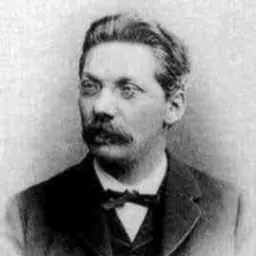
Lived 1888 – 1974 (aged 86). John Crowe Ransom was an American poet, essayist, writer, literary critic, journalist and teacher, known for New Criticism.
John Crowe Ransom (April 30, 1888 – July 3, 1974) was an American educator, scholar, literary critic, poet, essayist and editor. He is considered to be a founder of the New Criticism school of literary criticism. As a faculty member at Kenyon College, he was the first editor of the widely regarded Kenyon Review. Highly respected as a teacher and mentor to a generation of accomplished students, he also was a prize-winning poet and essayist. He was nominated for the 1973 Nobel Prize in Literature.
Background John Crowe Ransom was born on April 30, 1888, in Pulaski, Tennessee. His father, John James Ransom (1853–1934) was a Methodist minister.
He entered Vanderbilt University in Nashville at the age of fifteen, graduating first in his class in 1909. Ransom interrupted his studies for two years to teach sixth and seventh grades at the Taylorsville High School in Taylorsville, Mississippi, followed by teaching Latin and Greek at the Haynes-McLean School in Lewisburg, Tennessee.
In 1930, alongside eleven other Southern Agrarians, he published the conservative, Agrarian manifesto I'll Take My Stand: The South and the Agrarian Tradition, which assailed the tide of industrialism that appeared to be sweeping away traditional Southern culture. The Agrarians believed that the Southern tradition, rooted in the pre-Civil War agricultural model, was the answer to the South's economic and cultural problems. His contribution to I'll Take My Stand is his essay Reconstructed but Unregenerate which starts the book and lays out the Southern Agrarians' basic argument. In various essays influenced by his Agrarian beliefs, Ransom defended the manifesto's assertion that modern industrial capitalism was a dehumanizing force that the South should reject in favor of an agrarian economic model. However, by the late 1930s he began to distance himself from the movement, and in 1945, he publicly criticized it. He remained an active essayist until his death even though, by the 1970s, the popularity and influence of the New Critics had seriously diminished.
In 1937, he accepted a position at Kenyon College in Gambier, Ohio. In 1966, he was elected to the American Academy of Arts and Letters.
He has few peers among twentieth-century American university teachers of humanities; his distinguished students included Donald Davidson, Randall Jarrell, George Lanning, Robert Lowell, Andrew Lytle, Allen Tate, Peter Taylor, Robie Macauley, Robert Penn Warren, E.L. Doctorow, Cleanth Brooks, Richard M. Weaver, James Wright, and C. A. Patrides. His literary reputation is based chiefly on two collections of poetry, Chills and Fever (1924) and Two Gentlemen in Bonds (1927). Believing he had no new themes upon which to write, his subsequent poetic activity consisted almost entirely of revising ("tinkering", he called it) his earlier poems. Hence Ransom's reputation as a poet is based on the fewer than 160 poems he wrote and published between 1916 and 1927. In 1963, the poet/critic and former Ransom student Randall Jarrell published an essay in which he highly praised Ransom's poetry: Despite the brevity of his poetic career and output, Ransom won the Bollingen Prize for Poetry in 1951. His 1963 Selected Poems received the National Book Award the following year.
He primarily wrote short poems examining the ironic and unsentimental nature of life (with domestic life in the American South being a major theme). An example of his Southern style is his poem "Janet Waking", which "mixes modernist with old-fashioned country rhetoric." He was noted as a strict formalist, using both regular rhyme and meter in almost all of his poems. He also occasionally employed archaic diction. Ellman and O'Clair note that "[Ransom] defends formalism because he sees in it a check on bluntness, on brutality. Without formalism, he insists, poets simply rape or murder their subjects."
He was a leading figure of the school of literary criticism known as the New Criticism, which gained its name from his 1941 volume of essays The New Criticism. The New Critical theory, which dominated American literary thought throughout the middle 20th century, emphasized close reading, and criticism based on the texts themselves rather than on non-textual bias or non-textual history. In his seminal 1937 essay, "Criticism, Inc." Ransom laid out his ideal form of literary criticism stating that, "criticism must become more scientific, or precise and systematic." To this end, he argued that personal responses to literature, historical scholarship, linguistic scholarship, and what he termed "moral studies" should not influence literary criticism. He also argued that literary critics should regard a poem as an aesthetic object. Many of the ideas he explained in this essay would become very important in the development of The New Criticism. "Criticism, Inc." and a number of Ransom's other theoretical essays set forth some of the guiding principles that the New Critics would build upon. Still, his former students, specifically Allen Tate, Cleanth Brooks, and Robert Penn Warren, had a greater hand in developing many of the key concepts (like "close reading") that later came to define the New Criticism.
In 1951, he was awarded the Russell Loines Award for Poetry from the National Institute of Arts and Letters.
Personal life and death In 1920, he married Robb Reavill, a well-educated young woman who shared his interest in sports and games. Together they raised three children: a daughter, Helen, and two sons, David and John.
Ransom died on July 3, 1974, in Gambier at the age of eighty-six. He was buried at the Kenyon College Cemetery in Gambier.
Don’t just read it —
keep it.
Full-length biographies made to live with: read them, listen on the way to work, watch them tonight.
- E-book
- Audio
- Video
Instant download · yours to keep · every purchase keeps this site free
Important facts
People in John Crowe Ransom's life
Named in this biography and alive at the same time





Related people
Same field, nearest in time
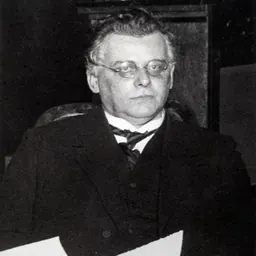
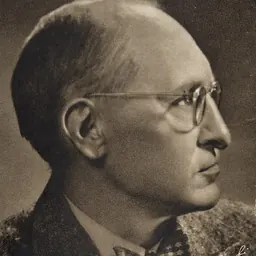
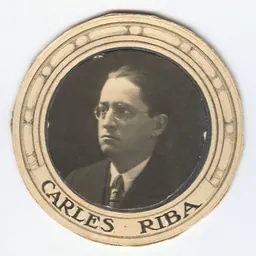
Contemporaries
People whose lives overlapped John Crowe Ransom's

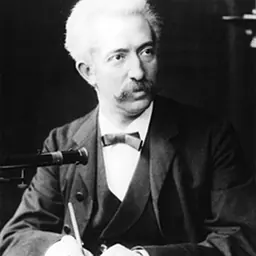



Frequently asked questions
Who was John Crowe Ransom?
American poet (1888–1974)
When was John Crowe Ransom born?
John Crowe Ransom was born on 30 April 1888 in Pulaski.
When did John Crowe Ransom die?
John Crowe Ransom died on 3 July 1974 in Gambier.
What was John Crowe Ransom's occupation?
John Crowe Ransom was a poet, essayist, writer, literary critic, journalist and teacher.
What was John Crowe Ransom known for?
John Crowe Ransom was known for New Criticism.
What nationality was John Crowe Ransom?
John Crowe Ransom was American.
Sources & further reading
· Wikipedia: John Crowe Ransom
Cite this page
APA: Biography.guide. (2026). John Crowe Ransom. https://biography.guide/john-crowe-ransom/
MLA: "John Crowe Ransom." Biography.guide, https://biography.guide/john-crowe-ransom/.
Chicago: "John Crowe Ransom." Biography.guide. https://biography.guide/john-crowe-ransom/.
Data last updated: 2026-09-20 · Spot an error? Report a correction.
Page generated 2026-09-27 05:31 UTC