
E. H. Bakewell
Australian pastoralist and businessman
About E. H. Bakewell
Lived 1859 – 1944 (aged 84). E. H. Bakewell was an Australian.
Edward Howard Bakewell (6 July 1859 – 31 March 1944) was a South Australian pastoralist, businessman and administrator.
Born at North Adelaide, he was a son of Samuel Bakewell (ca.1815 – 22 September 1888), who arrived in South Australia in 1839, and his wife Eliza Hannah Bakewell (née Pye). He was among the earliest scholars at Prince Alfred College. On completing his education he joined the staff of the National Bank as a ledger-keeper, and after three years there he gained experience in the north of the State in flour milling and in the pastoral Industry.
Pastoral interests The pastoral industry particularly, attracted his attention, and for more than 50 years he was closely associated with it. For many years he was managing director of the Willowie Land and Pastoral Association Ltd., which held large freehold and leasehold properties in the northern parts of South Australia and the Northern Territory. For many years also he was general manager of the estate of the John Howard Angas, which included the famous Hill River Estate, Point Sturt Stud Cattle Estate, Kings-ford, and other northern properties. For 10 years he was managing partner of Coronga Park Station. NSW, and Tarella Station, near White Cliffs, New South Wales. For about 12 years he was managing director of Yalkuri Station, Lake Alexandrina.
Business interests At the time of his death he was chairman and managing director of the South Australian Portland Cement Co., a position he had held for more than 50 years. He had seen the company grow from its initiation to its present prominence, and its progress was largely due to his initiative and enterprise.
He was, with David Mitchell, John Gibson and C. H. Angas a member of Sir John Monash's South Australian Reinforced Concrete Co. Ltd. in 1907
For 20 years Bakewell was the SA Director of the Commercial Union Assurance Co. Ltd., and for some years was chairman of directors of the company.
Municipal Tramways Trust Bakewell's name is closely associated with Adelaide's Municipal Tramways Trust. He was appointed chairman of the Trust by the Government in succession to its first chairman, A. B. Moncrieff (1845–1928) in 1922, and during his 15 years' occupancy of that office played a prominent part in the progress made by the Trust, and as a mark of appreciation named the overway bridge at Mile End after him. Adelaide's Bakewell Bridge (on Glover Avenue/Henley Beach Road over the railway and Port Road East/Railway Terrace, Mile End) was named for him. Built to carry trams and vehicular traffic, it was opened on 22 December 1925 and demolished in 2007. The replacement underpass was opened in January 2008.
Other interests Although he never entered Parliament, Bakewell always showed a keen interest in politics, and for many years was one of the leaders of the Liberal and Country League and was chairman of the finance committee of the Liberal and Country League for many years. He was a member of the Liberal Club Ltd. from its inception. Bakewell's services were engaged by the Government on numerous occasions.
He was president of the Australian National League 1907–1910
Bakewell was one of the most prominent members of the Employers' Federation, of which he was chairman from 1915 to 1929. In that capacity he always strongly supported the practice of bringing employers and employees together through the medium of round table conferences, which, he always held did away with much misunderstanding and bitterness. He was a strong opponent of overlapping Federal and State legislation, and held that industrial matters should be subject to State legislation wherever possible. One of his outstanding achievements was the bringing about of closer unity among large and small employers of labour.
In 1928 he was appointed a member of the Commonwealth Land Valuation Board, formed to deal with objections lodged by taxpayers against the valuation of land assessed for land tax purposes. He was also prominent in Masonic circles, and was a member of the council and executive of the Stockowners' Association. Evelyn Marjorie Bakewell (1899– ) married Ross Macrow of Adelaide in 1930 He married again, to Florence (died 1957; no other details yet found). They had homes "Wyuna" at Victoria Avenue, Unley Park; "Marmion", Magill Road, Tranmere; and 80 Northgate Street, Millswood.
Don’t just read it —
keep it.
Full-length biographies made to live with: read them, listen on the way to work, watch them tonight.
- E-book
- Audio
- Video
Instant download · yours to keep · every purchase keeps this site free
Important facts
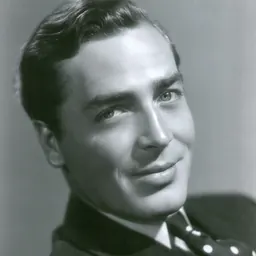
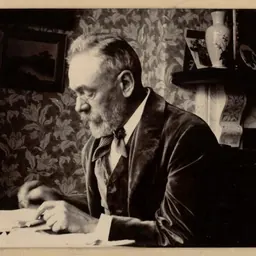
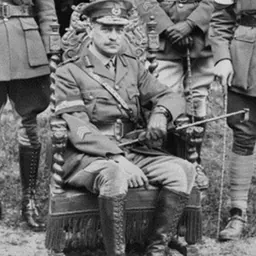
People in E. H. Bakewell's life
Named in this biography and alive at the same time





Contemporaries
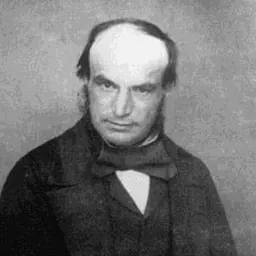
People whose lives overlapped E. H. Bakewell's

Frequently asked questions
Who was E. H. Bakewell?
Australian pastoralist and businessman
When was E. H. Bakewell born?
E. H. Bakewell was born on 6 July 1859 in Adelaide.
When did E. H. Bakewell die?
E. H. Bakewell died on 31 March 1944 in Morgan.
What nationality was E. H. Bakewell?
E. H. Bakewell was Australian.
Sources & further reading
Cite this page
APA: Biography.guide. (2026). E. H. Bakewell. https://biography.guide/e-h-bakewell/
MLA: "E. H. Bakewell." Biography.guide, https://biography.guide/e-h-bakewell/.
Chicago: "E. H. Bakewell." Biography.guide. https://biography.guide/e-h-bakewell/.
Data last updated: 2026-09-20 · Spot an error? Report a correction.
Page generated 2026-09-27 05:26 UTC