
About E. Armand
Lived 1872 – 1962 (aged 89). E. Armand was a French writer and journalist.
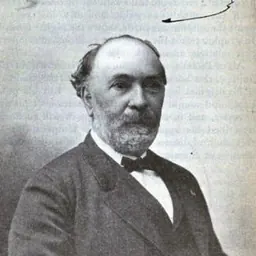
E. Armand (March 26, 1872 – February 19, 1962), pseudonym of Ernest-Lucien Juin, was an influential French individualist anarchist at the beginning of the 20th century and also a dedicated free love/polyamory, intentional community, and pacifist/antimilitarist writer, propagandist and activist. He wrote for and edited the anarchist publications L'Ère nouvelle (1901–1911), L'Anarchie, L'En-Dehors (1922–1939) and L'Unique (1945–1953).
Life and activism
Armand collaborated in anarchist and pacifist journals such as La Misère, L'Universel and Le Cri de révolte. In 1901, he established with Marie Kugel (his companion until 1906) the journal L'Ère nouvelle, which initially adhered to Christian anarchism.
In 1908 he published the book Qu'est-ce qu'un anarchiste. In 1911 he married Denise Rougeault who helped him financially and with this he was able to concentrate on his activism. From 1922 on he published the magazine L'En-Dehors which lasted around 17 years. At the same time he wrote Poésies composées en prison, l'Initiation individualiste anarchiste (1923) and La révolution sexuelle et la camaraderie amoureuse (1934). In 1931 he published "Ways of communal life without state and authority. Economic and sexual experiences through history" in which he presented intentional communities anarchist and non-anarchist from different times. In it he argued that these experiments were ways of resistance and propaganda by the deed of the possibility of living differently according to affinity groups will. On the debate within anarchist circles he defended the Ido constructed language over Esperanto with the help of José Elizalde. He also maintained a fluid contact with important individualist anarchists of the time such as the American Benjamin Tucker and the French Han Ryner.
He died on 19 February 1963, in Rouen. He says the individualist is "a presentist" and "he could not, without bad reasoning and illogic, think of sacrificing his being, or his having, to the coming of a state of things he will not immediately enjoy".
From the influence of Max Stirner he embraces egoistical denial of social conventions, dogmas and accords in order to live in accord to one's own ways and desires in daily life since he emphasized anarchism as a way of life and practice. In this way he manifests "So the anarchist individualist tends to reproduce himself, to perpetuate his spirit in other individuals who will share his views and who will make it possible for a state of affairs to be established from which authoritarianism has been banished. It is this desire, this will, not only to live, but also to reproduce oneself, which we shall call "activity" ".
A hedonistic individualism is advocated when he manifests that "(Charles) Fourier saw it clearly when he launched his truly majestic expression of "the utilization of the passions". A reasonable being utilizes; only the senseless suppress and mutilate. "Utilize one's own passions" yes, but for whose benefit? For one's own benefit, to make one's self someone "more alive", that is, more open to the multiple sensations that life offers. The happiness of living! Life is beautiful for whoever goes beyond the borders of conventional existence, whoever evades the hell of industrialism and commercialism, whoever rejects the stink of the alleys and taverns. Life is beautiful for whoever constructs it without care for the restrictions of respectability, of the fear of "what they'll say" or of the gossips...Our individualism is not an individualism of the graveyard, an individualism of sadness and of shadow, an individualism of pain and suffering. Our individualism is a creator of happiness, in us and outside of us. We want to find happiness wherever it is possible, thanks to our potential as seekers, discoverers, realizers.". Above all he advocated a pluralism in sex and love matters in which one could find "Here sexual union and family, there freedom or promiscuity". Di Giovanni was still married when they began the relationship. "The letter was published in L'En-Dehors" on 20 January 1929 under the title "'An Experience', together with the reply from E. Armand". Armand replied to Scarfó, "Comrade: My opinion matters little in this matter you send me about what you are doing. Are you or are you not intimately in accord with your personal conception of the anarchist life? If you are, then ignore the comments and insults of others and carry on following your own path. No one has the right to judge your way of conducting yourself, even if it were the case that your friend's wife be hostile to these relations. Every woman united to an anarchist (or vice versa), knows very well that she should not exercise on him, or accept from him, domination of any kind."
Works L'idéal libertaire et sa réalisation., 1904. De la liberté sexuelle, 1907. Mon athéisme, 1908. Qu'est-ce qu'un anarchiste ? Thèses et opinions, Paris, Éditions de l'anarchie, 1908, 179 p. Le Malthusianisme, le néo-malthusianisme et le point de vue individualiste, 1910. La Procréation volontaire au point de vue individualiste, 1910. Est-ce cela que vous appelez « vivre ? », 1910. Les Ouvriers, les syndicats et les anarchistes, 1910. Mon point de vue de « l'anarchisme individualiste », 1911. La Vie comme expérience, 1916. Les besoins factices, les stimulants et les individualistes, 1917. Le plus grand danger de l'après-guerre, 1917. Lettre ouverte aux travailleurs des champs, 1919. L'illégalisme anarchiste. Le mécanisme judiciaire et le point de vue individualiste, 1923. L'illégaliste anarchiste est-il notre camarade ?, 1923. in english L'Initiation individualiste anarchiste, 1923. Entretien sur la liberté de l'amour, 1924. L'ABC de « nos » revendications individualistes anarchistes, 1924. Liberté sexuelle, 1925. Amour libre et liberté sexuelle, 1925. Realism and Idealism mixed – Reflections of an Anarchist Individualist. 1926. Ways of Life in Common without State nor Authority: Sexual and Economic Experiences through History. 1931 Libertinage and Prostitution: great prostitutes and famous libertines: influence of the sexual act in the political and social life of humanity 1936
Publications L'Anarchie L'Ère nouvelle (1901–1911) Hors du troupeau (1911) Par-delà la Mêlée (1916) L'EnDehors (1922) L'Unique (1945)
Don’t just read it —
keep it.
Full-length biographies made to live with: read them, listen on the way to work, watch them tonight.
- E-book
- Audio
- Video
Instant download · yours to keep · every purchase keeps this site free
Important facts
People in E. Armand's life
Named in this biography and alive at the same time
Related people
Same field, nearest in time



Contemporaries
People whose lives overlapped E. Armand's


Frequently asked questions
Who was E. Armand?
French individualist anarchist (1872-1962)
When was E. Armand born?
E. Armand was born on 26 March 1872 in 11th arrondissement of Paris, Paris.
When did E. Armand die?
E. Armand died on 19 February 1962 in Rouen.
What was E. Armand's occupation?
E. Armand was a writer and journalist.
What nationality was E. Armand?
E. Armand was French.
Sources & further reading
Cite this page
APA: Biography.guide. (2026). E. Armand. https://biography.guide/e-armand/
MLA: "E. Armand." Biography.guide, https://biography.guide/e-armand/.
Chicago: "E. Armand." Biography.guide. https://biography.guide/e-armand/.
Data last updated: 2026-09-20 · Spot an error? Report a correction.
Page generated 2026-09-27 05:29 UTC